Use this hub to move from a report, inspection finding or construction question to the most relevant termite information. The guides are organised around real decisions: what was found, what the report says, what stage the building is at, and what treatment or documentation needs to be understood.
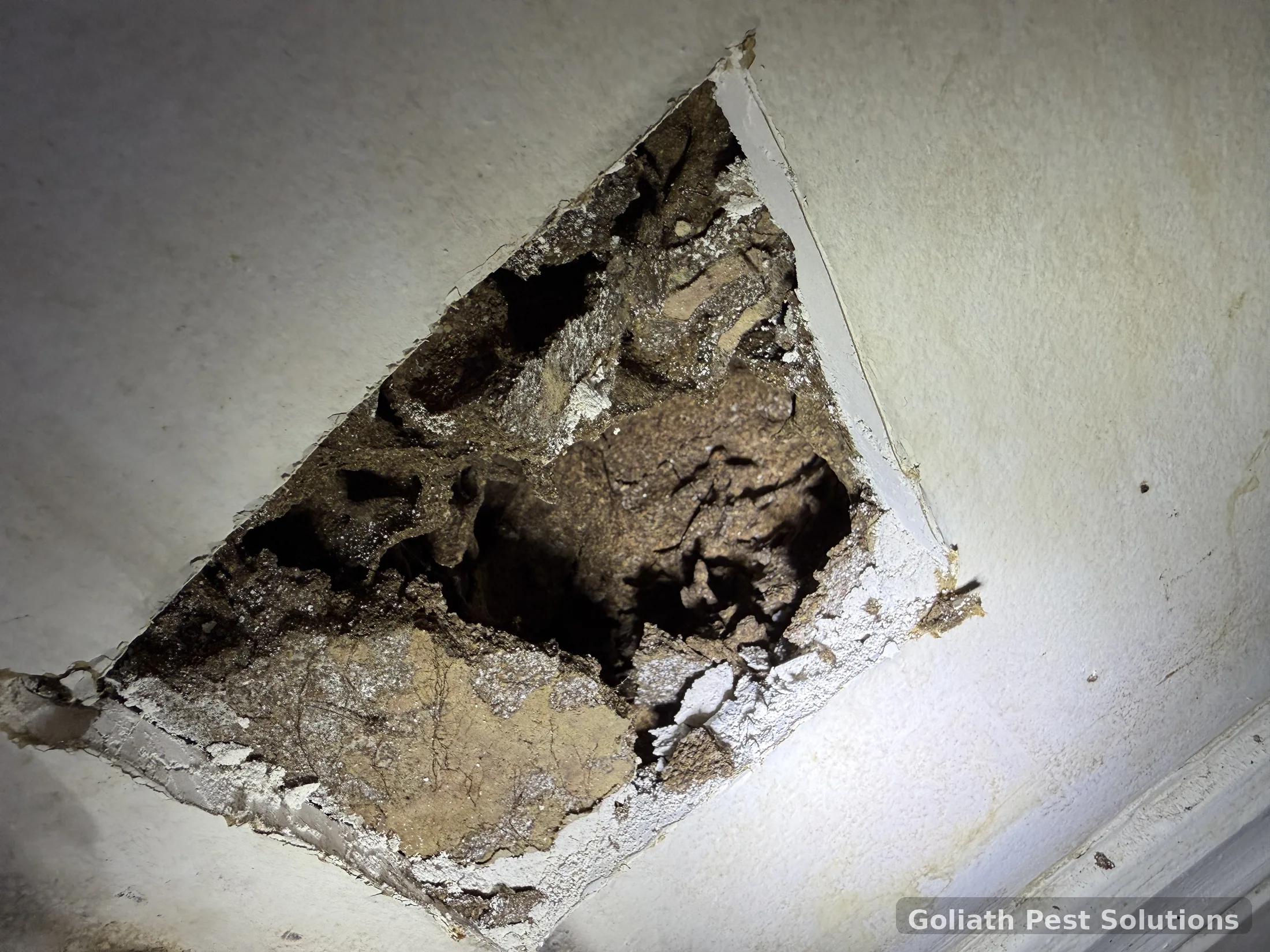
Termite searches often begin with a specific trigger. A buyer may have received a building report, an owner may have found suspicious damage, a builder may need a termite-management installer, or a homeowner may already be comparing treatment quotes. The quickest route is to start with that trigger instead of reading every page in order.
Use the report and pre-purchase guides to understand what visible damage, a recommendation for further inspection, missing treatment records or an unidentified barrier actually mean.
Separate the immediate question of current activity from the longer-term question of property protection. Active treatment, inspection and barrier planning are different stages.
Use the AS 3660.1 and builder pages to understand construction-stage coordination, extensions, penetrations and handover documentation.
NSW Government guidance distinguishes a general building inspection from a pest inspection. A building report may identify visible damage associated with termites, but it does not determine whether termites or other timber-destroying pests are still present. That is why report wording often leads to a separate termite or timber-pest assessment.
Understand why that recommendation appears and what a dedicated termite assessment can add.
Read guide →Learn why visible damage alone does not tell you whether activity is current, historic or fully understood.
Read guide →Plan the termite inspection, documents to request and questions to ask before you commit.
Read guide →What to do when a report cannot identify a termite-management system or the treatment history is unclear.
Read guide →A report finding should not automatically be converted into a treatment recommendation. A dedicated termite inspection considers accessible evidence of activity and damage, property construction, moisture and drainage conditions, timber-to-soil contact, previous treatment evidence and other relevant risk factors.
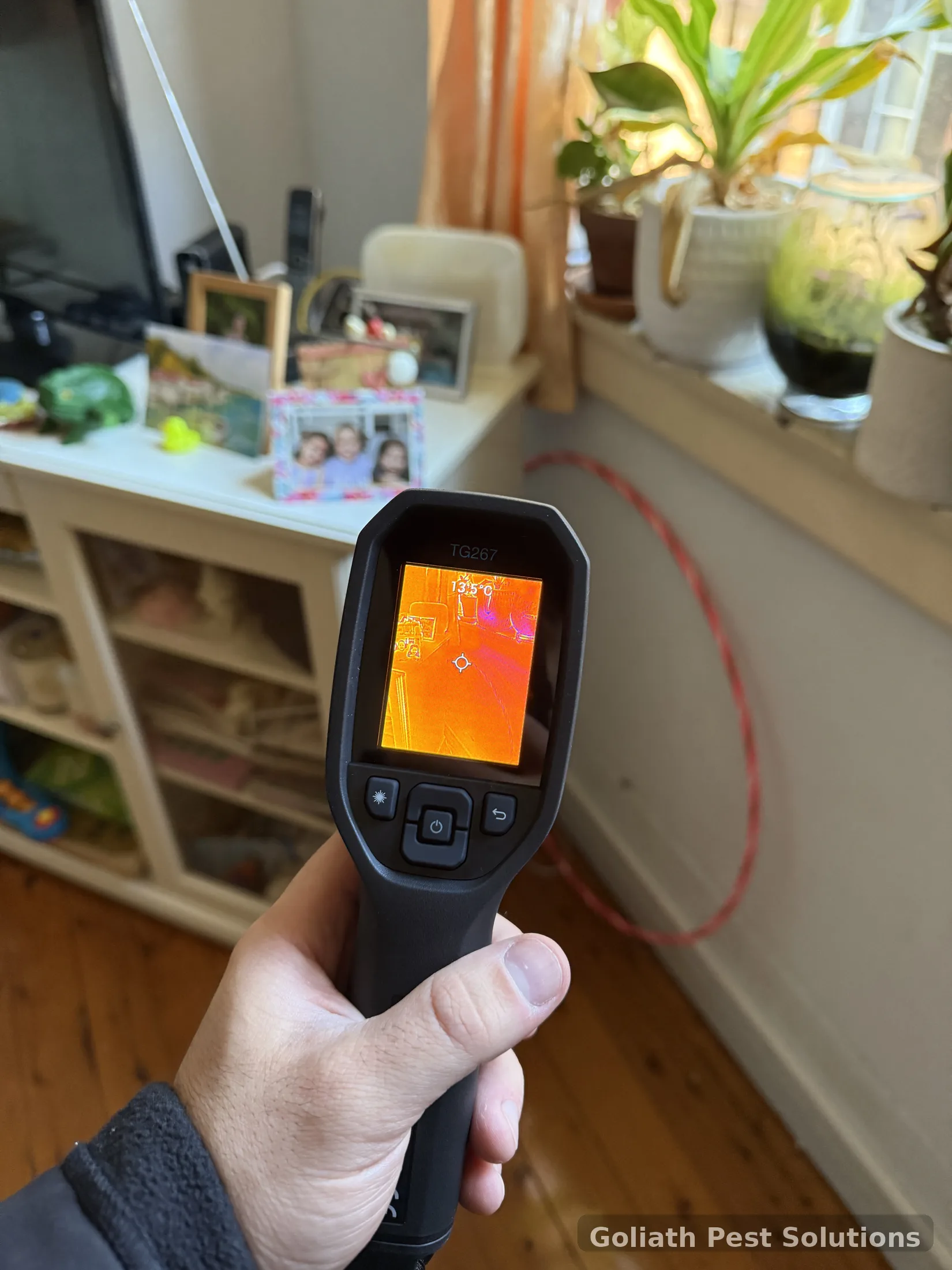
Diagnostic tools such as moisture meters and thermal imaging can support the investigation when used in context, but they do not replace professional interpretation or physical inspection. See the full Termite Inspection Sydney guide for the inspection process.

The construction pages are deliberately separated from existing-building treatment pages. New building work is planned around AS 3660.1 and the construction sequence, while existing properties are assessed around the current structure, access and termite-management history.
Two termite quotes can look similar while covering different problems, treatment areas, products, installation methods, follow-up obligations and warranty conditions. Use the treatment guides to understand what each proposal is actually offering before deciding whether it is like-for-like.
| Topic | Best guide | What it explains |
|---|---|---|
| Current termite activity | Active Termites | Immediate assessment, colony treatment and the distinction between treating activity and providing longer-term property protection. |
| Soil-treated zones | Chemical Barriers | Drilling, injection, trenching, rodding, accessible subfloor work and treatment continuity. |
| Termidor | Termidor Treatment Guide | Accredited application, treated zones, warranty context and inspection requirements. |
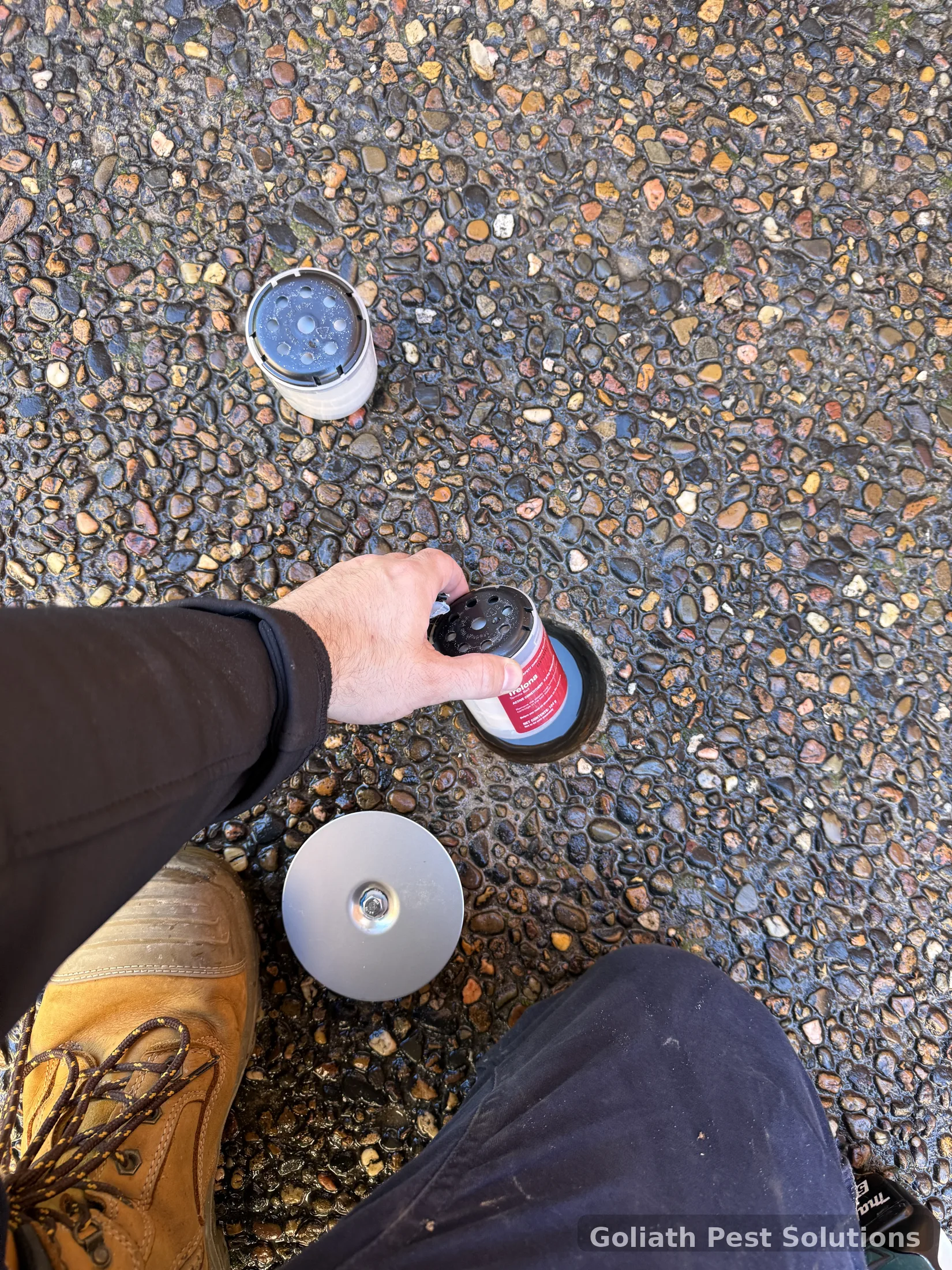
| Baiting and monitoring | Trelona Baiting | In-ground stations, monitoring and ongoing servicing. |
| Price | Treatment Cost | Why scope, property construction and treatment design can materially change the price. |
| Written proposal | Quote Review | Upload an existing quote so the treatment scope and price can be compared. |
Start with the Active Termites guide and avoid unnecessary disturbance of the activity. If you already have a written treatment proposal, the Quote Review page explains how Goliath compares the scope before confirming whether the price-beat offer applies.
Choose the guide that matches the wording in your report: Building Inspector Recommended a Termite Inspection? if further termite assessment is recommended; Pre-Purchase Report Found Termite Damage? if visible termite damage is noted; or No Termite Barrier in the Building Report? if no barrier or termite-management system could be identified. If the treatment history is unclear, use Existing Termite Barrier or Treatment History Unknown?.
No. The guides explain the purpose and practical context of AS 3660.1 and AS 3660.2 in plain language. Project-specific requirements should be checked against the current Standard, project documents and applicable building requirements.
Yes. The guides can help you understand terminology and treatment components, but the actual quote should still be compared line by line. Goliath reviews eligible written Active Termite Treatment and Chemical Termite Barrier proposals on a like-for-like basis.
Send Goliath the report, photos or written quote you already have. We can point you to the relevant information and discuss the next practical step.
Reference context: NSW Government pre-purchase inspection guidance, AS 3660.1:2014 and AS 3660.2:2017.

1300 953 966 • info@goliathpestcontrol.com.au
Mortlake NSW 2137 • Sydney-wide service
Active termites • Chemical barriers • Inspections • Guides • Quote review • Contact
See our real Sydney termite treatment case studies →
RELATED TERMITE RESOURCES
Use the specialist service pages below when you are ready to move from research into inspection, treatment or written quote comparison.
Find guides, treatments, standards, report help and Sydney service areas.
Compare treatment methods, learn what inspections involve and see genuine termite-management work completed by Goliath Pest Solutions.
Enter your postcode and we’ll check whether it falls within our standard service area from Mortlake.