Termite management for new building work is best planned before the critical construction stage is reached. Goliath works with builders and property owners to coordinate suitable termite-management scopes, treatment zones, access and documentation for Sydney projects.
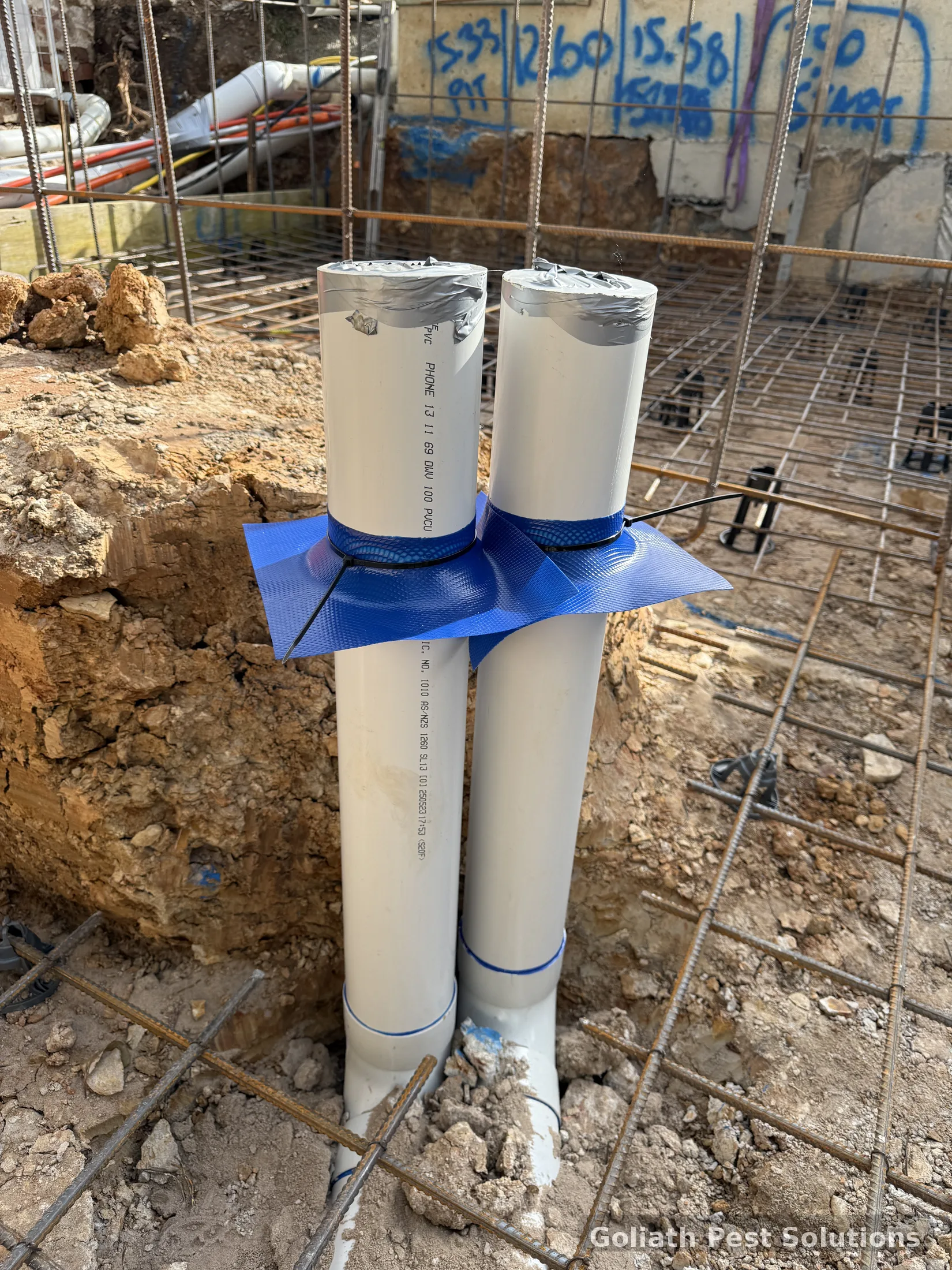
Pre-construction termite protection is the planning and installation of termite risk-management measures while new building work is being carried out. The exact solution depends on the building design, slab or suspended-floor construction, penetrations, perimeter details, specified products and other project requirements.
Standards Australia describes AS 3660.1:2014 as setting requirements for the design and construction of subterranean termite management systems for new buildings and new building work. That is why a builder should not assume that a generic treatment performed at the end of a project is equivalent to planning the termite system at the correct construction stage.
For a deeper explanation of the Standard and how it differs from management of an existing building, see our AS 3660.1 guide and AS 3660.2 guide.
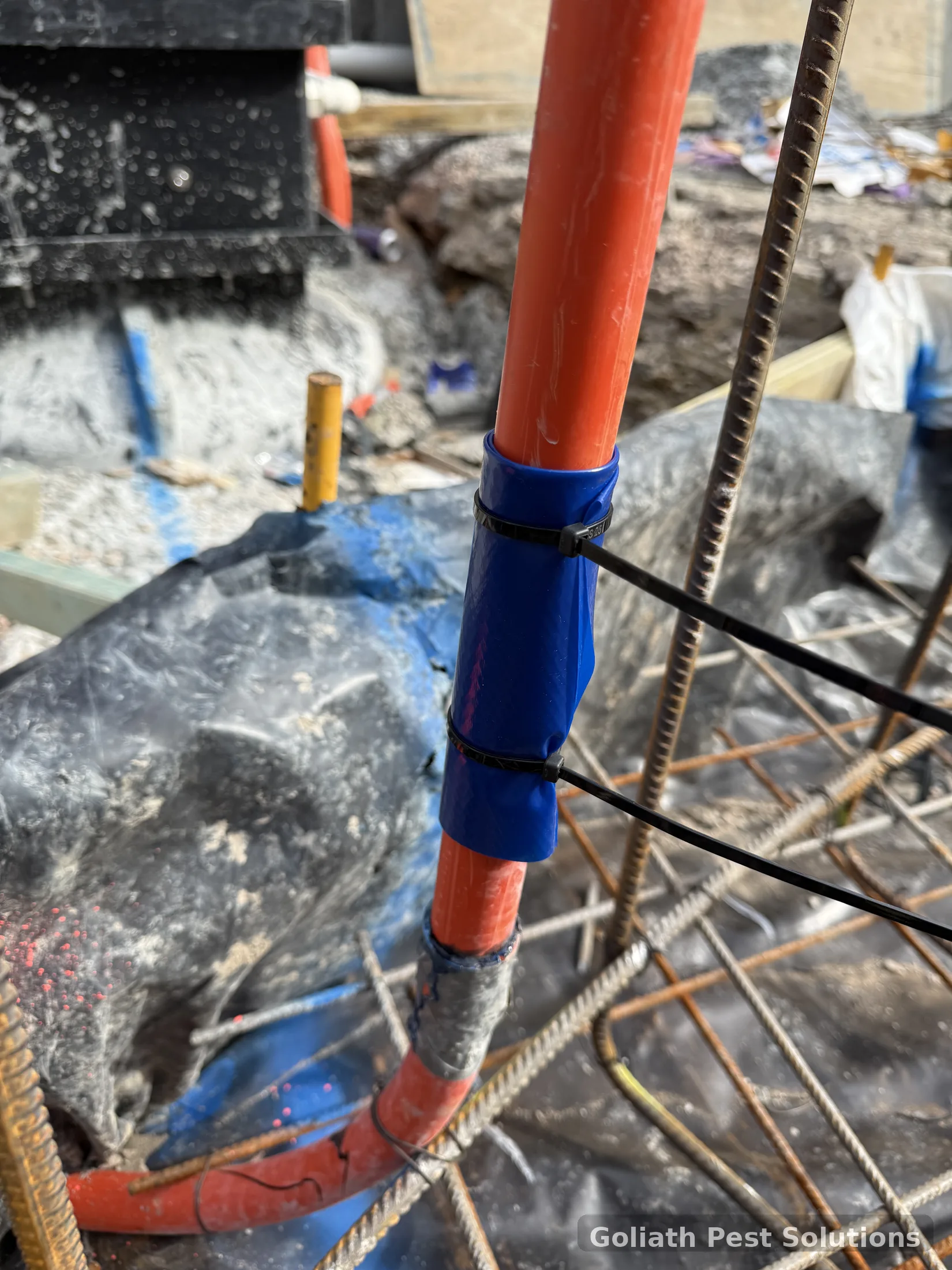
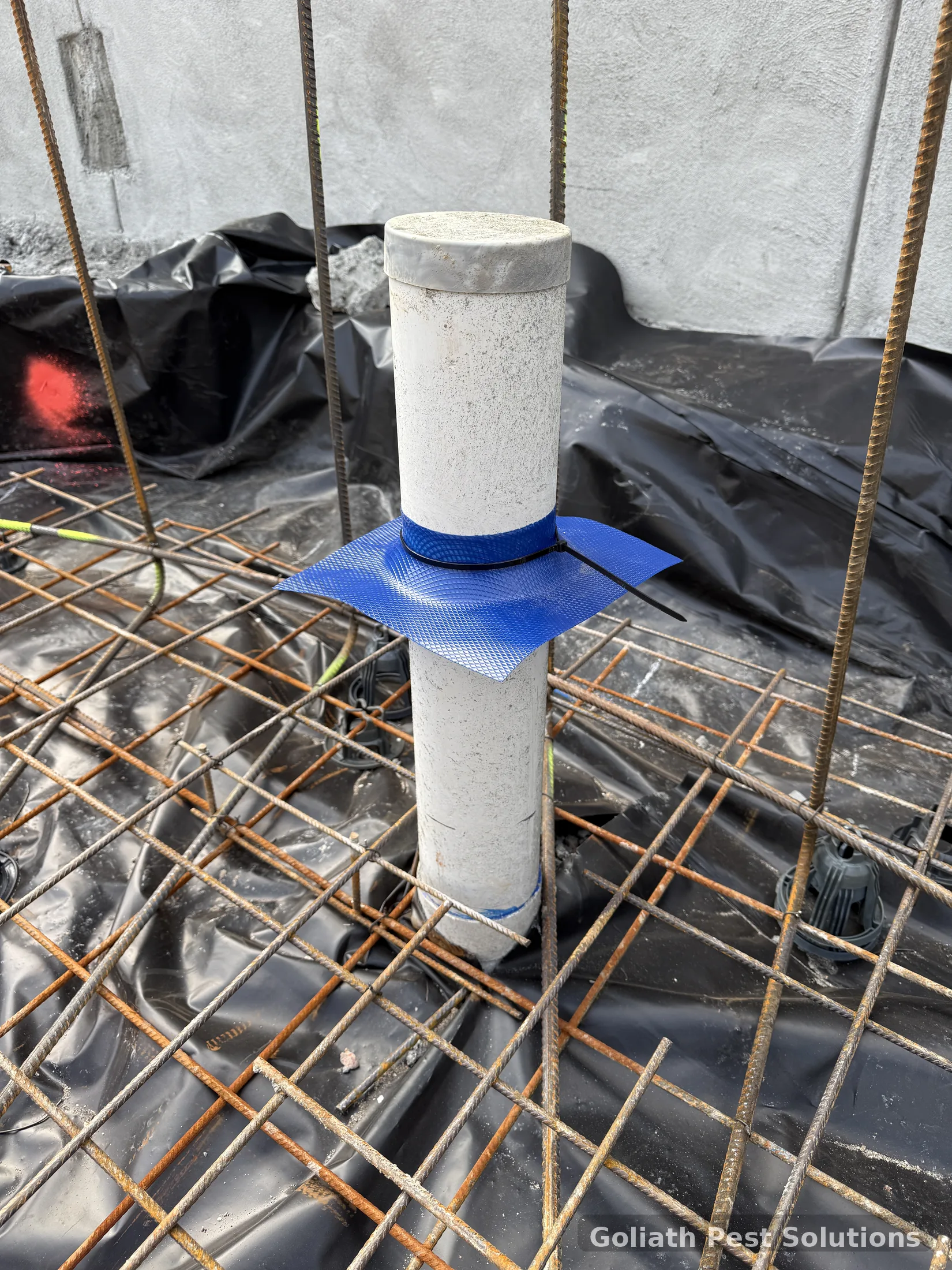
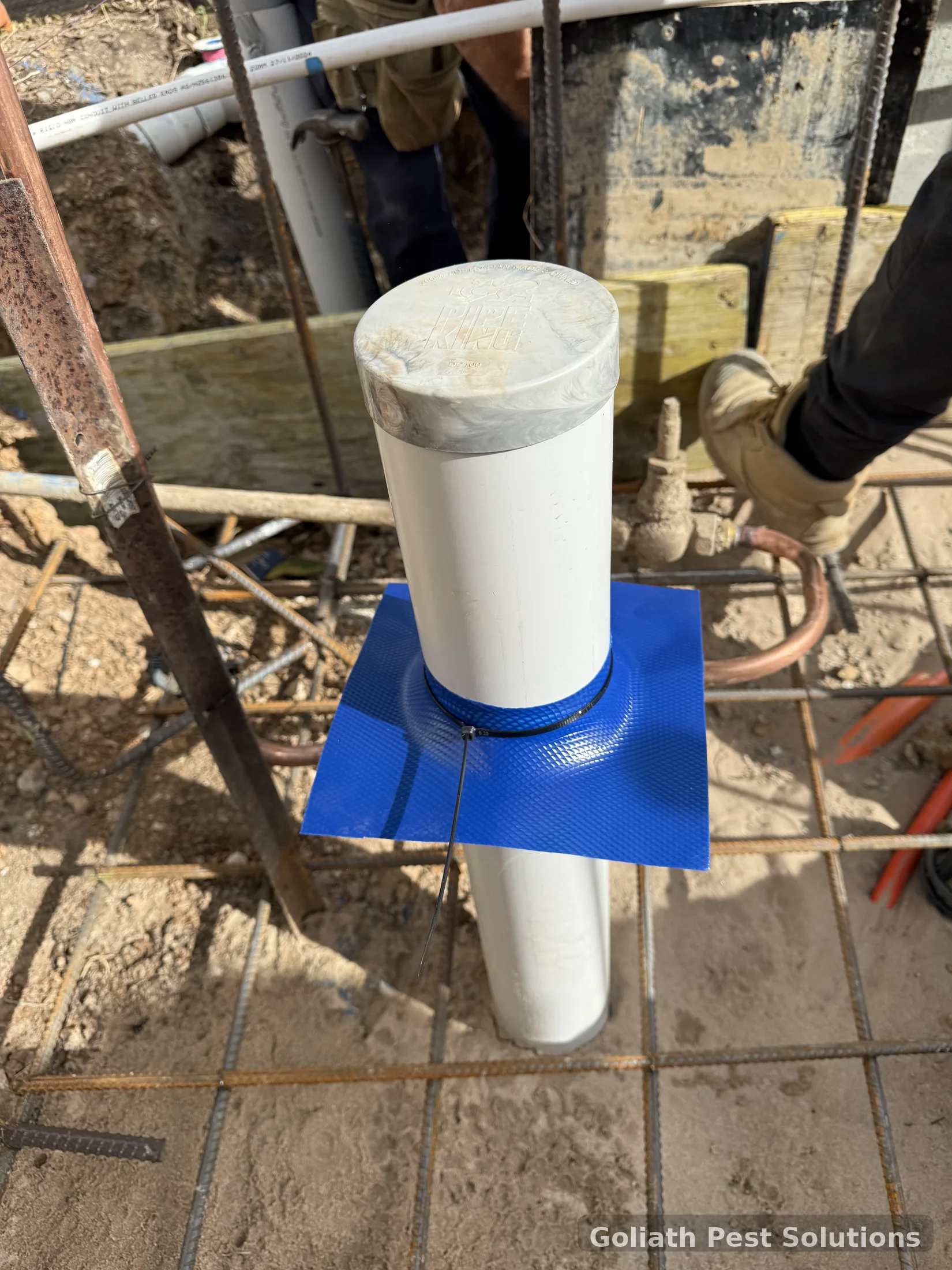
The most useful time to discuss the termite scope is before the relevant work becomes inaccessible. A practical review considers the construction sequence and the points where future termite entry or concealed access needs to be managed.
Pipes and other slab penetrations are obvious interfaces that need to be considered as part of the project’s termite-management design rather than ignored until handover.
The building perimeter, slab edge and adjoining soil or paved areas affect how the specified system can be installed and later inspected.
Construction joints and the junction between new and existing work can create different requirements from a completely new freestanding build.
Landscaping, paving, cladding and stored materials can affect inspection zones. Keeping future inspection access in mind during construction can reduce problems later.
Confirm the address, construction type, plans or relevant details, proposed termite-management method and who is responsible for each part of the scope.
Identify when the site will actually be ready. Some termite-management work is construction-stage dependent, so the installer needs realistic notice before concrete, covering or landscaping closes access.
Complete the agreed treatment or system work to the relevant areas and record the work performed. If site conditions differ materially from the expected scope, stop and clarify rather than silently improvising.
Keep treatment records, product information and other relevant documentation with the project file so the owner and future inspectors can understand what was installed.
NSW Government consumer guidance states that when building or renovating a home, the builder is responsible for installing a termite risk management system for the work. The same guidance notes that different systems may be used, including chemical barriers, physical barriers, termite-resistant materials and construction methods designed to minimise risk.
That does not mean every pest-control contractor installs every type of system. Goliath’s role should be defined around the termite-management work it is qualified and equipped to provide. Where a project requires a proprietary physical barrier, specialist component or another trade’s work, that requirement should be identified rather than implied to be included.
For suitable projects, Goliath can coordinate professional chemical termite-management work and related builder-facing support. Learn more about our chemical termite barriers and Termidor treatment.

Real Goliath field imagery from construction-stage work. Project details vary, so photographs illustrate the type of coordination involved rather than a universal installation method.

No. Pre-construction work is coordinated with new building work and can address construction interfaces before they are covered or completed. Post-construction treatment is designed around an existing building, where access and installation methods are different.
No. AS 3660.1 is a termite-management standard, not the name of one product. The appropriate system depends on the building design, project specification and relevant compliance requirements.
As early as practical, ideally before the construction stage that affects the termite-management scope. Early contact gives time to review the project, confirm what Goliath is being asked to provide and coordinate site access.
Yes. A termite management system does not remove the need for ongoing inspections. NSW Government guidance specifically notes that effective termite risk management combined with regular inspections can reduce the risk of termite damage.
Yes. Send the written scope and project information. We can compare what is actually included, identify material differences and provide our own proposal where the work is within our service scope.
Send Goliath the project details before the relevant construction stage. We can review the termite-management scope, site access, construction interfaces and timing for the work we are equipped to deliver.
Reference context: AS 3660.1:2014, AS 3660.2:2017 and NSW Government termite guidance. Project-specific requirements should be confirmed against the current project documents, applicable NCC provisions and relevant Australian Standards.
RELATED TERMITE RESOURCES
Barrier work should be compared on the actual treated areas, access, product, installation method, warranty and ongoing inspection requirements.
Find guides, treatments, standards, report help and Sydney service areas.
Compare treatment methods, learn what inspections involve and see genuine termite-management work completed by Goliath Pest Solutions.
Enter your postcode and we’ll check whether it falls within our standard service area from Mortlake.