For a Sydney property purchase, a termite or timber-pest inspection can answer questions that a general building report does not. It can investigate evidence of active termites, previous damage, conducive conditions, treatment history and areas that warrant closer attention before you commit.
NSW Government guidance states that while a building inspection report should identify visual damage caused by termites, it will not include whether termites and other pests that destroy timber are still around. The Government recommends obtaining a pest inspection as well, especially where termites are a known problem.
For a buyer, that means the termite inspection is not simply a duplicate report. It focuses on timber-pest evidence, current or previous activity, visible damage, relevant property conditions and the limitations of what could be inspected. It can also help you understand whether further specialist advice is required before treatment or repair decisions are made.
Share any comments about timber damage, moisture, inaccessible areas, subfloor conditions, drainage or recommendations for further investigation.
If a recent pest report is supplied, check its date, scope, who prepared it and whether the inspection conditions are still representative of the property.
Ask for treatment certificates, invoices, durable notices, barrier or baiting records, warranty documents and annual inspection history.
Identify locked rooms, low subfloors, roof access, stored goods or other constraints that could prevent important areas being inspected.
The technician looks for accessible evidence of live termites, mud leads, workings and other indications of current or previous termite presence.
Damage is documented where accessible. If structural significance or repair scope is uncertain, further advice from an appropriate building professional may be required.
Moisture, drainage, timber-to-soil contact, subfloor ventilation, landscaping and construction details can affect termite risk and future inspection access.
Visible evidence of barriers, drill points, bait stations, notices or treatment records can be considered, but system status should not be assumed without documentation.
The report should identify areas that could not be inspected so you know what remains uncertain rather than treating inaccessible areas as clear.
Depending on findings, the next step may be monitoring, active treatment, longer-term termite management, moisture or building rectification, or simply ongoing inspections.
If the inspection leads to a termite treatment quote, read the scope carefully. A quote for active colony treatment is not automatically the same as a quote for a chemical barrier. A barrier covering only selected external areas is not necessarily comparable with a broader treatment that includes drilling, trenching, accessible subfloor work, warranty obligations and follow-up inspections.
Use the termite treatment cost guide to understand the main price drivers, or upload an existing proposal through Termite Quote Beat for a like-for-like review.
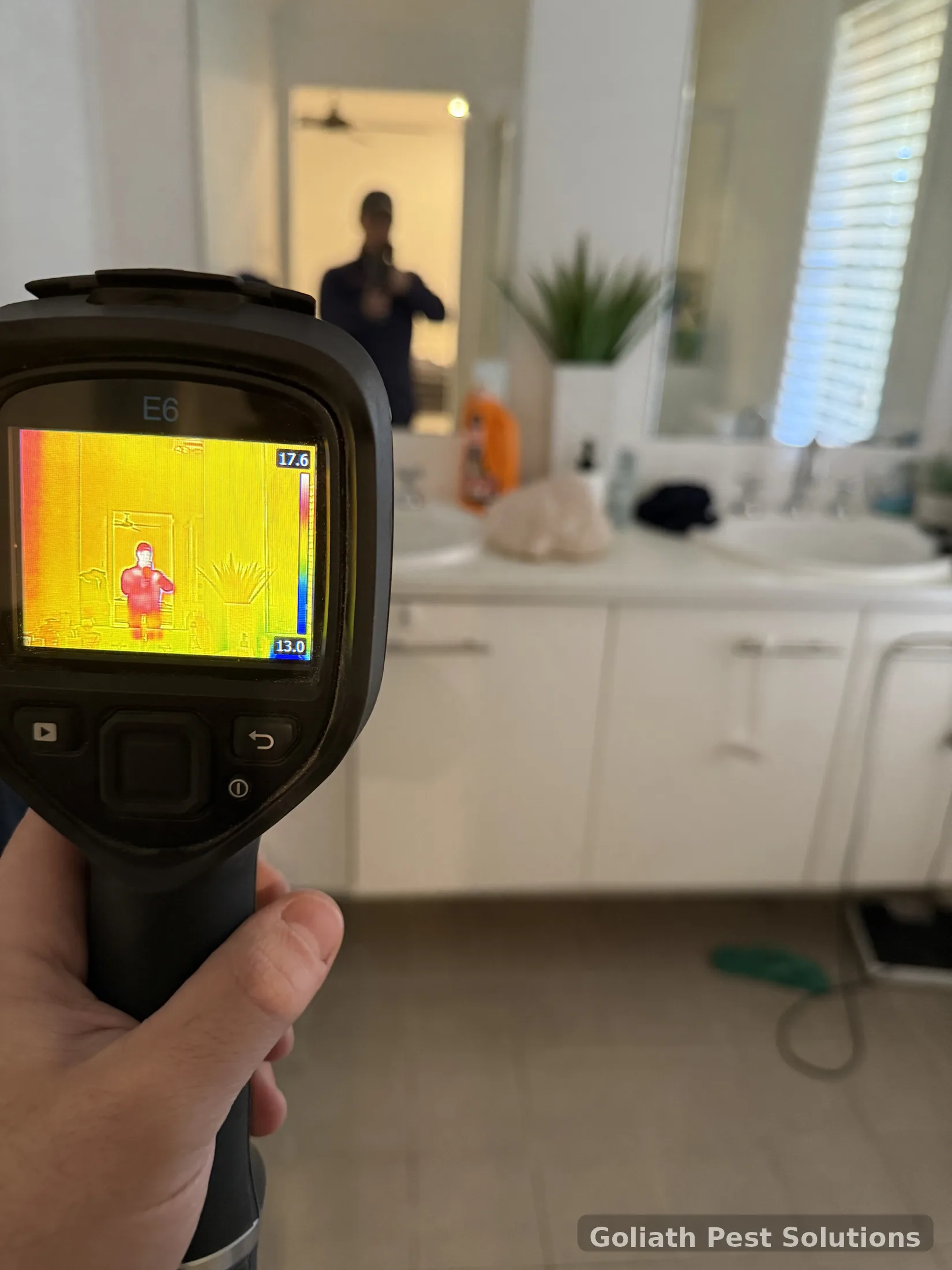
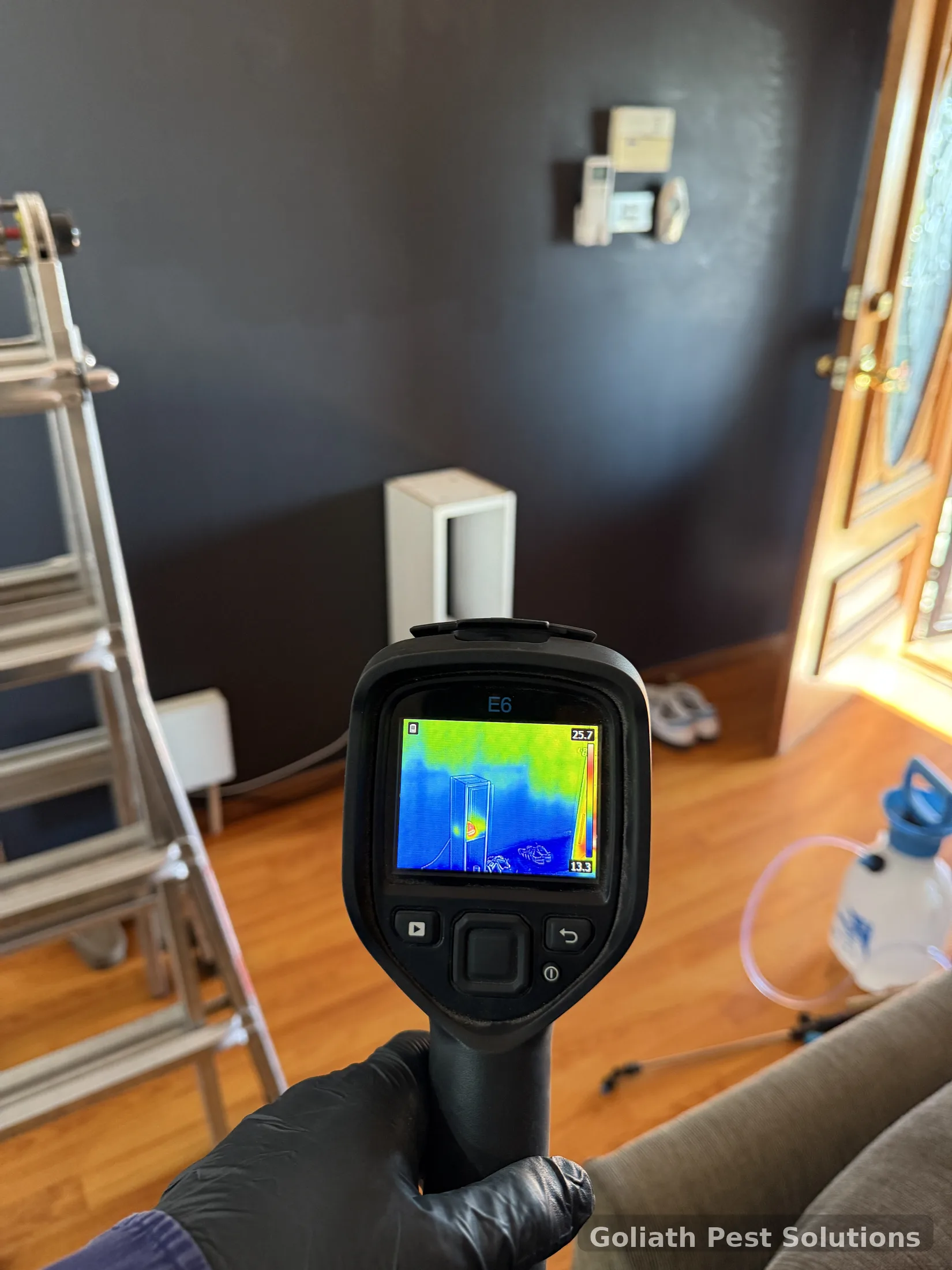
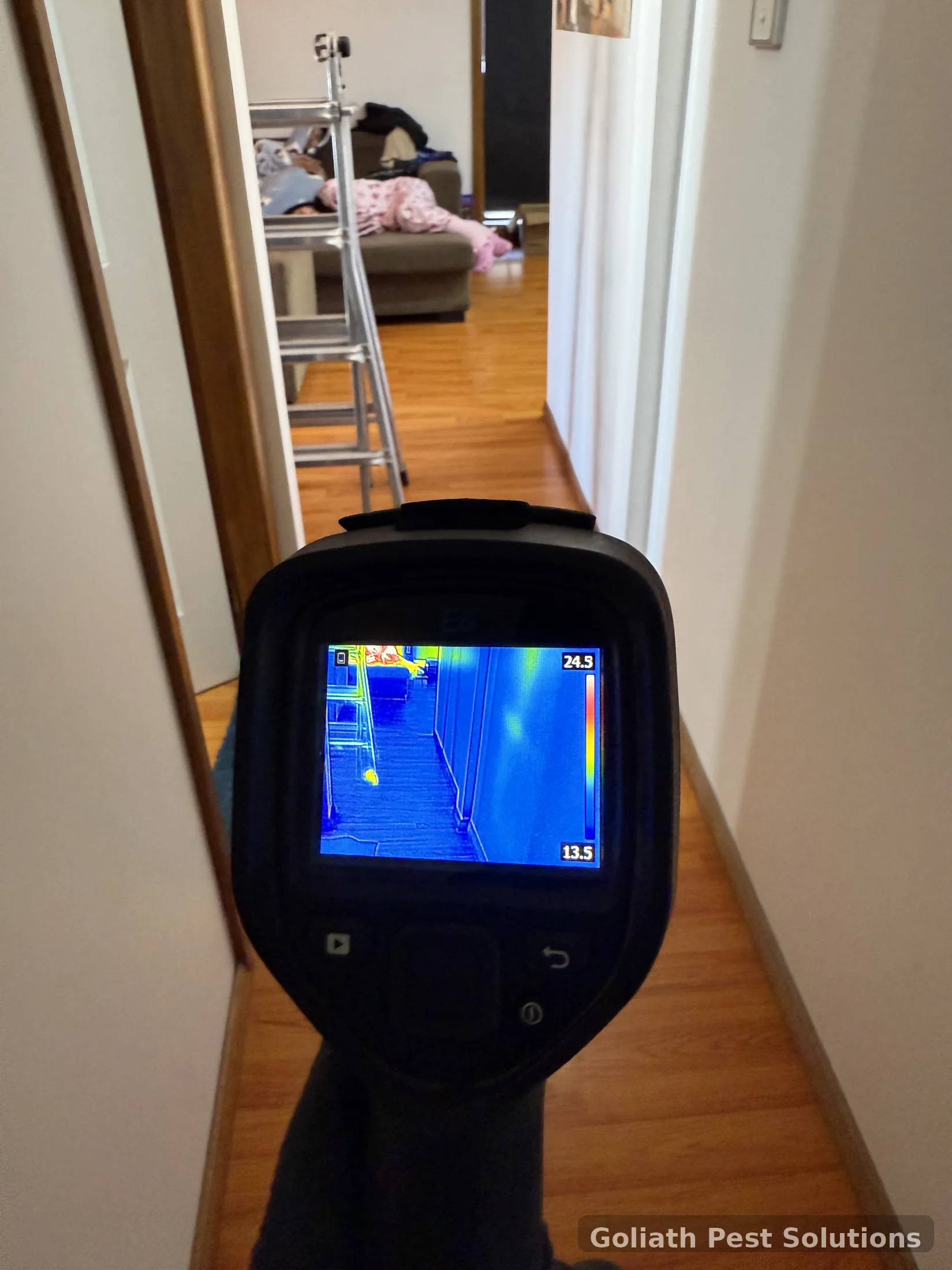
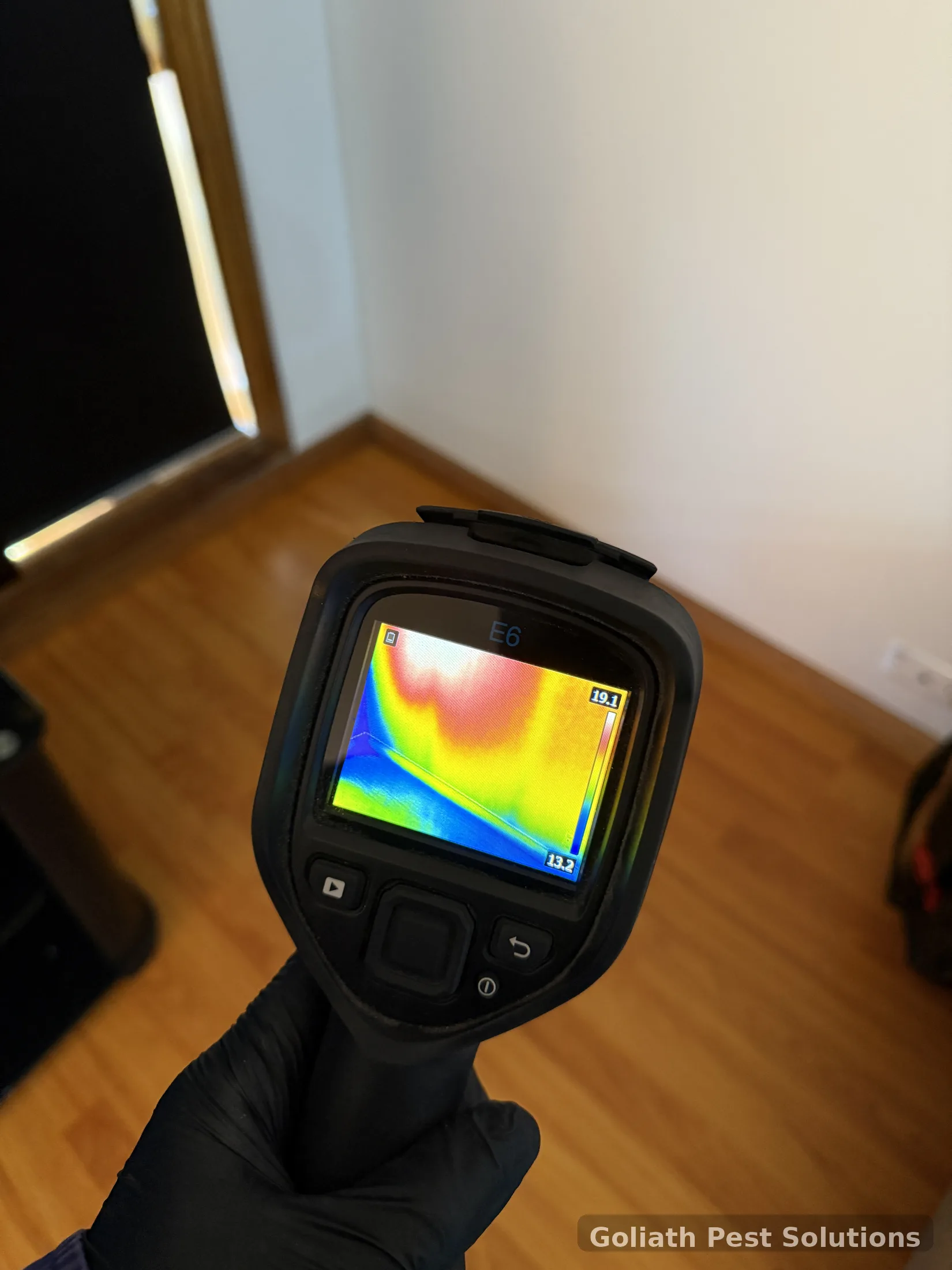
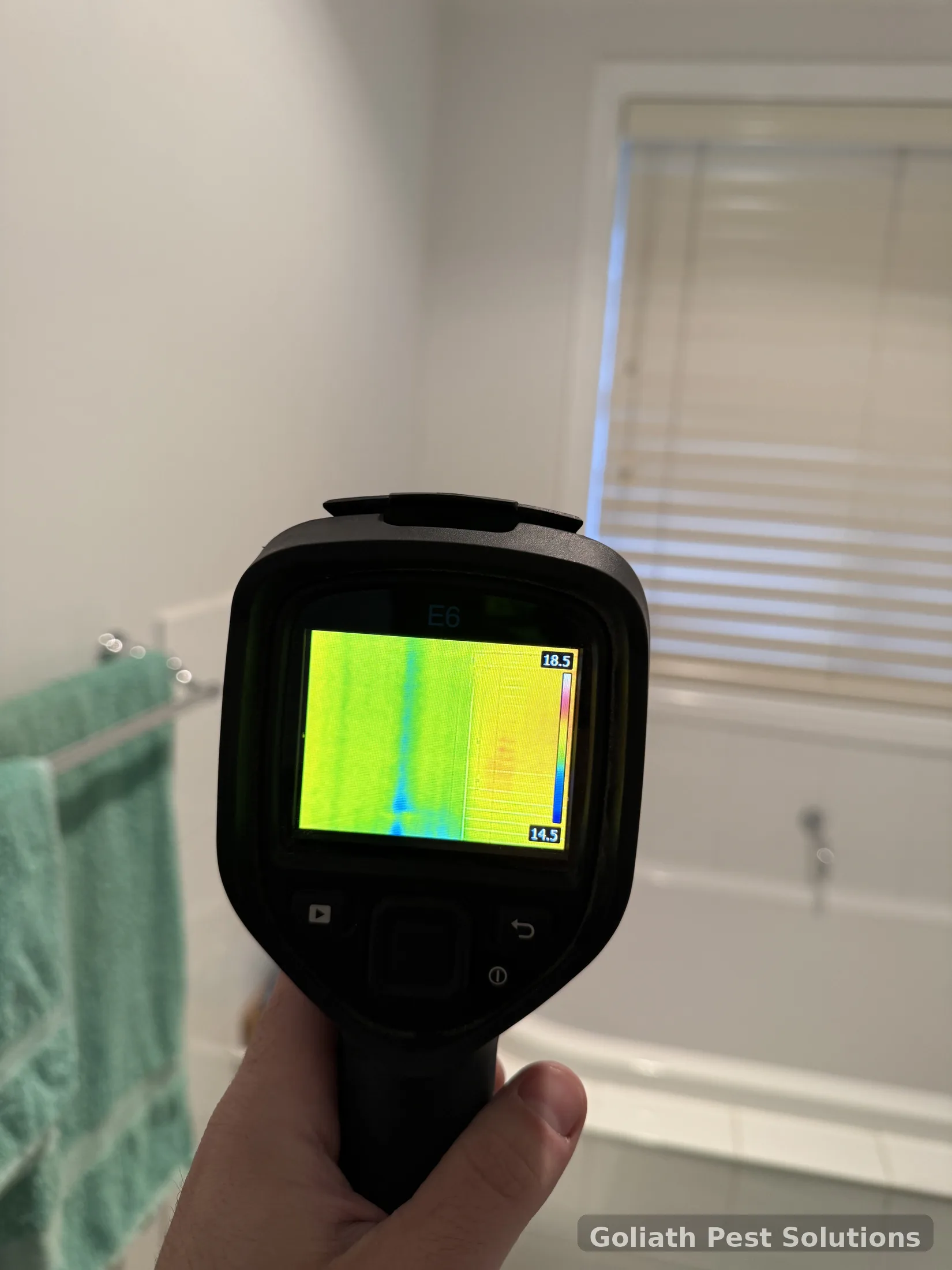
Diagnostic equipment supports an inspection. It should not be presented as a stand-alone guarantee that termites are present or absent.

Before the inspection, ask whether the property has had previous termite activity, chemical barrier work, baiting or monitoring, repairs associated with termite damage, or regular annual pest inspections. Request copies of any available reports and treatment records rather than relying only on a verbal statement that the property has been “treated”.
If a termite-management system is mentioned, ask when it was installed, what product or system was used, which areas were covered and whether the warranty or servicing programme is still current. Also ask whether extensions, new paving, landscaping, plumbing work or other alterations occurred after the original treatment, because changes around the structure can affect inspection access and the relevance of older records.
This background does not replace the current inspection. It gives the technician context and helps you identify inconsistencies between the property history, visible evidence and the documents supplied.
A building report and a pest or termite inspection have different scopes. NSW Government guidance recommends obtaining a pest inspection as well because a building report does not determine whether timber-destroying pests are still present.
Arrange it early enough that you can read the findings and obtain further advice before your decision point. Your solicitor, conveyancer or buying adviser can help you understand contractual timing.
Provide any building report, vendor pest report, previous treatment records, known termite history and information about areas of concern or limited access.
Ask for documentation. An existing barrier or system should be understood in terms of product, treatment areas, date, warranty and inspection obligations rather than assumed to be current merely because it is mentioned.
No inspection can make concealed or future termite risk disappear. The report should be read together with its scope, access limitations and recommendations.
Send the building report or property details to Goliath. We can discuss the inspection scope and help you understand any termite findings before you move to treatment decisions.
Reference: NSW Government pre-purchase inspection reports and NSW buying residential property guidance.

1300 953 966 • info@goliathpestcontrol.com.au
Mortlake NSW 2137 • Sydney-wide service
Active termites • Chemical barriers • Inspections • Guides • Quote review • Contact
RELATED TERMITE RESOURCES
Building reports, old treatment records and visible damage often raise questions that need a termite-specific inspection or treatment scope.
Find guides, treatments, standards, report help and Sydney service areas.
Compare treatment methods, learn what inspections involve and see genuine termite-management work completed by Goliath Pest Solutions.
Enter your postcode and we’ll check whether it falls within our standard service area from Mortlake.