SYDNEY TERMITE SPECIALISTS  •   TERMIDOR ACCREDITED  •  1300 953 966
EXISTING HOMES • TREATMENT HISTORY

Existing Termite Barrier or Treatment History Unknown?

Older homes often come with incomplete termite paperwork. You may see drill points, bait stations, an old sticker or a reference in a previous report but have no clear certificate, product details, treatment map or warranty history. The right response is to establish what is known before assuming the property is either protected or unprotected.
Existing property reviewBarrier & baiting historyDocumentation before treatment
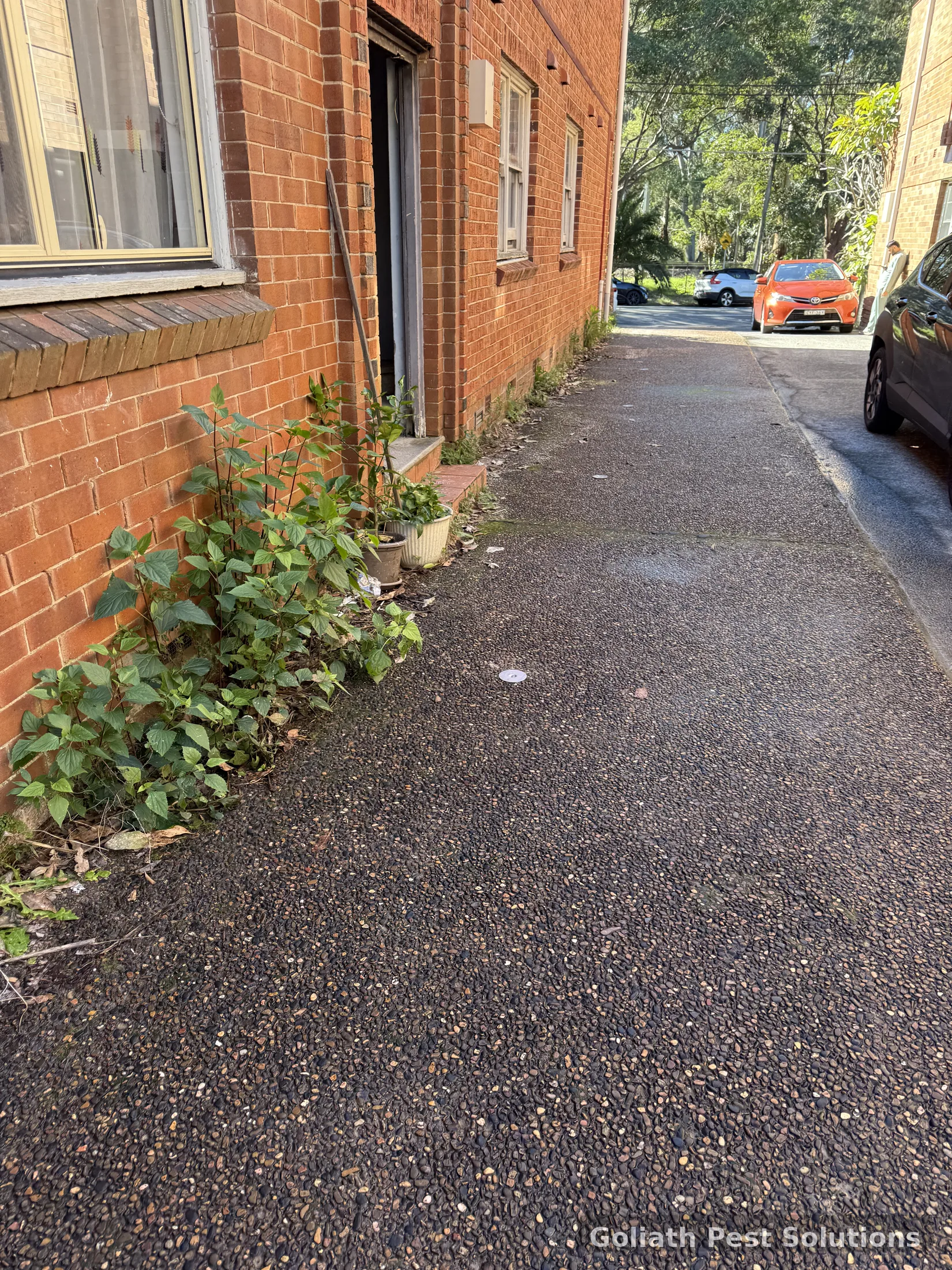
Exterior treatment points beside a brick building where termite-management history may need review
UNKNOWN DOES NOT MEAN ABSENT

Missing records and missing termite protection are not the same thing

A property can have evidence of previous termite management without complete records. Conversely, a treatment invoice may exist even though the treatment covered only part of the property or was performed many years ago. That is why the first task is to distinguish documented facts from assumptions.

Look for durable notices, pest-control stickers, treatment certificates, product names, drill patterns, bait or monitoring stations, warranty paperwork and annual inspection reports. Ask the vendor, property manager or previous pest company for records if they are available.
Important: the absence of one visible sign, such as a durable notice, should not be treated as conclusive proof that no termite-management system was ever installed. Equally, the presence of a notice or old invoice does not prove the system is current, complete or compliant with its ongoing conditions.
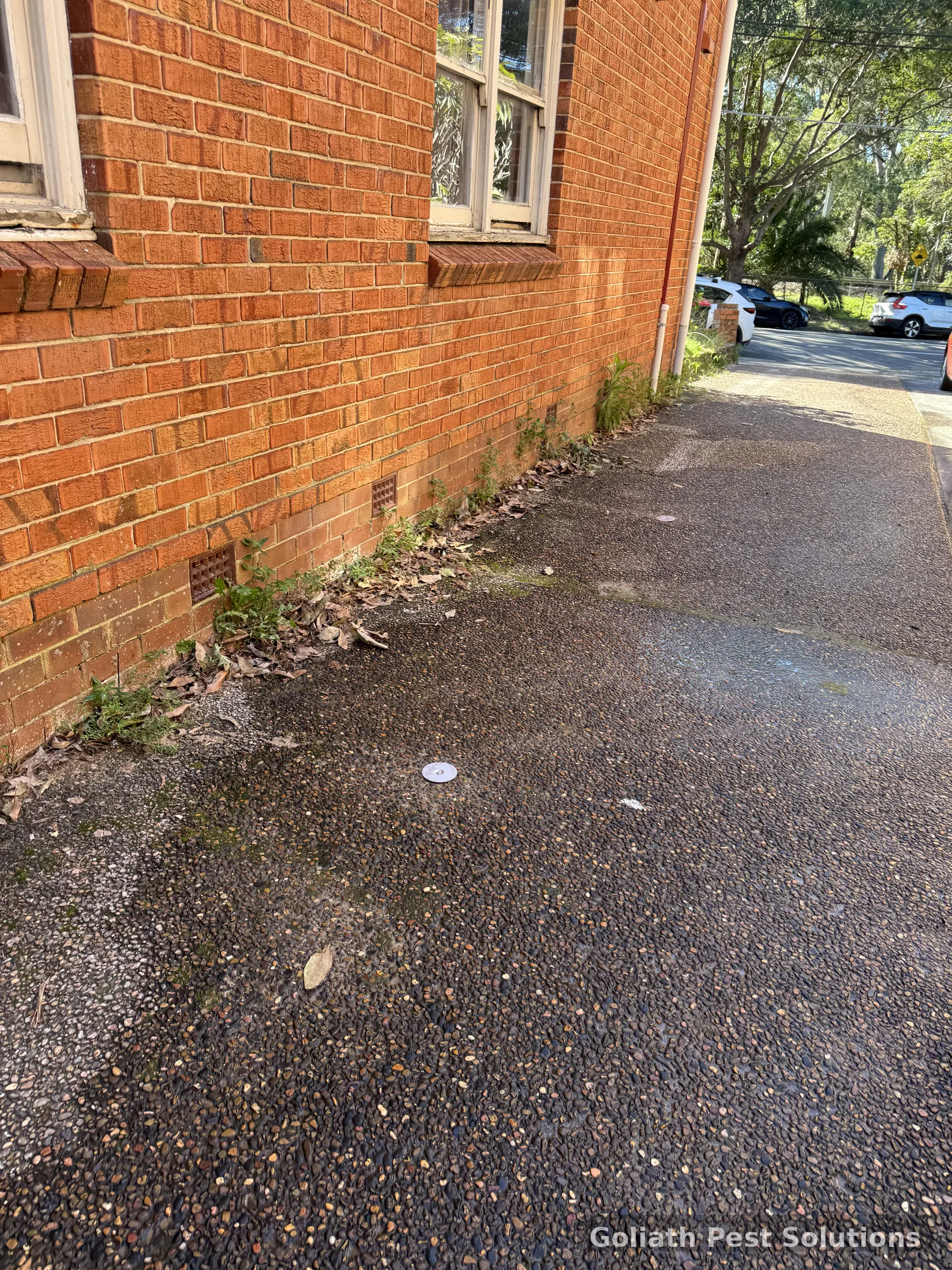
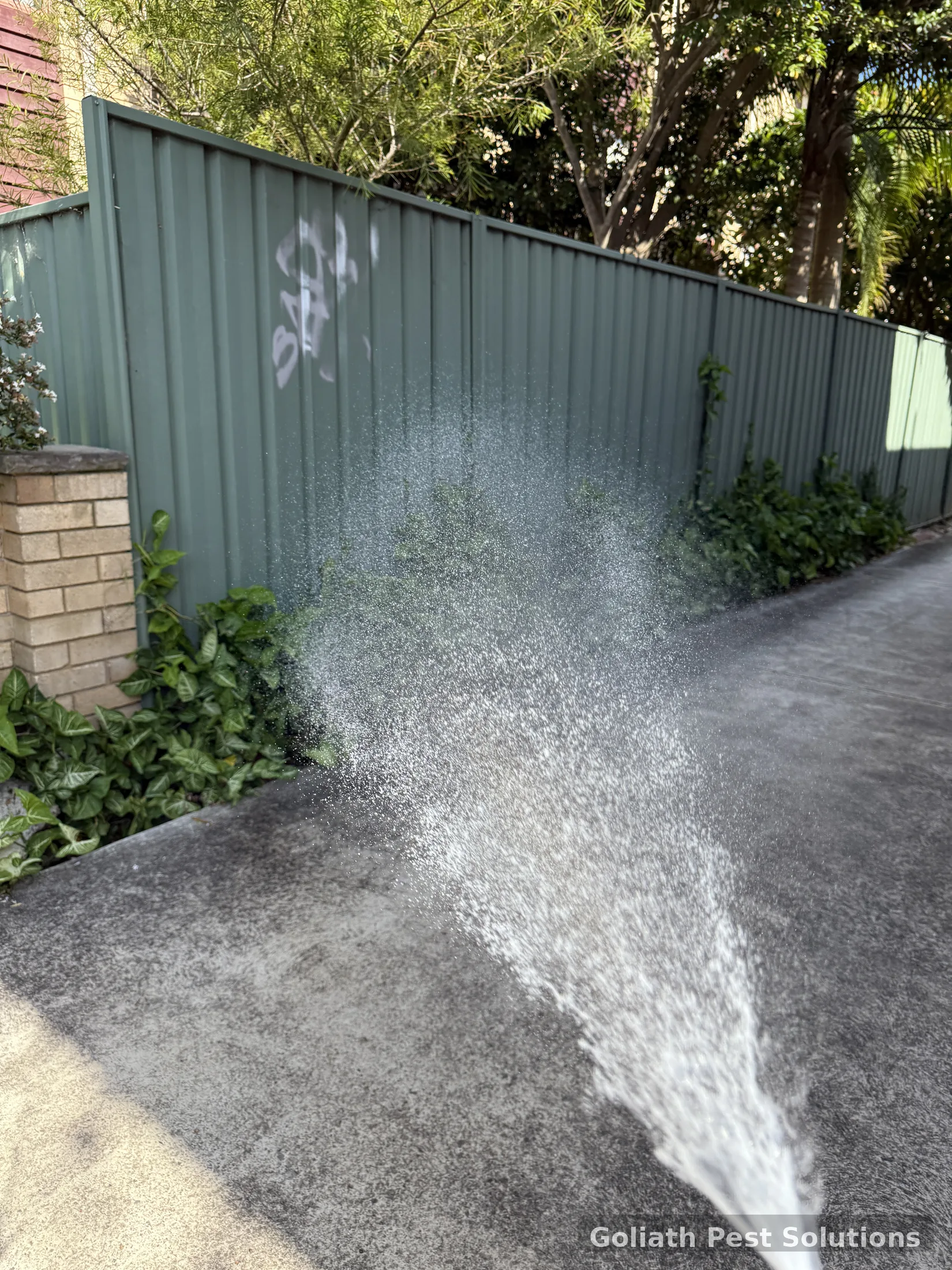
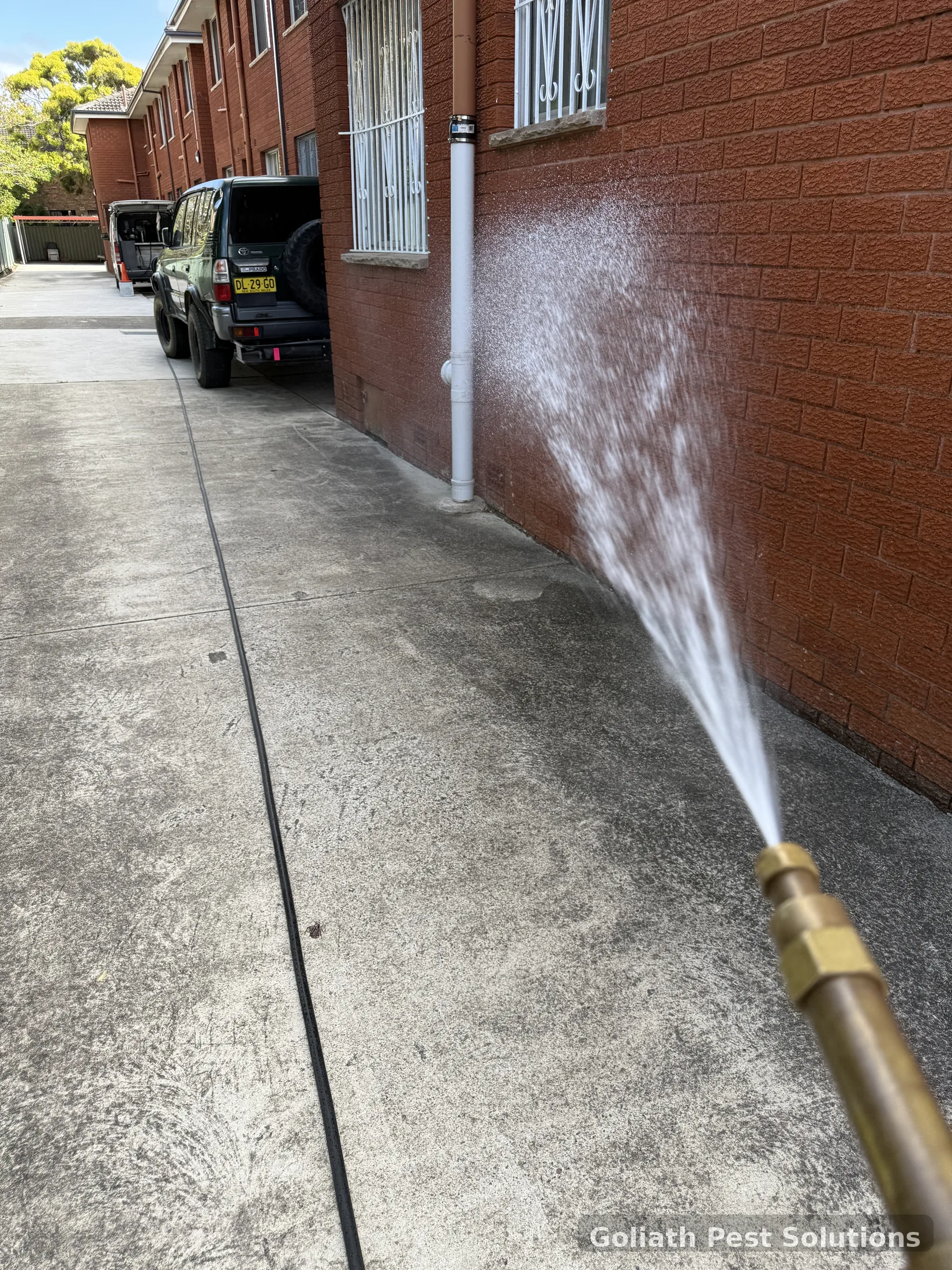
Exterior perimeter treatment work at a Sydney propertyChemical treatment application beside an external wallExisting property perimeter showing previous termite treatment points
CLUES WORTH CHECKING

Build a treatment-history picture from several sources

Durable notice

A notice may identify a treatment system, product, date or service provider. Record the information, but also check whether subsequent work altered the property.

Drill holes and treatment points

Drilling around paved perimeters can suggest previous chemical work, but the pattern alone may not establish product, dosage, treatment date or complete scope.

Bait or monitoring stations

In-ground stations can indicate a monitoring or baiting programme. Their presence does not tell you whether the programme is currently serviced.

Reports and invoices

Old inspection reports, treatment certificates, warranties and invoices can clarify what was treated and what ongoing inspections or servicing were required.

ASSESS CURRENT CONDITION

Why the property today matters more than the label on an old treatment

Termite management is affected by what has happened since the original work. Paving may have been replaced, garden beds raised, extensions built, plumbing altered, soil levels changed, subfloor access restricted or landscaping placed against the structure. Any of those changes can affect inspection access and the practical continuity of an older management system.

AS 3660.2 provides guidance for termite management in and around existing buildings and structures. For an existing property with uncertain treatment history, the useful question is not simply “was there ever a barrier?” but “what evidence of management exists now, what areas can be inspected, what risks are present and what further work is appropriate?”

EvidenceWhat it may tell youWhat it does not prove
Old invoiceDate, company, product or general treatment description.That every current risk area was treated or that warranty conditions remain satisfied.
Durable noticeInformation recorded about a termite-management system.That the system has not been altered, bridged or affected by later building work.
Drill patternPossible previous perimeter treatment.Product, treatment depth, age, continuity or current efficacy.
Bait stationsPossible monitoring or baiting programme.That stations are currently serviced, baited or part of an active contract.
Annual inspection reportsUseful history of observations and recommendations over time.Future absence of termites or conditions that changed after the report.
WHEN A NEW QUOTE IS PROPOSED

Ask whether the quote is replacing, extending or rectifying the old system

A new treatment proposal should make clear what it is trying to achieve. Is it treating active termites? Is it installing a new chemical barrier around the accessible perimeter? Is it rectifying gaps in an older treatment? Is it adding a monitoring programme? Those are different scopes.

If you have a written proposal, use Termite Quote Beat to compare the scope before the price. For detailed barrier installation information, see Chemical Termite Barriers Sydney and our post-construction barrier guide.
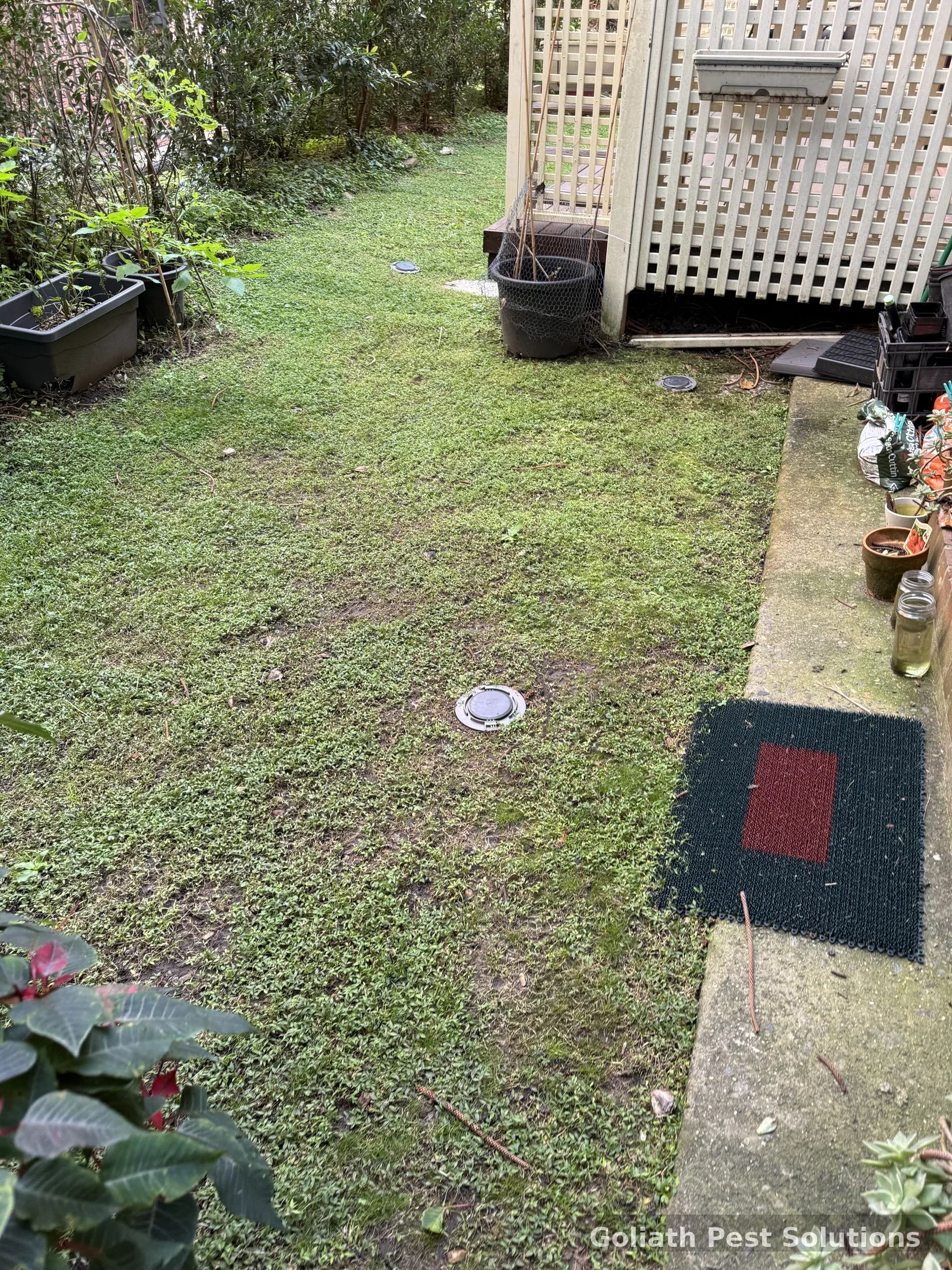
In-ground termite monitoring station at an existing property

Different management systems leave different visible clues. Identification should be based on records and inspection rather than one photograph or surface feature.

CHECK WHAT CHANGED AFTER THE ORIGINAL WORK

Renovations and landscaping can change the management picture

An older termite-management system was designed around the property as it existed at the time. Later work can alter that context. New paving can cover previous treatment points, garden beds can raise soil levels, an extension can create a new junction with the original structure, and plumbing repairs can disturb soil or building areas that formed part of an earlier treatment plan.

When reviewing old records, compare the treatment date with major renovations or external changes. If the property has been substantially altered since the original work, the current inspection should consider those new interfaces rather than assuming the historical scope still describes the entire building.

This is one reason existing-property termite management should be based on present conditions. The history is valuable evidence, but the current building, access and risk factors determine what should be assessed next.

COMMON QUESTIONS

Existing barrier and treatment-history FAQs

If I cannot find a termite barrier certificate, does that mean there is no barrier?

No. Missing paperwork does not prove that no treatment or system exists. It means the history is unclear and should be investigated through records, visible evidence and professional assessment.

What evidence can help identify an old termite treatment?

Useful clues can include durable notices, invoices, treatment certificates, drill points, bait stations, warranty documents, pest reports and information from previous owners or managing agents.

Can an old chemical barrier still be relied on?

That depends on the product, installation, treatment areas, age, site changes, warranty conditions and subsequent inspections. The existence of an old treatment record should not be treated as proof of current continuous protection.

What if paving or landscaping was changed after treatment?

Changes around the building can affect treatment zones, inspection access and continuity. They should be considered when reviewing the current termite-management plan.

Do I need a new barrier if the history is unknown?

Not automatically. First assess the property, existing evidence, risk factors and treatment records. The appropriate response may be inspection, targeted rectification, monitoring or a new management system depending on the findings.

NEXT STEP

Unsure what termite treatment your property already has?

Send Goliath the available reports, notices, invoices or photographs. We can help identify what information is useful, inspect the property where appropriate and discuss any gaps in the current termite-management plan.

Reference context: AS 3660.2:2017, Termite management, Part 2: In and around existing buildings and structures.

Goliath Pest Solutions

Termite Quote Beat by Goliath Pest Solutions

1300 953 966 • info@goliathpestcontrol.com.au
Mortlake NSW 2137 • Sydney-wide service

Active termites • Chemical barriers • Inspections • Guides • Quote review • Contact

RELATED TERMITE RESOURCES

Turn report wording into a clear termite decision

Building reports, old treatment records and visible damage often raise questions that need a termite-specific inspection or treatment scope.

Find termite answers and real projectsSydney termite specialists
Case StudiesActive TermitesTermite BarriersInspectionsTermidor HE
SYDNEY TERMITE SERVICE AREAS Looking for termite treatment in your suburb?
VIEW ALL SERVICE AREAS →
SUBURB NOT LISTED? NO PROBLEM. We service properties across the wider Sydney area.

Enter your postcode and we’ll check whether it falls within our standard service area from Mortlake.

Coverage is an approximate service-area check based on postcode location, not driving distance. Quote review is still available for edge-of-area and larger termite projects.