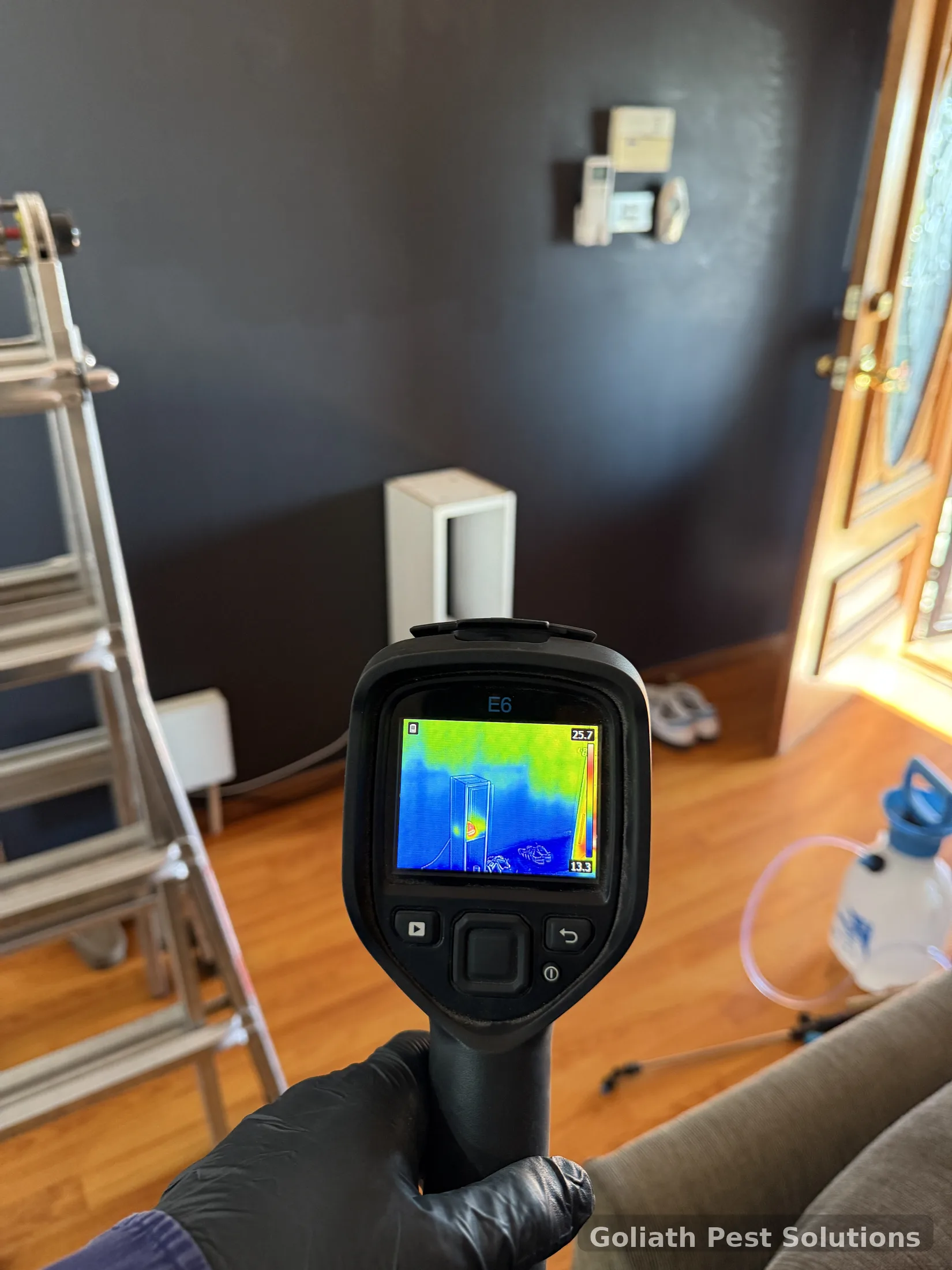
Termite risk is easier to manage when damp areas, drainage, subfloor conditions and inspection access are treated as part of the building picture rather than isolated observations. For Northbridge properties, Goliath Pest Solutions can investigate termite evidence while documenting the moisture and access conditions that may affect future inspection or treatment.
Genuine Goliath Pest Solutions field photography. Image location is not represented as Northbridge unless specifically documented.
Persistent moisture can come from plumbing, roof or gutter issues, drainage, waterproofing, condensation, ground conditions or restricted ventilation. Those causes need the appropriate building response. From a termite perspective, the value of noting moisture is that it can identify areas that deserve closer inspection and ongoing attention.
The assessment should remain disciplined: moisture is a conducive condition, not a diagnosis. A technician still needs to look for termite evidence, understand the construction and record any parts of the building that cannot be inspected. If the damp source is repaired, keep the repair details for future inspections.

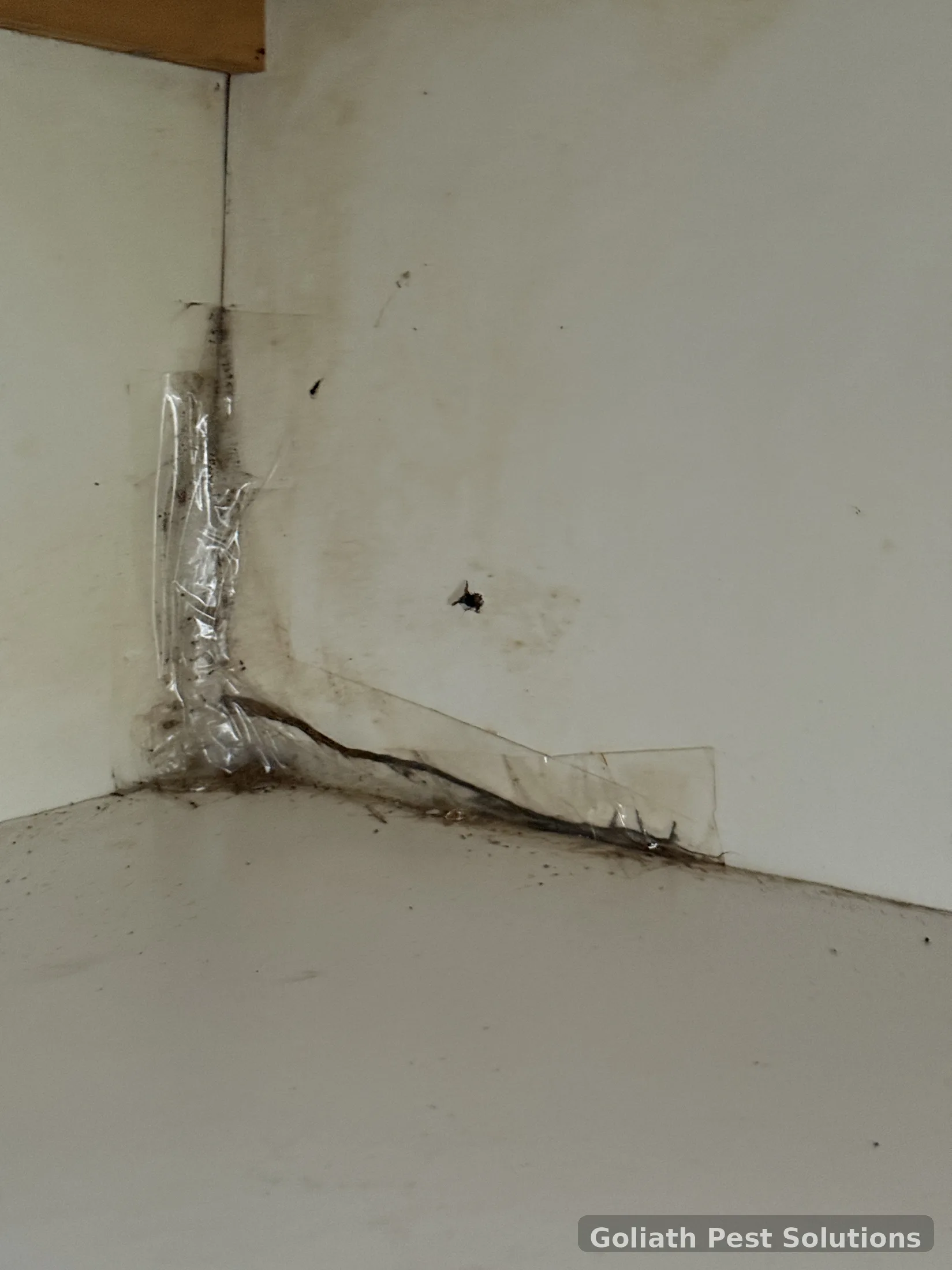
Supporting field image used to explain inspection or treatment considerations. It is not presented as a photographed job in Northbridge.
Northbridge enquiries involving damp or restricted areas benefit from a clear separation between observations, causes and termite evidence.
Determine whether plumbing, drainage, ventilation or another building issue is contributing to persistent damp.
Look for mudding, feeding, damage and other termite evidence around the affected area.
Document low subfloors, fixed finishes, stored goods or other restrictions that reduce visibility.
After rectification or treatment, retain records so future changes can be compared against the current condition.
In a raised-floor property, accessible subfloor areas can provide important information about moisture, ventilation, foundation interfaces, timber contact and termite evidence. In slab construction, external slab edges and penetrations may be more relevant. The inspection should adapt to the actual building rather than follow a single checklist mechanically.
Where a section is inaccessible, the report should explain that limitation and recommend a proportionate next step if the area is important to the termite question. That may be improved access, removal of stored material or further investigation by another trade.
A good inspection does not turn every conducive condition into a treatment sale. It records the condition, looks for termite evidence and recommends treatment only where the findings justify it.
See our Termite Inspections page for the broader inspection process, or Active Termites if live activity has already been found.
If live termites are found, active treatment can proceed while the underlying moisture or drainage issue is also addressed. If no termites are found, building rectification and ongoing inspection may be more appropriate than preventive chemical work that does not address the damp source.
| Situation | What may be assessed | Useful next question |
|---|---|---|
| Termites plus leak | active termite evidence, surrounding timber and timing of plumbing/building repair | How will pest treatment and repair be coordinated without losing evidence? |
| Damp subfloor, no activity | ventilation, drainage, timber contact and inspection visibility | What conducive conditions should be corrected and when should the area be re-inspected? |
| Barrier proposal | perimeter access, soil/concrete interfaces and locations affected by moisture or landscaping | Can the proposed treated zone be installed continuously and kept inspectable? |
| Restricted access | importance of the hidden area and practical ways to improve inspection | Is further access needed before treatment scope is finalised? |
Where a soil-treated zone is appropriate, read our Chemical Barriers guide. If a previous system is uncertain, the unknown barrier or treatment history guide explains what old records and visible evidence can and cannot establish.
A damp subfloor can justify maintenance and closer termite attention without proving an infestation. The useful response is to identify why the area remains damp, improve ventilation or drainage where appropriate, remove avoidable timber-to-soil contact and keep inspection routes clear.
Our Moisture and Termite Risk guide explains this distinction in detail. The How Termites Enter Homes guide also shows why concealed building interfaces and bridged inspection zones matter when assessing access pathways.
If the area later dries after building work, that change is useful information. Keep photographs and invoices so future technicians can distinguish a resolved moisture condition from a new problem.
A quote triggered by moisture should explain the termite evidence supporting the treatment recommendation. If the main recommendation is building rectification and future inspection, that should also be stated plainly.
Where a chemical barrier is proposed, compare exactly which soil or concrete sections are included, how continuity will be achieved and whether moisture-related access limitations affect the work.
Already have a written proposal? Use Termite Quote Beat to submit it for a like-for-like review. If price is still the main uncertainty, our Termite Treatment Cost page explains why construction, access and treatment scope can materially change a quote.
These pages help keep the Sydney service-area structure connected without implying that Goliath operates a separate office in each suburb.
No. Damp conditions can be conducive to termite risk, but current termite activity requires supporting evidence.
If termites are suspected now, an inspection can document the current condition first. Building rectification should then address the underlying moisture source.
No. A barrier is a termite-management measure. Plumbing, drainage, ventilation or waterproofing defects require the appropriate building repair.
The limitation should be documented. If the inaccessible area is important to the finding, improved access or further investigation may be recommended.
NSW Government identifies chemical and physical barriers, resistant materials, construction methods and landscaping as parts of termite risk management used with regular inspections: NSW Government. City of Ryde publishes practical general advice on keeping slab edges clear and subfloor areas ventilated and accessible: Termite guidance.
These sources provide general guidance. A treatment recommendation still needs to be based on the construction, accessible evidence and conditions at the individual property.
We can assess the termite evidence, document conducive conditions and access limitations, and help separate pest treatment from the building work needed to address moisture.
RELATED TERMITE RESOURCES
If you are comparing termite work for a Northbridge property, use these pages to move from inspection or active activity into the appropriate treatment and quote-review pathway.
Find guides, treatments, standards, report help and Sydney service areas.
Compare treatment methods, learn what inspections involve and see genuine termite-management work completed by Goliath Pest Solutions.
Enter your postcode and we’ll check whether it falls within our standard service area from Mortlake.