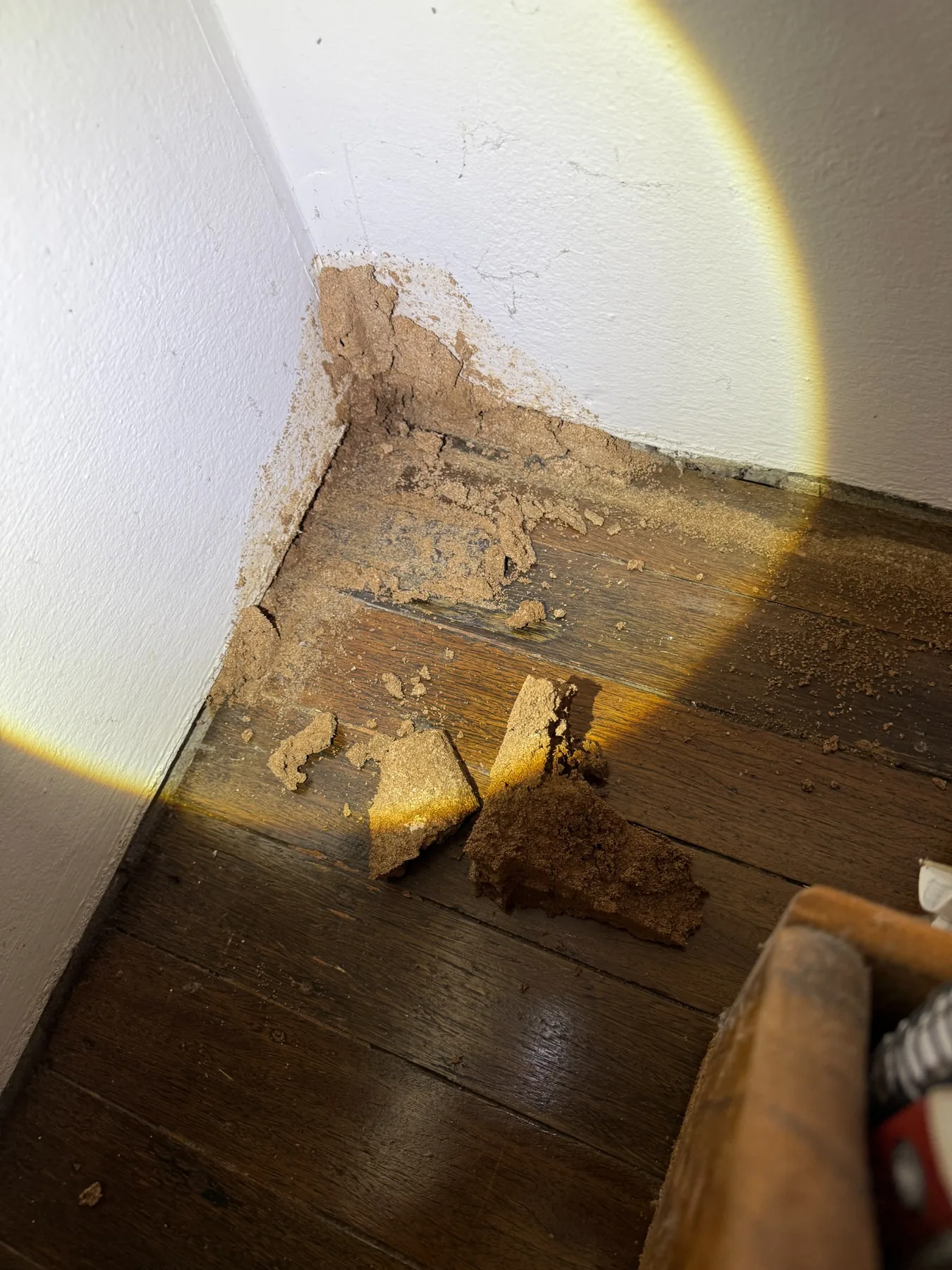
When the treatment history of a Naremburn property is incomplete, the safest approach is to document what can actually be verified rather than treating old drill holes, bait stations or a seller’s recollection as proof of current protection. Goliath Pest Solutions can inspect the property and help rebuild a useful termite record from the evidence that remains.
Genuine Goliath Pest Solutions field photography. Image location is not represented as Naremburn unless specifically documented.
A durable notice may identify a system or treatment date. An invoice may describe a product or general scope. Drill holes can show that treatment was attempted in a particular area. Bait stations may indicate a monitoring program. Each of those clues helps, but none automatically confirms that every current risk area is covered or that warranty and service requirements are still satisfied.
That distinction matters when buying, renovating or deciding whether to spend money on a new barrier. The inspection should record the existing clues, compare them with the current construction and assess whether any gaps or altered areas require further work.

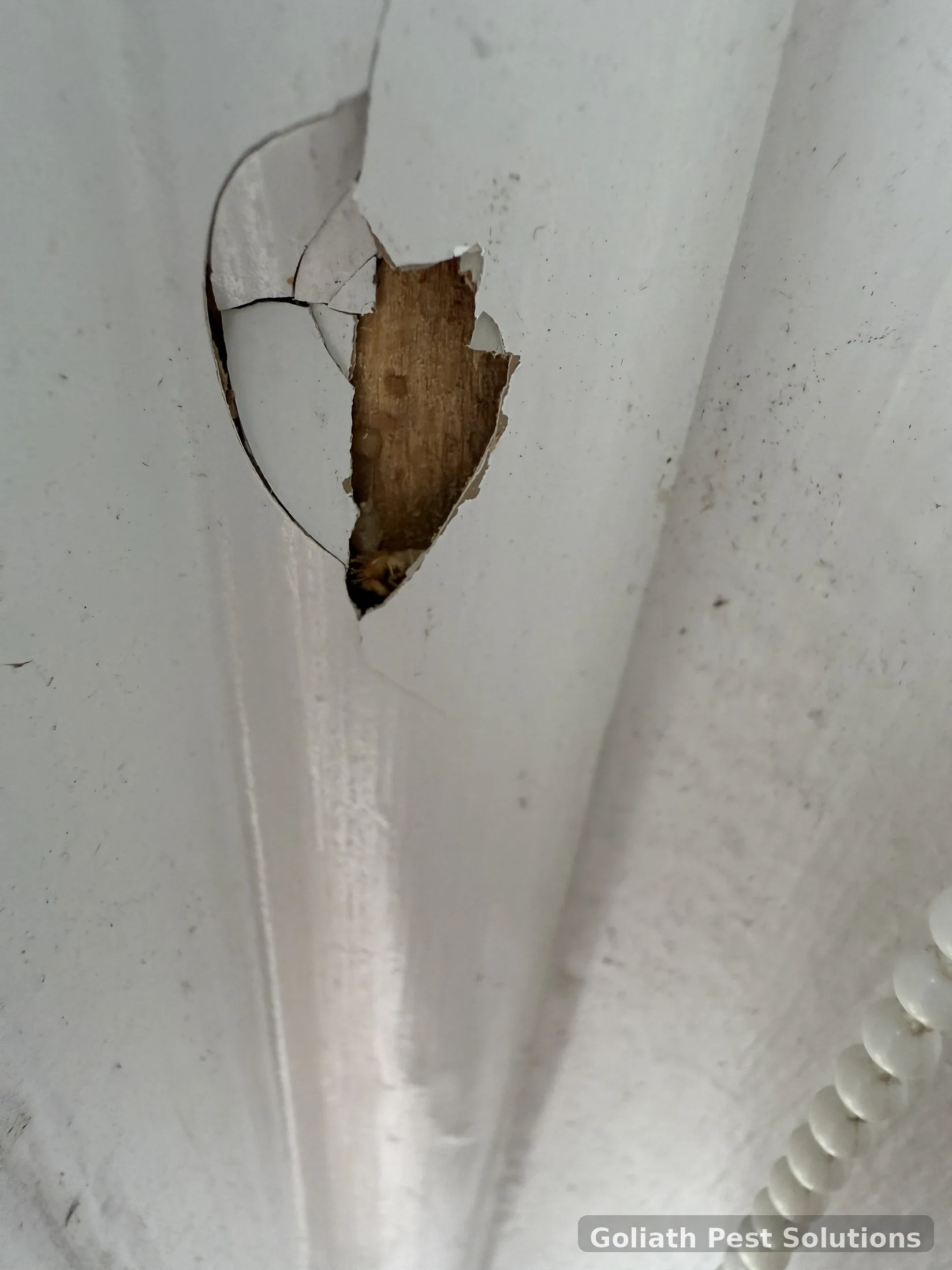
Supporting field image used to explain inspection or treatment considerations. It is not presented as a photographed job in Naremburn.
A few records can materially change the next decision, so gather them before assuming the old system has no value.
Record the system information, date and location of the notice and compare it with the current building.
Check treatment areas, product or system, completion date, exclusions and inspection conditions.
Treat it as evidence of possible previous treatment, not proof of current effectiveness or complete coverage.
Use current inspection findings and construction to decide whether new protection or monitoring is justified.
A property can change substantially after treatment. Paving may be replaced, garden levels raised, extensions added, walls altered or service penetrations introduced. Even where an old system is documented, those changes can affect inspection access and treatment continuity.
The technician should therefore look at the current property, not merely the old paperwork. If the records are useful, retain them and update the file with new work so future owners and inspectors have a more complete history.
An incomplete history is not a reason to invent certainty. The report can state what was observed, what documents establish and which parts of the previous system remain unknown.
See our Termite Inspections page for the broader inspection process, or Active Termites if live activity has already been found.
If the existing system cannot be verified or the building has changed, a new barrier, monitoring program or other work may be appropriate. But the scope should be based on current inspection and access rather than a blanket assumption that everything must start again.
| Situation | What may be assessed | Useful next question |
|---|---|---|
| Old barrier appears present | records, visible treatment evidence, construction changes and current inspection | Which parts of the old treatment can be verified and which cannot? |
| No treatment records | current property construction, activity evidence and practical protection options | What new system would address today’s risk areas? |
| Stations still in ground | station condition, servicing records and whether an active contract exists | Are these stations part of a maintained monitoring program or only abandoned hardware? |
| Renovation since treatment | new footprint, paving, penetrations and interfaces | Which changes may have interrupted the original treatment or inspection zone? |
Where a soil-treated zone is appropriate, read our Chemical Barriers guide. If a previous system is uncertain, the unknown barrier or treatment history guide explains what old records and visible evidence can and cannot establish.
That statement may be completely genuine, but it is not enough to define a current treatment system. Ask for invoices, warranty information, durable-notice details, inspection reports and service records. If those documents cannot be found, photograph any visible treatment clues and have them assessed.
Our Existing Termite Barrier or Treatment History Unknown? guide explains what old records can and cannot prove. The Records, Certificates & Durable Notices page provides a practical list of information worth retaining.
For buyers, this approach turns an uncertain history into a documented due-diligence question. You may still decide to install new protection, but the decision will be based on current evidence rather than fear created by missing paperwork.
If a contractor proposes a complete new system because records are missing, ask what parts of the property were inspected, what previous treatment evidence was found and why the proposed scope is appropriate for the current construction.
A quote that acknowledges uncertainty can be stronger than one that claims to know what cannot be verified. Look for clear treatment areas, assumptions, exclusions and future inspection requirements.
Already have a written proposal? Use Termite Quote Beat to submit it for a like-for-like review. If price is still the main uncertainty, our Termite Treatment Cost page explains why construction, access and treatment scope can materially change a quote.
These pages help keep the Sydney service-area structure connected without implying that Goliath operates a separate office in each suburb.
Not reliably on their own. Drill patterns can indicate possible previous treatment, but product, age, concentration, depth and continuity normally require records or other evidence.
Not necessarily. A durable notice can record termite-management information, but warranty status may depend on provider terms, inspections, alterations and time.
First determine whether they are part of a current monitoring program or have useful service records. Their presence alone does not prove they are active or maintained.
Yes. Send the available documents and new proposal so the treatment areas, system and assumptions can be compared.
NSW Government recommends pest inspection as part of property due diligence where termite information is needed: Pre-purchase inspection reports. NSW EPA provides current consumer guidance on engaging licensed pest-management technicians: NSW EPA.
These sources provide general guidance. A treatment recommendation still needs to be based on the construction, accessible evidence and conditions at the individual property.
Send the records you have or arrange an inspection. We can document the current evidence and help decide whether the old system can still inform a sensible new treatment scope.
RELATED TERMITE RESOURCES
If you are comparing termite work for a Naremburn property, use these pages to move from inspection or active activity into the appropriate treatment and quote-review pathway.
Find guides, treatments, standards, report help and Sydney service areas.
Compare treatment methods, learn what inspections involve and see genuine termite-management work completed by Goliath Pest Solutions.
Enter your postcode and we’ll check whether it falls within our standard service area from Mortlake.