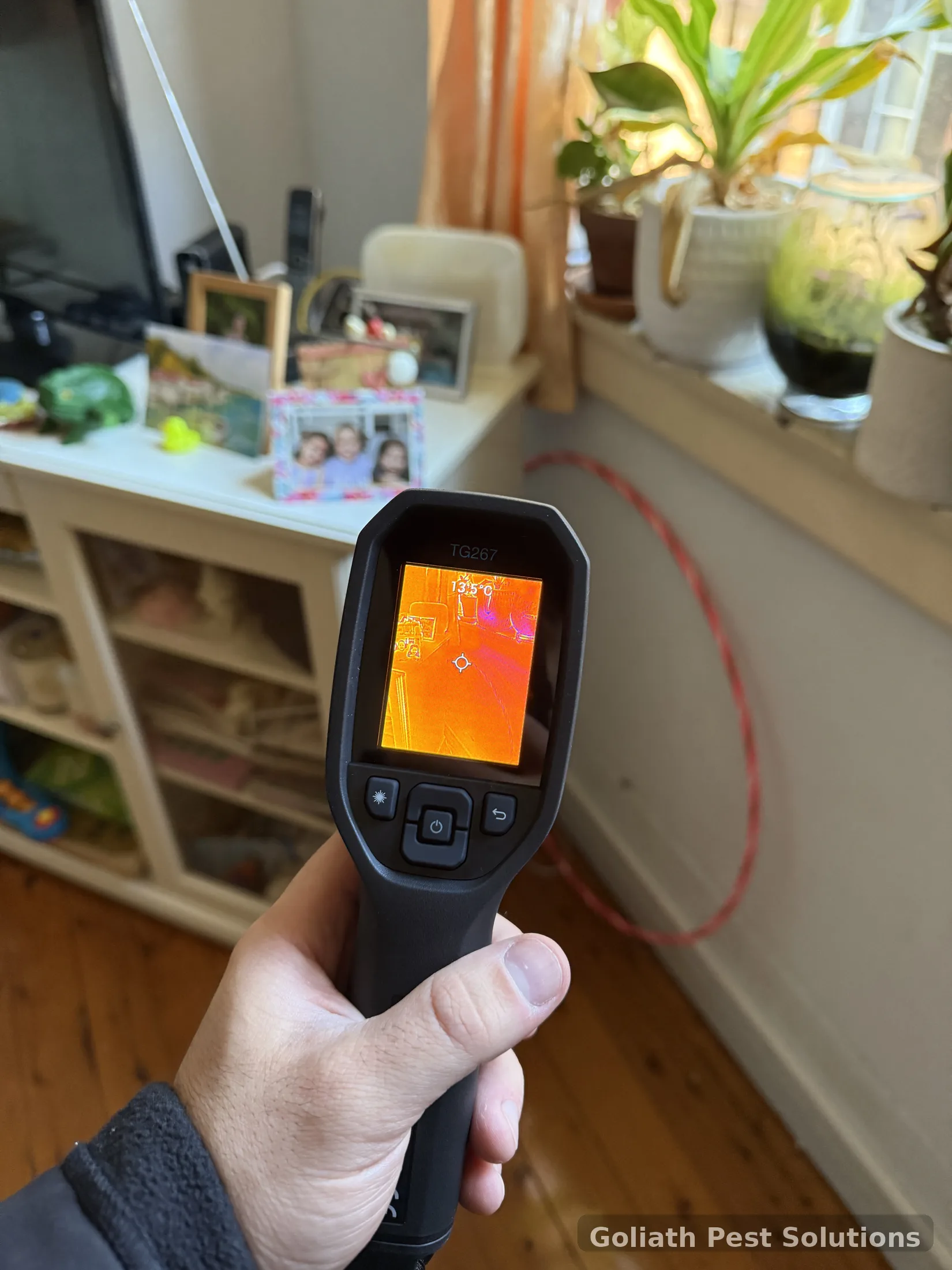
A termite concern in Artarmon can arise from a home, strata property, commercial premises or a pre-purchase report. Whatever the property type, the useful first question is the same: what evidence is accessible, what parts of the building are relevant to the finding, and what does the proposed treatment actually need to achieve?
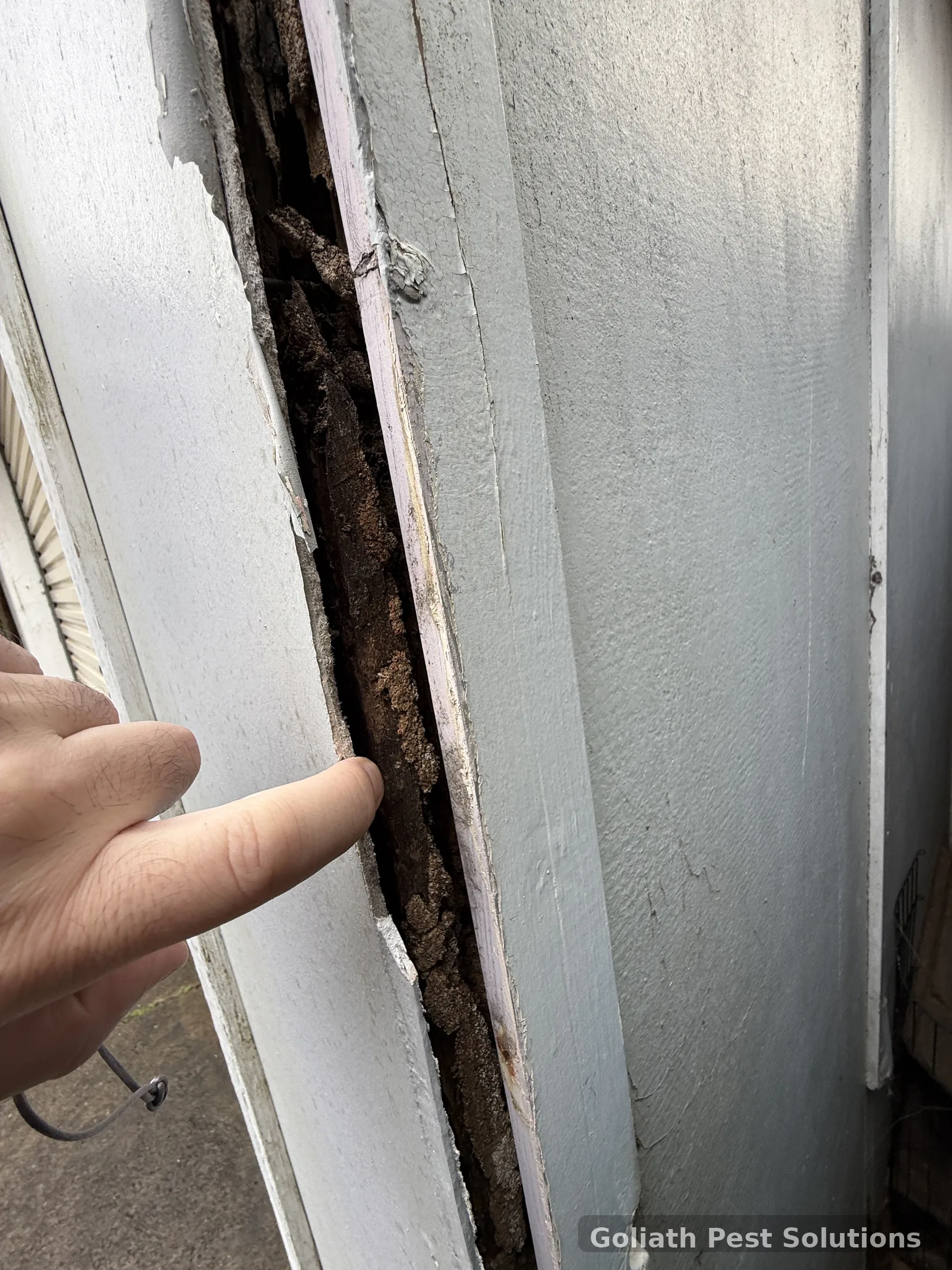
Genuine Goliath Pest Solutions field photography. Image location is not represented as Artarmon unless specifically documented.
In a detached home, one owner may be able to approve inspection and treatment across the whole property. In strata or commercial settings, access may involve common property, tenanted areas, plant rooms, landscaped zones or building-management approval. That does not change termite biology, but it can change how an inspection is planned and how a treatment scope is documented.
For Artarmon enquiries we therefore separate the technical termite question from the access and approval question. First identify activity, damage, conducive conditions and relevant construction. Then document which areas can be treated, which areas require additional access and who needs the report or proposal.

Supporting field image used to explain inspection or treatment considerations. It is not presented as a photographed job in Artarmon.
A structured process helps prevent the administrative side of a property from obscuring the technical evidence.
Record live activity, damage, mudding, moisture or report findings before deciding on treatment.
Identify private, common, tenancy and restricted areas that affect inspection or installation.
Separate colony treatment, longer-term protection, monitoring and rectification items.
Write inclusions, exclusions, follow-up requirements and access assumptions clearly for all parties.
Termite inspections are affected by what can actually be seen and reached. Furniture, stored goods, fixed linings, locked rooms, ceiling access, subfloor restrictions and landscaped areas can all limit the assessment. In a managed property, those limitations should be documented so the next decision is based on known information rather than a false impression of complete access.
If another consultant has already produced a building or pest report, provide it before the inspection. It may identify areas requiring follow-up, previous observations or access limitations that should be checked again.
An inspection can still be useful when access is imperfect, provided the limitations are clear. The report should distinguish what was observed from what could not be inspected.
See our Termite Inspections page for the broader inspection process, or Active Termites if live activity has already been found.
The treatment itself may involve active-termite management, chemical barriers, baiting or monitoring, but managed buildings also need a practical plan for access, communication and follow-up.
| Situation | What may be assessed | Useful next question |
|---|---|---|
| Activity in one tenancy or lot | evidence in the affected area plus accessible adjoining interfaces | Does the inspection need access beyond the area where termites were first found? |
| External barrier work | perimeter soil, paving, concrete and areas controlled by different parties | Who authorises drilling, trenching or access to common areas? |
| Monitoring program | station locations, responsibility for access and service intervals | Who will maintain access to stations and receive service records? |
| Pre-purchase or due diligence | existing reports, visible damage, treatment history and access limitations | What further information is needed before the buyer relies on the finding? |
Where a soil-treated zone is appropriate, read our Chemical Barriers guide. If a previous system is uncertain, the unknown barrier or treatment history guide explains what old records and visible evidence can and cannot establish.
Finding termites in a single room, tenancy or accessible section does not automatically define the full extent of the problem. The activity may relate to concealed routes or interfaces that continue beyond the initial area. The first inspection should therefore consider accessible adjoining construction and record where further access is needed.
If the property is being purchased, NSW Government notes that a building inspection and pest inspection answer different questions. Our termite inspection before buying guide explains how specialist termite information can sit alongside a general building report.
For a managed building, clear communication reduces duplication. Photographs, marked locations, access notes and written treatment areas allow strata, owners, agents and technicians to work from the same information.
For strata or commercial work, compare more than the treatment product. Check whether the proposal includes all relevant areas, how access will be coordinated, who receives documentation and what follow-up visits are included.
If quotes assume different access or different portions of the building, they are not like-for-like even if the product name is the same. Those scope differences should be resolved before price becomes the deciding factor.
Already have a written proposal? Use Termite Quote Beat to submit it for a like-for-like review. If price is still the main uncertainty, our Termite Treatment Cost page explains why construction, access and treatment scope can materially change a quote.
These pages help keep the Sydney service-area structure connected without implying that Goliath operates a separate office in each suburb.
An inspection can document the accessible area, but the limitations matter. If relevant common property or adjoining areas cannot be inspected, further access may be recommended.
That depends on ownership and management arrangements, but the people responsible for approving access, rectification or treatment should receive the relevant findings and scope.
It can if the treatment areas, approvals and responsibilities are clearly defined. The proposal should avoid ambiguity about who authorises each part of the work.
Yes. Upload the written proposal and we can compare treatment areas, method, exclusions, monitoring and warranty conditions like-for-like.
NSW Government explains why pest inspection can provide information beyond a general building report: Pre-purchase inspection reports. NSW EPA explains how consumers can check pest-management licensing: Engaging a pest management technician.
These sources provide general guidance. A treatment recommendation still needs to be based on the construction, accessible evidence and conditions at the individual property.
Whether the property is a home, strata lot or managed premises, we can inspect the termite question, document access limitations and prepare or review a clear written treatment scope.
RELATED TERMITE RESOURCES
If you are comparing termite work for a Artarmon property, use these pages to move from inspection or active activity into the appropriate treatment and quote-review pathway.
Find guides, treatments, standards, report help and Sydney service areas.
Compare treatment methods, learn what inspections involve and see genuine termite-management work completed by Goliath Pest Solutions.
Enter your postcode and we’ll check whether it falls within our standard service area from Mortlake.