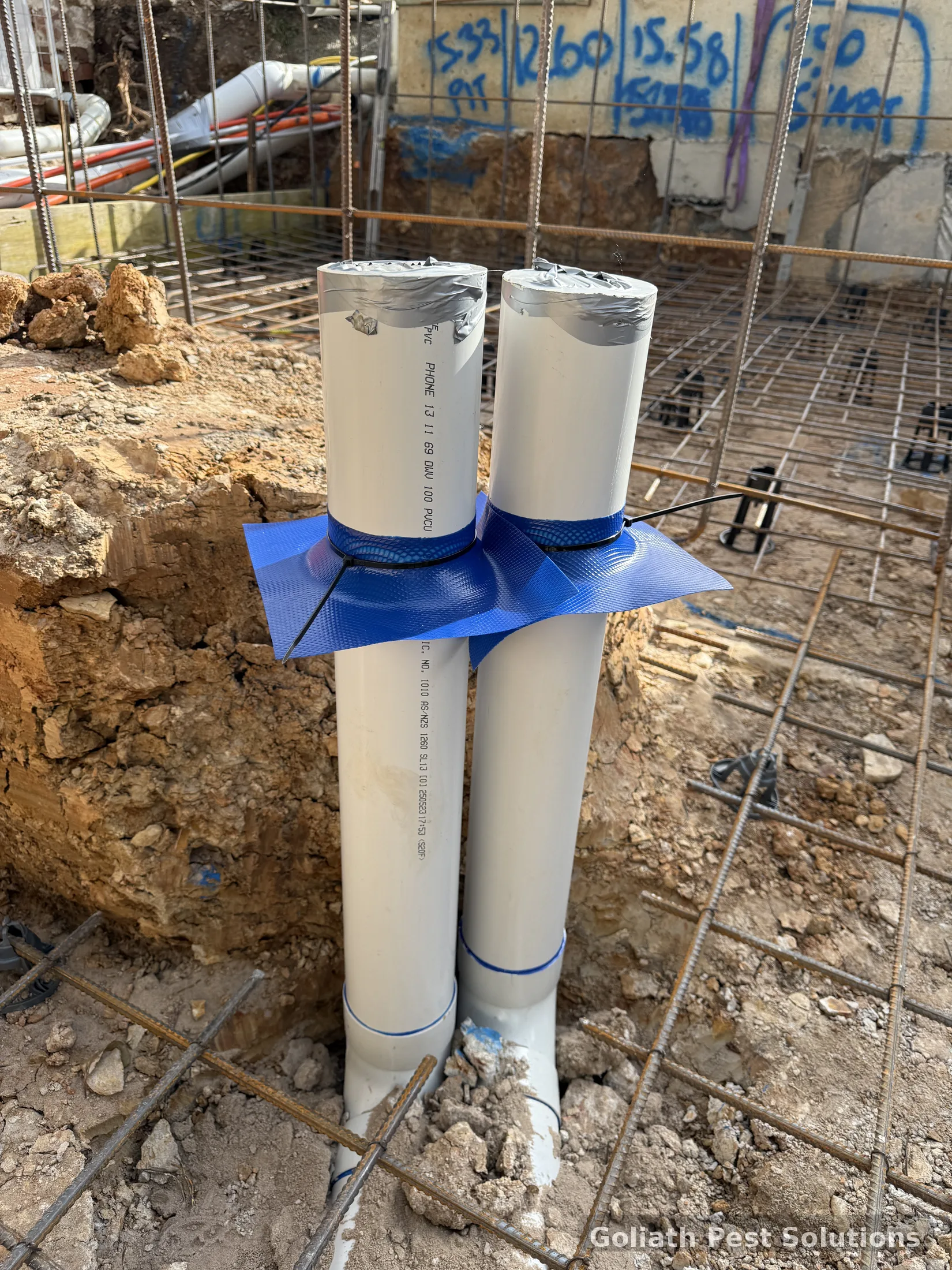
Renovations, extensions and changes around an existing building can complicate termite management because new slabs, paving, walls, penetrations or landscaping may interact with older protection. For Gladesville properties, Goliath Pest Solutions can assess active termites, existing treatment evidence and the way proposed building work changes future inspection or treatment access.
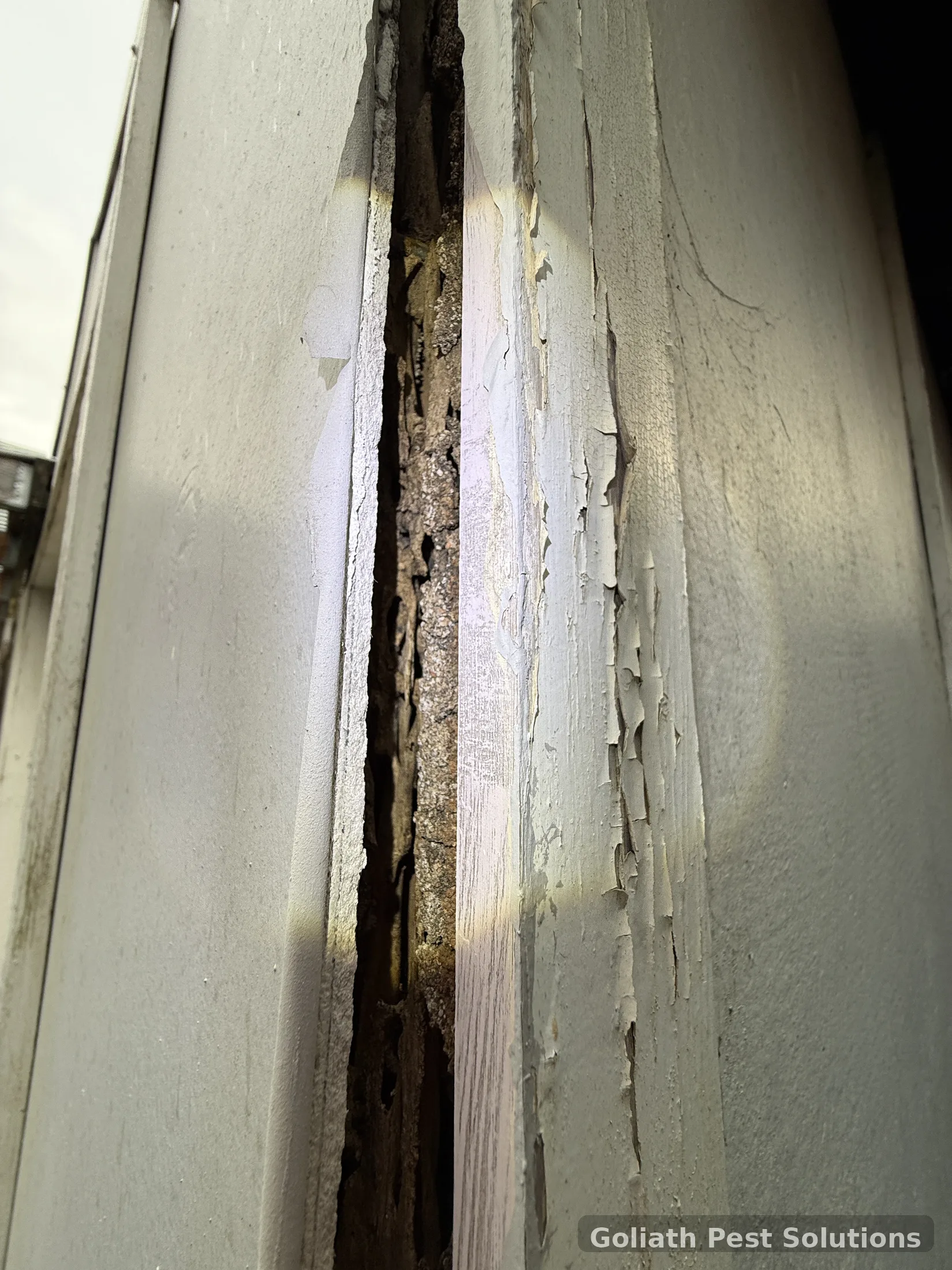
Genuine Goliath Pest Solutions field photography. Image location is not represented as Gladesville unless specifically documented.
A property may have an old chemical barrier, physical system, drill pattern or durable notice that related to the building before later alterations. Once an extension, new paving, deck, service route or other work is introduced, it is important to understand whether the previous system still provides useful continuity around the changed footprint.
This does not mean every renovation automatically requires a completely new barrier. It means the new and existing construction should be considered together. Treatment records, plans, exposed interfaces and access limitations can help determine which areas can be retained, supplemented, inspected or redesigned.

Supporting field image used to explain inspection or treatment considerations. It is not presented as a photographed job in Gladesville.
The best sequence depends on whether termites are active now, whether old protection can be verified and what the building work is changing.
Assess and manage current activity before demolition or construction destroys useful evidence.
Plan termite-management details around penetrations, junctions and interfaces while they are accessible.
Check whether new levels could conceal slab edges, bridge inspection zones or restrict future treatment access.
Review what is documented about the existing system and identify where continuity may be altered by the project.
Before work begins, an inspection can document accessible evidence of termite activity, damage and previous treatment. This is particularly useful where walls, floors, decks or landscaped areas will soon be removed or rebuilt.
During planning, photographs, plans and treatment records help the installer understand where new construction meets the existing structure. After completion, keep the updated records so future technicians are not forced to infer what happened behind finished surfaces.
Termite management is easier when inspection and construction information are available at the same time. Once finishes are complete, previously visible details may become concealed and harder to verify.
See our Termite Inspections page for the broader inspection process, or Active Termites if live activity has already been found.
A Gladesville renovation may need active-termite work first, construction-stage protection during the project and post-construction treatment or inspection after completion. The exact sequence depends on what already exists and what is being changed.
| Situation | What may be assessed | Useful next question |
|---|---|---|
| Active termites before renovation | activity, mud leads, damaged materials and timing of demolition | What should be treated or documented before evidence is removed? |
| New building work | construction details, penetrations, slab or footing interfaces and installation timing | Which termite-management measures need to be installed before the next building stage? |
| Existing perimeter after changes | old treatment records, new paving, landscaping and accessible soil or concrete | Where has the original treatment path been interrupted or made inaccessible? |
| Post-construction review | completed interfaces, durable notice, treatment documentation and future access | What records should be retained and what ongoing inspection is required? |
Where a soil-treated zone is appropriate, read our Chemical Barriers guide. If a previous system is uncertain, the unknown barrier or treatment history guide explains what old records and visible evidence can and cannot establish.
The important question is not simply whether the original house “had a barrier”. A previous treatment may have been designed for a different footprint. If a new room, slab, deck or external finish changes the building perimeter, the original treatment history must be interpreted against the new geometry.
Our Termite Management for Extensions & Renovations page goes deeper into this planning process. For new work, the AS 3660.1 guide explains the broader new-building context without pretending that one method suits every detail.
The practical objective is continuity, inspectability and documentation. Future owners and technicians should be able to understand what was installed, where it applies and which parts of the property still require regular visual inspection.
A renovation-related termite quote should clearly separate work to the existing building from work associated with the new construction. If the proposal is staged, the timing of each stage should be understandable.
Look for explicit treatment areas, construction assumptions, exclusions, product or system details and any builder coordination required. If the quote relies on plans, verify what happens if the on-site conditions differ.
Already have a written proposal? Use Termite Quote Beat to submit it for a like-for-like review. If price is still the main uncertainty, our Termite Treatment Cost page explains why construction, access and treatment scope can materially change a quote.
These pages help keep the Sydney service-area structure connected without implying that Goliath operates a separate office in each suburb.
Yes, where termite-management measures form part of the new building work. Early coordination can preserve access to interfaces that become difficult to reach after construction.
No conclusion should be made without reviewing the old system and the changed building footprint. The existing treatment may not cover new or altered interfaces.
Sometimes, but demolition can remove or disturb useful evidence. If termites are suspected before work, assessment before major disturbance is generally more informative.
Keep treatment proposals, completion records, product or system information, photographs where available, durable-notice details, inspection reports and warranty conditions.
NSW Government outlines termite-management approaches for homes and emphasises regular inspection alongside protection systems: Home building safety and standards. NSW EPA provides licensing guidance for engaging pest management technicians: NSW EPA.
These sources provide general guidance. A treatment recommendation still needs to be based on the construction, accessible evidence and conditions at the individual property.
Send plans or an existing written quote for review, or arrange an inspection before work removes important evidence. We can help connect the existing building, the proposed work and the termite-management scope.
RELATED TERMITE RESOURCES
If you are comparing termite work for a Gladesville property, use these pages to move from inspection or active activity into the appropriate treatment and quote-review pathway.
Find guides, treatments, standards, report help and Sydney service areas.
Compare treatment methods, learn what inspections involve and see genuine termite-management work completed by Goliath Pest Solutions.
Enter your postcode and we’ll check whether it falls within our standard service area from Mortlake.