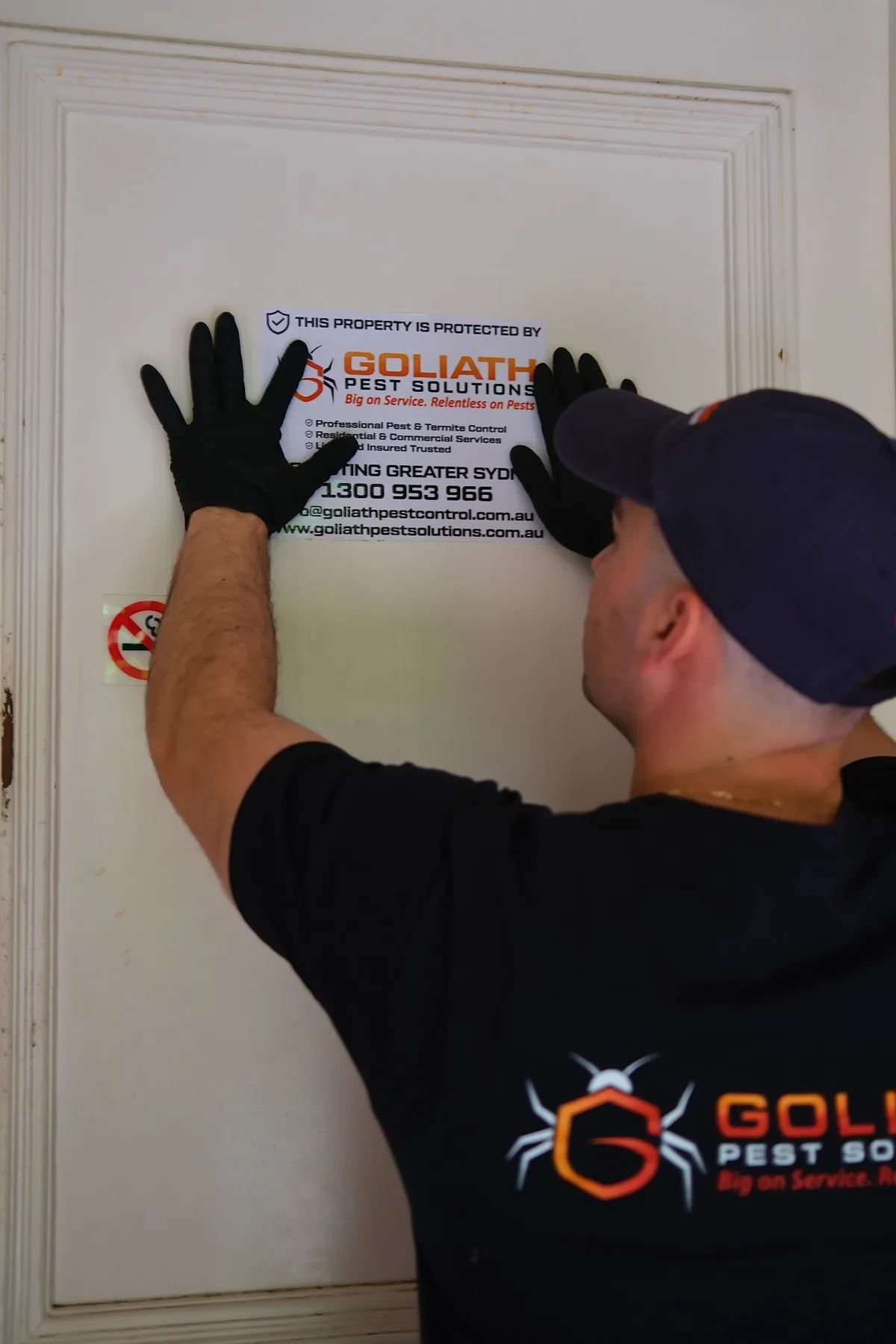
Termite management works best when the inspection, treatment records and future inspection requirements stay with the property. For Hunters Hill homeowners, Goliath Pest Solutions can assess current termite evidence and provide documentation that makes future treatment history easier to understand rather than leaving the next owner with unexplained drill holes or missing records.
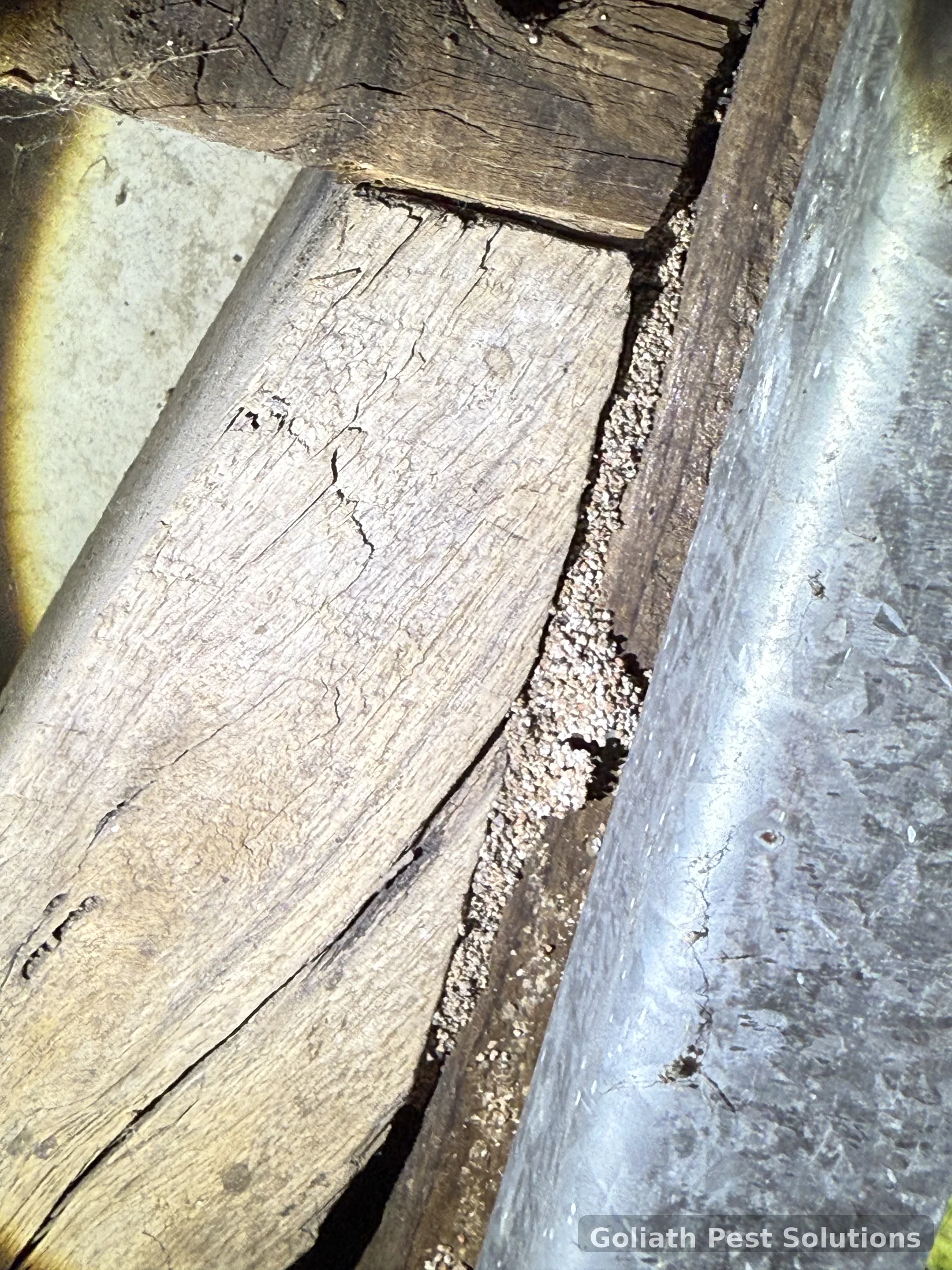
Genuine Goliath Pest Solutions field photography. Image location is not represented as Hunters Hill unless specifically documented.
A written proposal explains what is intended before work starts. A completion record confirms what was actually done. A durable notice can record system information at the property. Inspection reports track findings and limitations over time. Together, those records reduce uncertainty if the home is later sold, renovated or inspected by another technician.
Documentation is especially valuable when treatment areas become concealed by finishes or landscaping. A future inspector may not be able to see how a soil-treated zone was installed or whether an old drill pattern related to a complete barrier. The retained records provide context that visual inspection alone cannot reconstruct.

Supporting field image used to explain inspection or treatment considerations. It is not presented as a photographed job in Hunters Hill.
The service should solve today’s termite question while leaving enough information for future inspection, maintenance and property transactions.
Record the findings, access limitations and proposed treatment areas.
Retain details of work actually performed and any variations from the original proposal.
Keep inspection dates, station servicing and any rectification recommendations.
Provide the history so new work or due diligence can start from documented facts.
A treatment record is not a substitute for inspecting the property today. Construction can change, conducive conditions can develop and new termite activity can occur after earlier work. The technician should consider the records alongside current evidence.
Conversely, current inspection is stronger when records are available. Knowing where a previous barrier was installed or when monitoring stations were last serviced helps the technician distinguish maintained protection from abandoned or altered systems.
Documentation does not guarantee that termites will never enter a property. Its value is traceability: future decisions can be based on known work, known dates and known limitations rather than guesswork.
See our Termite Inspections page for the broader inspection process, or Active Termites if live activity has already been found.
Whether the property receives active-termite treatment, a chemical barrier or monitoring, the service record should identify the key areas and ongoing obligations. Vague wording becomes less useful with every year that passes.
| Situation | What may be assessed | Useful next question |
|---|---|---|
| Active-termite treatment | activity locations, product/method, follow-up findings and whether longer-term protection is separate | What record will show where activity was treated and what follow-up occurred? |
| Chemical barrier | treated sections, installation method, product/system and inspection conditions | Will the completion documentation identify the treatment path? |
| Baiting or monitoring | station locations, service dates, activity and replenishment | Who retains the monitoring history if the property changes hands? |
| Annual inspections | date, findings, access limitations and rectification recommendations | How are changes in the property condition tracked over time? |
Where a soil-treated zone is appropriate, read our Chemical Barriers guide. If a previous system is uncertain, the unknown barrier or treatment history guide explains what old records and visible evidence can and cannot establish.
A durable notice can be valuable, but it may not contain the full proposal, exact treatment path, warranty history or later alterations. Photograph the notice, keep the details and use them as one part of the current inspection rather than treating the notice as proof that all protection remains unchanged.
Our Termite Management Records, Certificates & Durable Notices guide explains the different records and what each can tell you. If the broader treatment history remains unclear, see Existing Barrier or Treatment History Unknown?.
When new treatment is completed, build a better record set from that point forward. This makes annual inspections, future renovations and any eventual property sale easier to manage.
A quote should specify not only the price and product but also the documentation and follow-up that form part of the service. Ask whether a completion record, durable notice and photographs are provided where relevant.
Warranty wording also matters. Check the term, eligibility conditions, inspection frequency and exclusions rather than relying on a headline number without understanding what keeps the warranty valid.
Already have a written proposal? Use Termite Quote Beat to submit it for a like-for-like review. If price is still the main uncertainty, our Termite Treatment Cost page explains why construction, access and treatment scope can materially change a quote.
These pages help keep the Sydney service-area structure connected without implying that Goliath operates a separate office in each suburb.
Keep the proposal, completion record, durable notice information, product/system details, warranty terms, inspection reports, monitoring records and relevant photographs.
It can provide useful system information, but current protection depends on the actual installed scope, later alterations, maintenance and current inspection findings.
Providing relevant treatment and inspection history can help the buyer and their inspectors understand previous work. Legal disclosure obligations should be discussed with the appropriate conveyancing professional.
Yes. Historic documents can help identify what was done and what remains uncertain before new work is proposed.
NSW Government provides general termite-management guidance and notes the continuing role of inspections: NSW Government. NSW EPA explains how to check a pest-management technician’s licence before agreeing to work: NSW EPA.
These sources provide general guidance. A treatment recommendation still needs to be based on the construction, accessible evidence and conditions at the individual property.
We can inspect the current condition, review old documents and make new treatment scopes easier to trace. Good records support better inspections long after the treatment day.
RELATED TERMITE RESOURCES
If you are comparing termite work for a Hunters Hill property, use these pages to move from inspection or active activity into the appropriate treatment and quote-review pathway.
Find guides, treatments, standards, report help and Sydney service areas.
Compare treatment methods, learn what inspections involve and see genuine termite-management work completed by Goliath Pest Solutions.
Enter your postcode and we’ll check whether it falls within our standard service area from Mortlake.