For Glenhaven termite enquiries, one of the most useful distinctions is between a property condition that may encourage concealed termite access and evidence that termites are actually present. Goliath Pest Solutions uses inspection findings, construction details and treatment records to keep those questions separate.
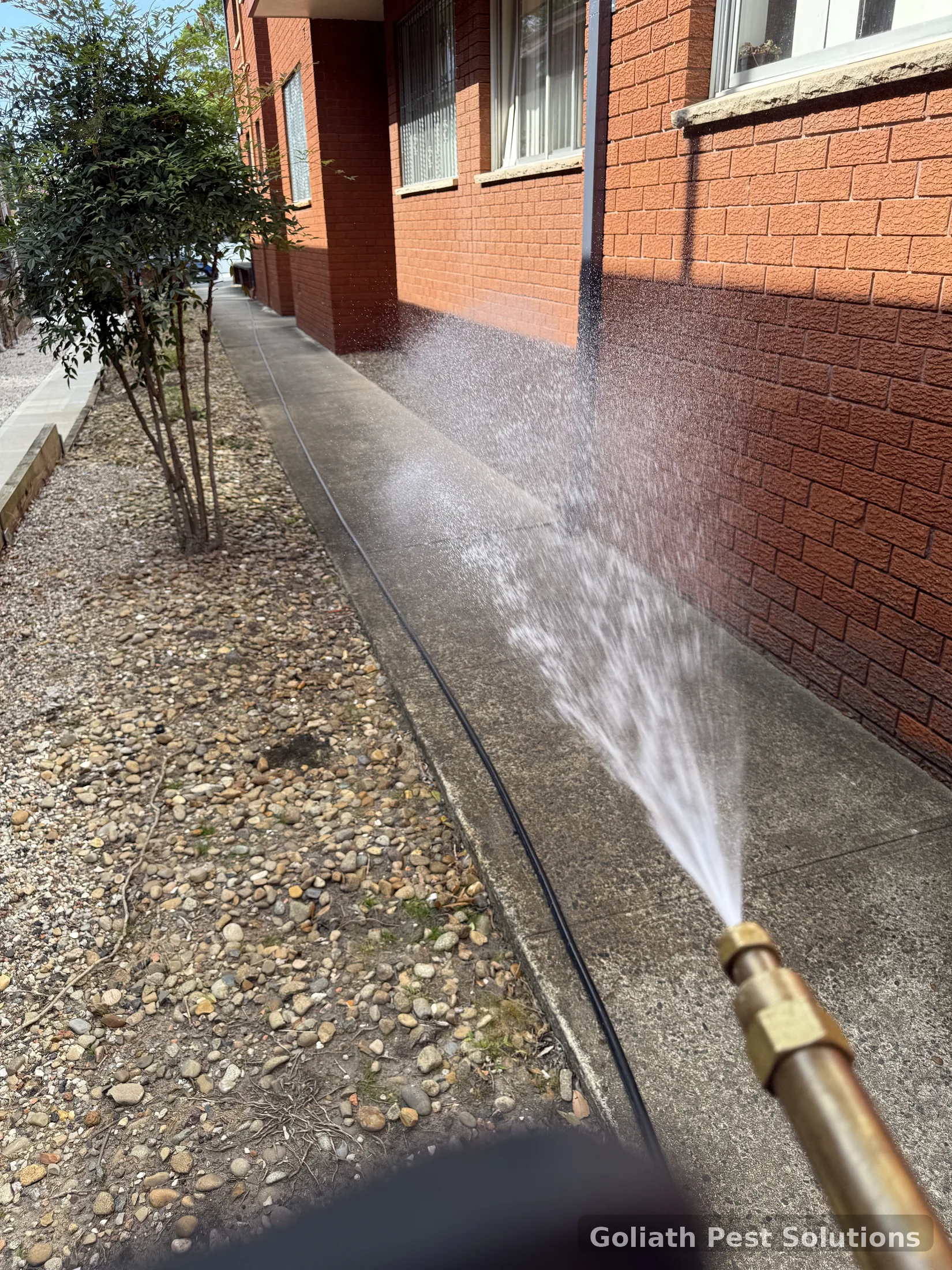
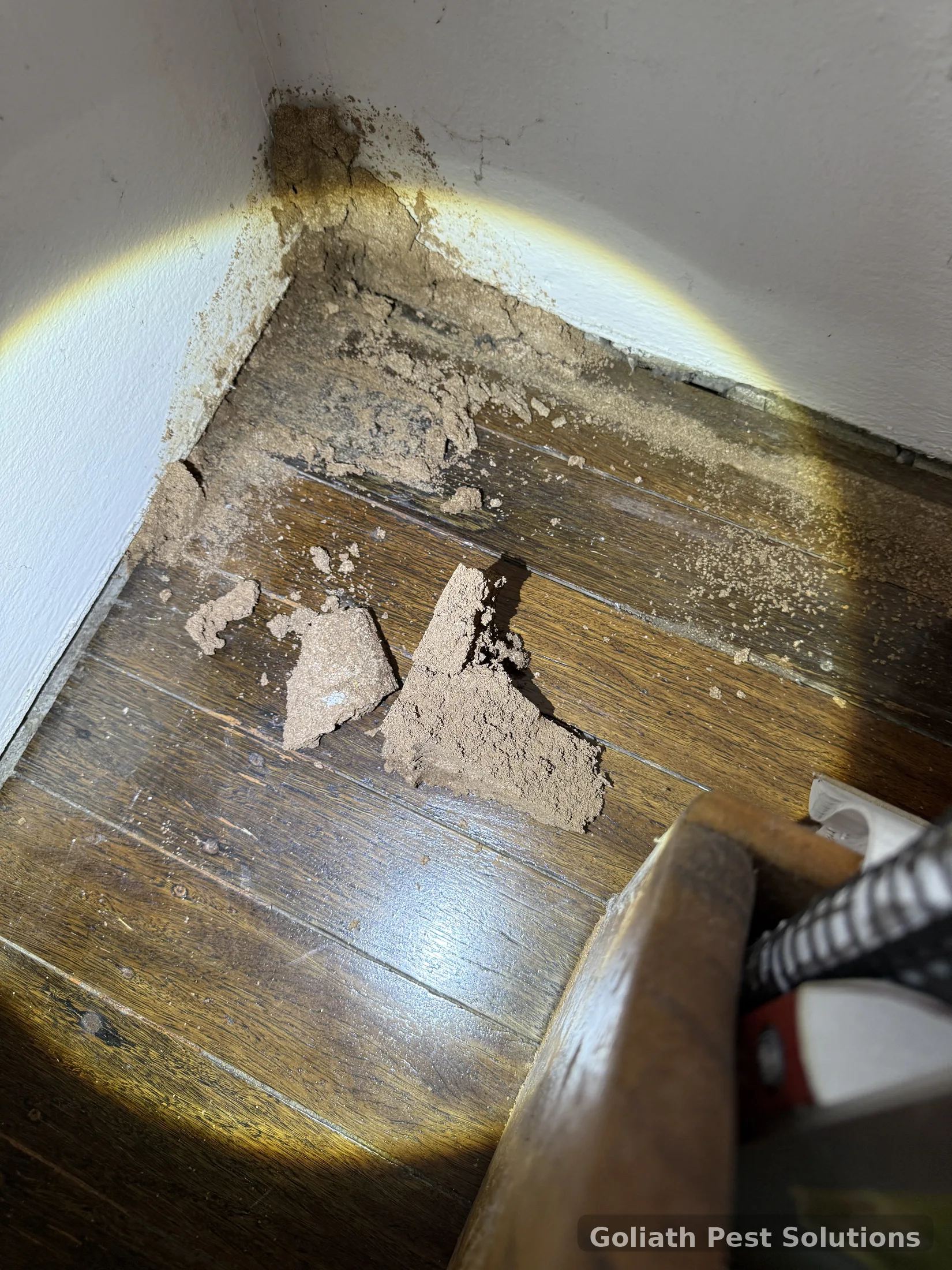
Genuine Goliath Pest Solutions field photography. Image location is not represented as Glenhaven unless specifically documented.
Leaks, poor drainage, damp subfloor areas, garden levels, concealed slab edges and timber close to soil can make inspection more difficult and may contribute to conditions that deserve attention. They do not establish active termites on their own.
The inspection therefore looks for direct termite evidence as well as the surrounding conditions. Correcting a leak or improving drainage can be useful property maintenance, but it should not be presented as a substitute for treatment when live termites are confirmed.

Supporting field image used to explain inspection or treatment considerations. It is not presented as a photographed job in Glenhaven.
Different observations lead to different actions, and several may be needed together.
Treat the active area according to the evidence and avoid unnecessary disturbance before assessment.
Address the moisture source and maintain inspection access while continuing appropriate termite inspections.
Investigate whether activity is current and assess the extent of accessible damage before deciding on treatment.
Review records, current construction and maintenance conditions before assuming the old system is complete.
A moisture meter or thermal camera can support an investigation when interpreted alongside physical evidence, but neither instrument confirms termites by itself. The technician still needs to inspect accessible timber, interfaces, voids and treatment records.
Where dampness, leaks or drainage issues are found, the report should identify them as conditions to address rather than converting them into an unsupported claim that termites are present.
Clear reporting matters because homeowners may need both pest-management work and building maintenance. The report should explain which recommendation relates to termites and which relates to reducing conducive conditions.
See our Termite Inspections page for the broader inspection process, or Active Termites if live activity has already been found.
Where live termites are confirmed, the treatment plan should address that activity. Longer-term protection may then involve barriers or monitoring, while moisture or drainage work is handled as a separate maintenance item.
| Situation | What may be assessed | Useful next question |
|---|---|---|
| Live activity plus leak | termite evidence, leak location, access and treatment sequence | What termite treatment is required now, and what building repair should occur separately? |
| Damp subfloor, no activity | moisture source, ventilation, timber contact and inspection history | What conditions should be rectified and how should the area be monitored? |
| Old damage in dry area | damage characteristics and evidence of current activity | Is there any current termite evidence or is the issue historical damage only? |
| Barrier with altered drainage | current treatment records, soil levels and changed site conditions | Has later landscaping or drainage work affected inspection or treatment continuity? |
Where a soil-treated zone is appropriate, read our Chemical Barriers guide. If a previous system is uncertain, the unknown barrier or treatment history guide explains what old records and visible evidence can and cannot establish.
The useful response is to document the moisture, look for termite evidence and identify the likely building-maintenance issue. It is not appropriate to tell a homeowner that dampness itself proves an infestation.
Our Moisture and Termite Risk guide explains the distinction in more detail, while Termite Inspections covers the broader diagnostic process.
If live termites are also found, both issues can be addressed in a coordinated plan: pest treatment for the termites and rectification of the leak, drainage or access issue for the building.
A written proposal should separate pest-management costs from unrelated building repairs. That makes it easier to understand what the termite contractor is actually supplying.
Where longer-term protection is proposed, compare treatment areas, installation methods, follow-up inspections and any maintenance conditions that affect the warranty.
Already have a written proposal? Use Termite Quote Beat to submit it for a like-for-like review. If price is still the main uncertainty, our Termite Treatment Cost page explains why construction, access and treatment scope can materially change a quote.
These pages help keep the Sydney service-area structure connected without implying that Goliath operates a separate office in each suburb.
No. Moisture can be a relevant condition, but termite presence needs to be established from termite evidence and inspection.
It can support an investigation by identifying moisture differences, but it does not confirm termites by itself.
That depends on the location and active-termite evidence. The technician can advise on treatment sequencing, while the leak itself should be repaired as a building-maintenance issue.
No. Property maintenance can improve conditions and access, but regular termite inspection remains a separate risk-management measure.
NSW Government provides general information about termite management, building protection and regular inspection: Home building safety and standards. NSW EPA explains licensing requirements when engaging pest-management technicians: NSW EPA.
These sources provide general guidance. A treatment recommendation still needs to be based on the construction, accessible evidence and conditions at the individual property.
Arrange an inspection or send the written proposal. We can help separate termite evidence from building-maintenance issues and define a clear treatment scope.
RELATED TERMITE RESOURCES
If you are comparing termite work for a Glenhaven property, use these pages to move from inspection or active activity into the appropriate treatment and quote-review pathway.
Find guides, treatments, standards, report help and Sydney service areas.
Compare treatment methods, learn what inspections involve and see genuine termite-management work completed by Goliath Pest Solutions.
Enter your postcode and we’ll check whether it falls within our standard service area from Mortlake.