A newer-looking property can still require termite inspection, treatment records and ongoing maintenance of its termite-management system. For Kellyville enquiries, Goliath Pest Solutions focuses on understanding what system was installed, what later changes have occurred and what current inspection or treatment is actually needed.
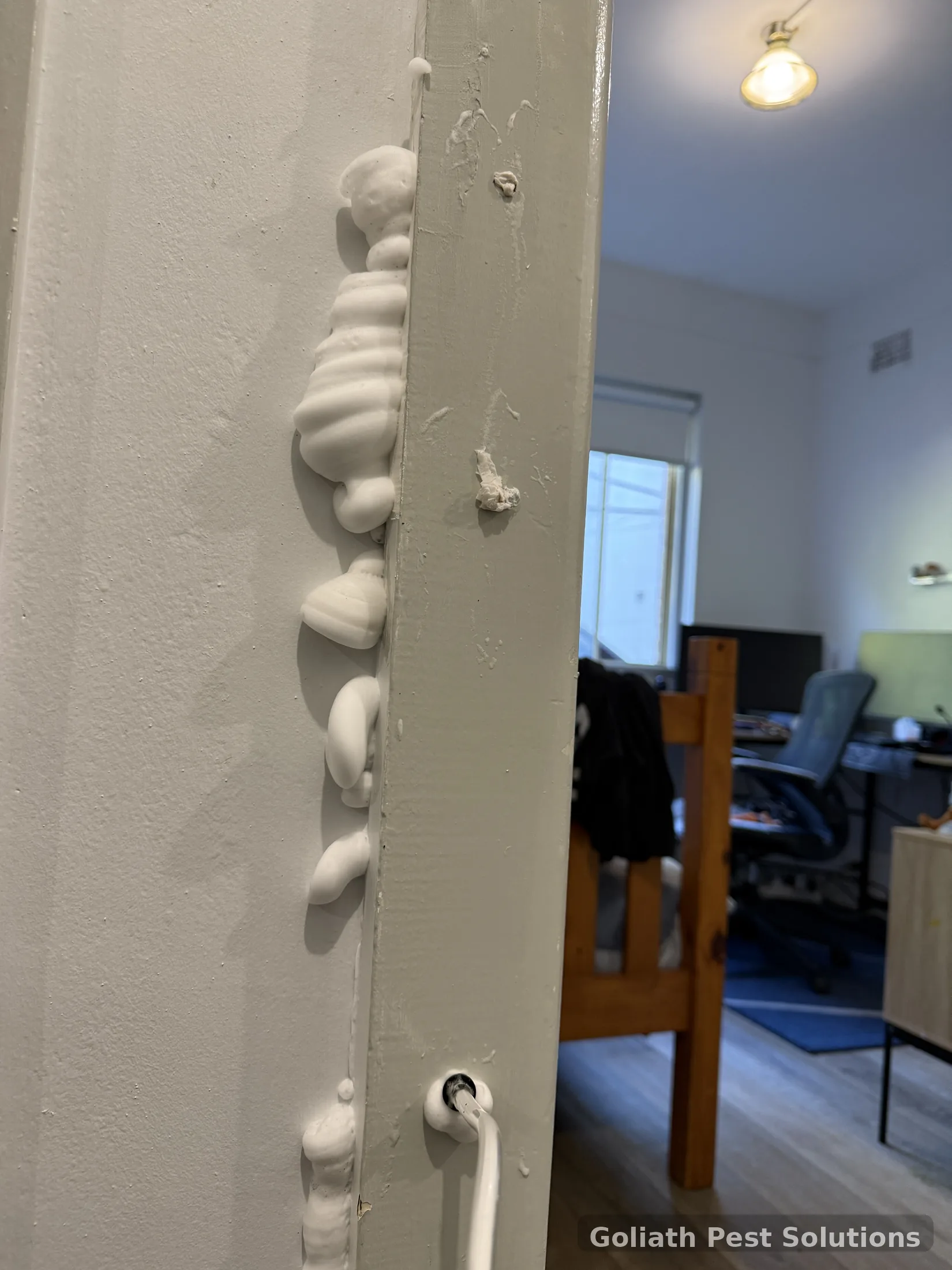
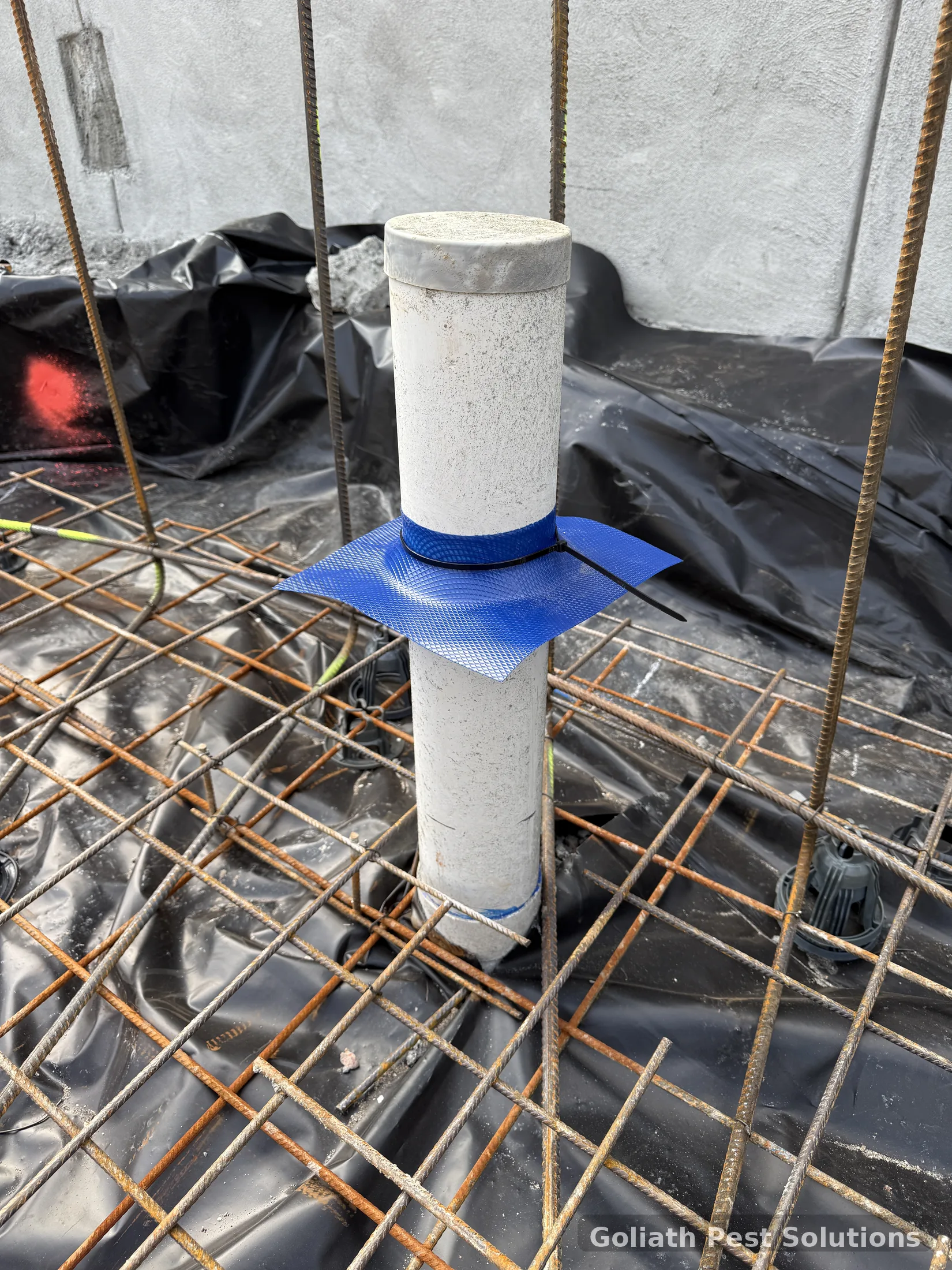
Genuine Goliath Pest Solutions field photography. Image location is not represented as Kellyville unless specifically documented.
A home may have physical components, treated zones, durable-notice information or construction features intended to manage termite risk. Those measures work best when owners know what was installed and continue the required inspection and maintenance rather than assuming “new house” means no future termite attention.
Later landscaping, paving, decks, additions, garden levels or service work can also change inspection visibility around a completed property. The current inspection should therefore consider both the original termite-management information and what has changed since handover.

Supporting field image used to explain inspection or treatment considerations. It is not presented as a photographed job in Kellyville.
The useful question is not simply “does the home have termite protection?” but what protection exists, what it covers and what ongoing inspection or service it requires.
Find durable-notice details, certificates, builder documents and any treatment or monitoring records.
Check for activity, damage, conducive conditions and changes that affect inspection visibility.
Consider paving, landscaping, decks, additions and service work completed since the original installation.
Keep annual inspection, monitoring and rectification information with the original system documents.
Documents can tell you what was specified or installed at a point in time. Inspection tells you what is accessible and observable now. Both are useful, particularly if the property has changed since construction.
If the owner cannot find the original records, the technician can document visible system clues and current conditions, but should avoid claiming certainty about concealed components that cannot be verified.
A termite-management system is not a substitute for ongoing inspection. The inspection checks the property as it exists today and can identify changes or conditions that documents from the construction stage cannot predict.
See our Termite Inspections page for the broader inspection process, or Active Termites if live activity has already been found.
If the original system is documented and intact, the next step may be inspection and maintenance rather than installing a completely separate barrier. If records are missing, construction has changed or activity is found, additional treatment may be justified.
| Situation | What may be assessed | Useful next question |
|---|---|---|
| Documented original system | records, current inspection and alterations since handover | What maintenance or inspection does the existing system require? |
| System history missing | visible clues, current construction and present-day risk areas | What can be verified before proposing additional treatment? |
| Landscaping or paving changes | inspection-zone visibility and possible effects on accessible interfaces | Have later works obscured areas that need to remain inspectable? |
| Live termites found | active-termite management plus review of existing protection | Why did activity occur and what longer-term changes are justified after colony treatment? |
Where a soil-treated zone is appropriate, read our Chemical Barriers guide. If a previous system is uncertain, the unknown barrier or treatment history guide explains what old records and visible evidence can and cannot establish.
Photograph the durable notice and keep it with the property records. It may identify the termite-management system, installer or date, but the owner should also locate any builder handover documents, warranty terms and subsequent inspection reports.
Our Termite Management Records, Certificates & Durable Notices guide explains the different records. If the original barrier or treatment history cannot be reconstructed, use the unknown treatment history guide as the next step.
The objective is to move from a vague belief that the home is “covered” to a documented understanding of what exists and how it should be inspected or maintained.
If a new treatment is proposed for a relatively recent home, ask how the contractor has accounted for the existing termite-management system. A second treatment may be appropriate, but the reason should be clear.
Compare whether the proposal is for active termites, rectification of a gap, additional perimeter protection, monitoring or a complete replacement strategy. Those are different scopes even if they use similar product names.
Already have a written proposal? Use Termite Quote Beat to submit it for a like-for-like review. If price is still the main uncertainty, our Termite Treatment Cost page explains why construction, access and treatment scope can materially change a quote.
These pages help keep the Sydney service-area structure connected without implying that Goliath operates a separate office in each suburb.
Yes. Termite-management systems and construction measures are used alongside ongoing inspection. Check the property’s specific documentation for inspection or maintenance requirements.
It records information about termite-management measures at the property. It is useful documentation, but should be read with the full treatment/building records and current inspection findings.
Landscaping, soil or mulch levels and other later work can reduce visibility of building interfaces. The current property should be inspected rather than relying only on original plans.
Not automatically. First document what can be verified and inspect the property. New protection can then be designed around actual gaps or current risk.
NSW Government explains that termite-management systems can include chemical and physical barriers, resistant materials and construction methods, used together with regular inspections: Home building safety and standards. NSW EPA explains technician licensing and consumer checks: NSW EPA.
These sources provide general guidance. A treatment recommendation still needs to be based on the construction, accessible evidence and conditions at the individual property.
Send the durable-notice or builder records you have, upload a new quote, or arrange an inspection. We can help work out what is documented, what is visible and what work is genuinely needed now.
RELATED TERMITE RESOURCES
If you are comparing termite work for a Kellyville property, use these pages to move from inspection or active activity into the appropriate treatment and quote-review pathway.
Find guides, treatments, standards, report help and Sydney service areas.
Compare treatment methods, learn what inspections involve and see genuine termite-management work completed by Goliath Pest Solutions.
Enter your postcode and we’ll check whether it falls within our standard service area from Mortlake.