For Baulkham Hills properties, termite decisions can arise at very different stages: live activity in an established home, an extension being planned, a new build, a building report or a request for longer-term protection. Goliath Pest Solutions can match the inspection and treatment process to the stage the property is actually at.
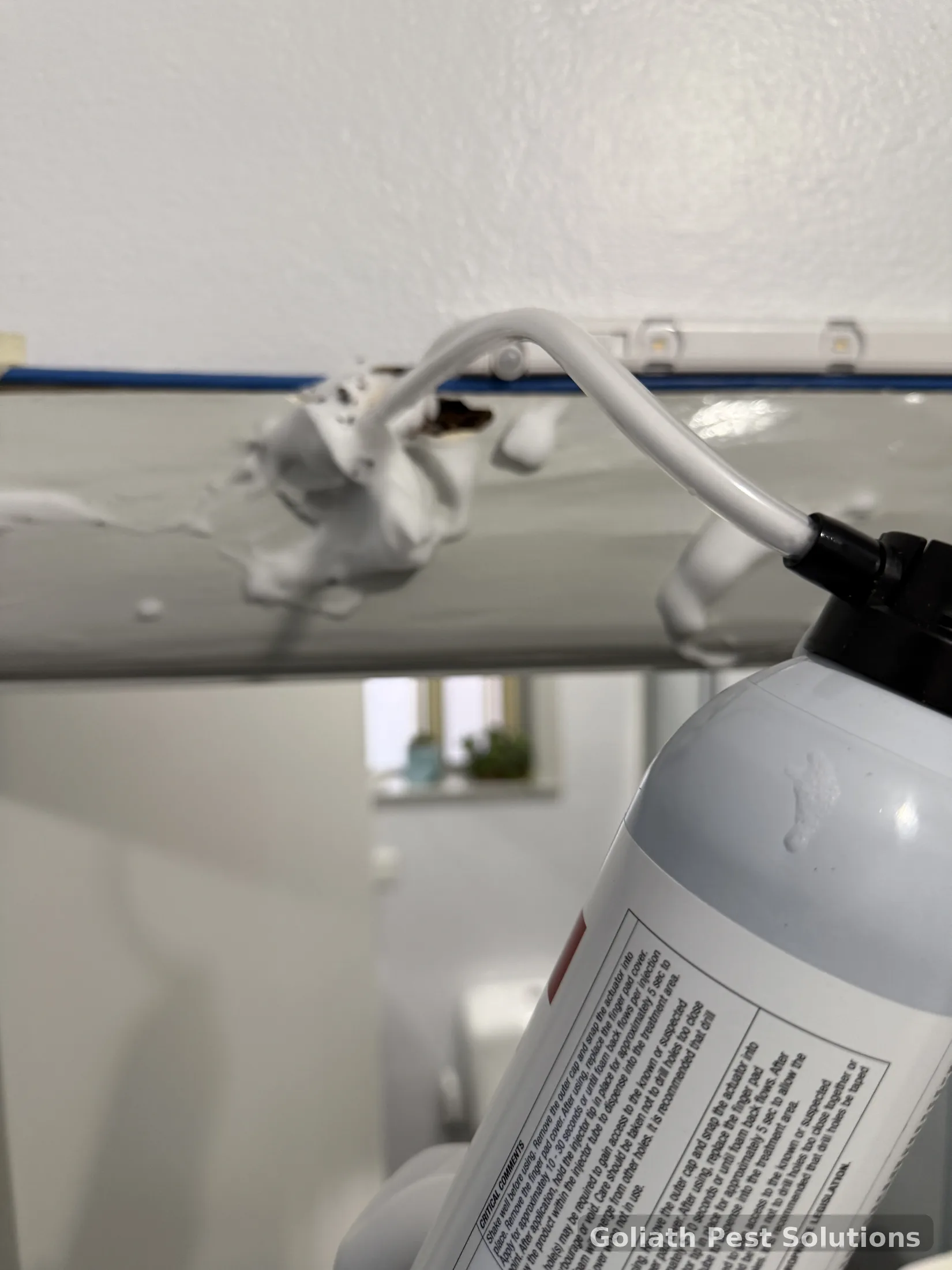
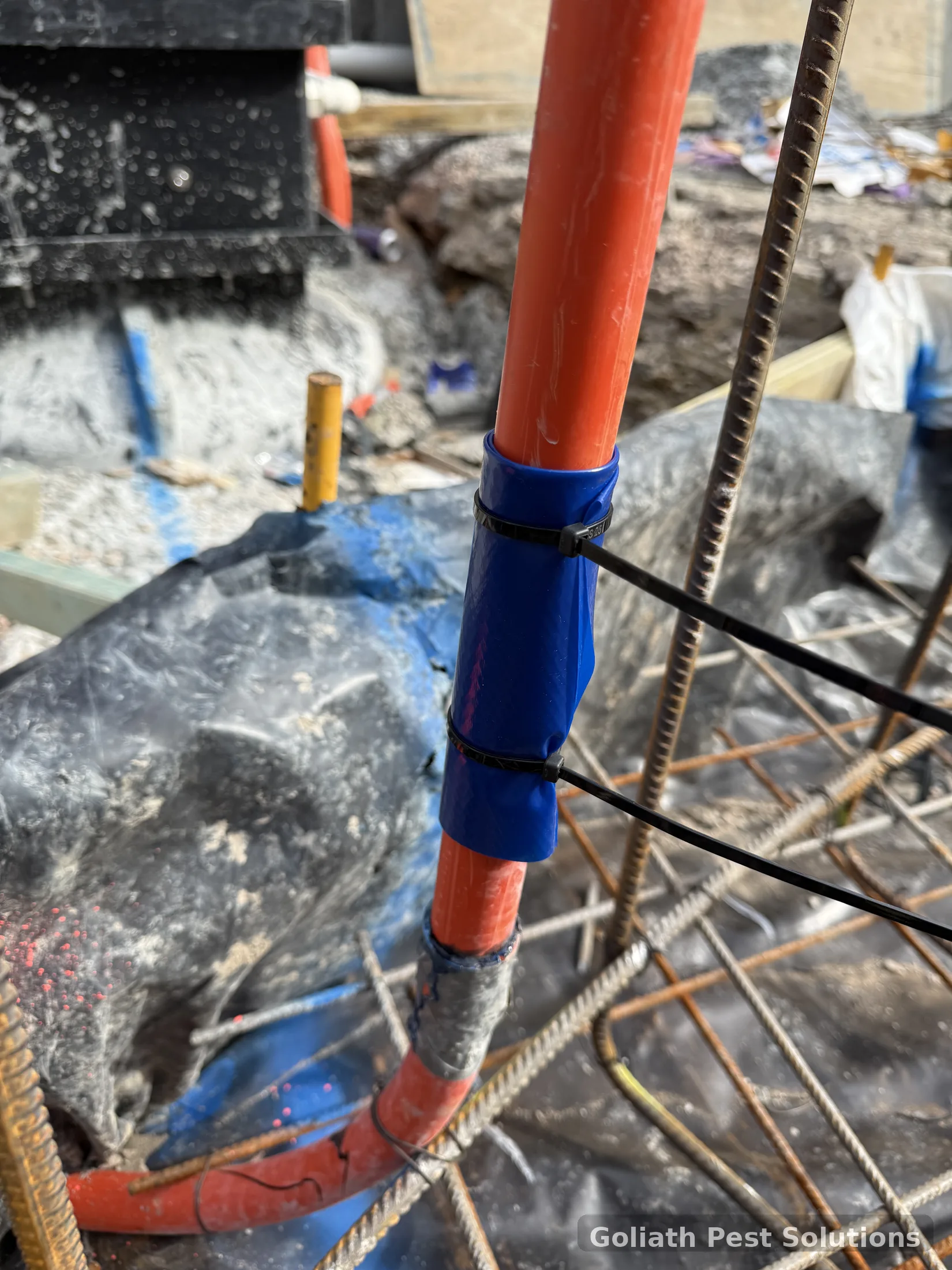
Genuine Goliath Pest Solutions field photography. Image location is not represented as Baulkham Hills unless specifically documented.
An established home with active termites needs evidence preserved and activity assessed. A renovation needs coordination between old and new construction. A new build needs termite-management details considered before relevant interfaces are covered. A purchaser may first need to clarify what a report finding actually means.
Treating those as one generic “termite service” creates avoidable confusion. The scope should state whether the objective is colony management, pre-construction protection, post-construction barrier work, inspection, monitoring or due diligence.

Supporting field image used to explain inspection or treatment considerations. It is not presented as a photographed job in Baulkham Hills.
A simple project-stage check prevents the wrong treatment language from being carried from one type of job into another.
Protect the evidence, assess activity and decide how colony treatment fits with longer-term protection.
Use inspection, treatment history and property risk conditions before deciding on preventive work.
Coordinate new protection with existing construction, junctions and future inspection access.
Plan termite-management installation around slab, penetrations and other construction stages before they are concealed.
For extensions and renovations, inspecting the existing structure before work can document termite evidence and old treatment information that might be lost during demolition. For completed homes, inspection identifies the accessible conditions the treatment design must work around.
If plans or engineering details are available, provide them for construction-stage work. They can help identify penetrations, level changes and junctions that need coordination between builder and termite installer.
Construction documentation and termite records answer different questions but work best together. The installer should understand what is being built, while the owner should retain what termite management was actually installed.
See our Termite Inspections page for the broader inspection process, or Active Termites if live activity has already been found.
During construction, treatment can be coordinated while interfaces are exposed. After construction, barriers often need to work around finished concrete, paving, landscaping and restricted areas. That difference should be reflected in both price and method.
| Situation | What may be assessed | Useful next question |
|---|---|---|
| New building stage | slab, penetrations, joints, construction sequence and nominated termite-management system | What must be installed before the next trade covers the area? |
| Extension interface | junction between new and existing building plus old treatment history | How will new protection connect with or supplement the existing structure? |
| Completed home barrier | soil, concrete, paving, subfloor and service obstacles | Which post-construction methods are needed to create the proposed treated zone? |
| Active termites in existing home | activity treatment first, then longer-term protection if appropriate | Are colony treatment and preventive barrier work clearly separated in the quote? |
Where a soil-treated zone is appropriate, read our Chemical Barriers guide. If a previous system is uncertain, the unknown barrier or treatment history guide explains what old records and visible evidence can and cannot establish.
Builders need more than a homeowner-style treatment description. The proposal should identify the construction stage, the areas or interfaces being protected, what needs to be ready before attendance and what documentation will be supplied after installation.
Our Termite Barrier Installer for Builders and Pre-Construction Termite Protection pages explain this workflow. The AS 3660.1 guide provides the broader new-building terminology.
If the project is an extension rather than a complete new build, the existing home needs to remain part of the discussion. Old treatment records, current termite evidence and how the new work joins the existing structure can all affect the final scope.
For construction quotes, compare inclusions at each stage, builder preparation requirements, return visits, penetrations, certificate or notice documentation and any areas explicitly excluded.
For completed homes, compare drilling, trenching, rodding, subfloor work and treatment continuity. The same term “barrier” can describe very different installation effort depending on when the work is performed.
Already have a written proposal? Use Termite Quote Beat to submit it for a like-for-like review. If price is still the main uncertainty, our Termite Treatment Cost page explains why construction, access and treatment scope can materially change a quote.
These pages help keep the Sydney service-area structure connected without implying that Goliath operates a separate office in each suburb.
The timing depends on the selected termite-management system and construction detail. Coordination is important because some interfaces are easiest or only possible to treat before they are covered.
No. It is part of the Australian termite-management standards framework. The actual system or product still needs to suit the construction and installation requirements.
Not automatically. The existing treatment history and the junction between old and new construction should be reviewed before deciding how protection is continued.
Yes. Existing homes can be assessed for chemical barrier and other termite-management options based on construction and access.
NSW Government outlines termite-management systems used for homes, including chemical and physical barriers and construction approaches, and stresses the role of regular inspection: NSW Government. NSW EPA provides pest-management licensing information: NSW EPA.
These sources provide general guidance. A treatment recommendation still needs to be based on the construction, accessible evidence and conditions at the individual property.
Send the plans or written quote, or arrange an inspection of the existing property. We can separate construction-stage protection, active-termite work and post-construction treatment into a scope that is easier to understand.
RELATED TERMITE RESOURCES
If you are comparing termite work for a Baulkham Hills property, use these pages to move from inspection or active activity into the appropriate treatment and quote-review pathway.
Find guides, treatments, standards, report help and Sydney service areas.
Compare treatment methods, learn what inspections involve and see genuine termite-management work completed by Goliath Pest Solutions.
Enter your postcode and we’ll check whether it falls within our standard service area from Mortlake.