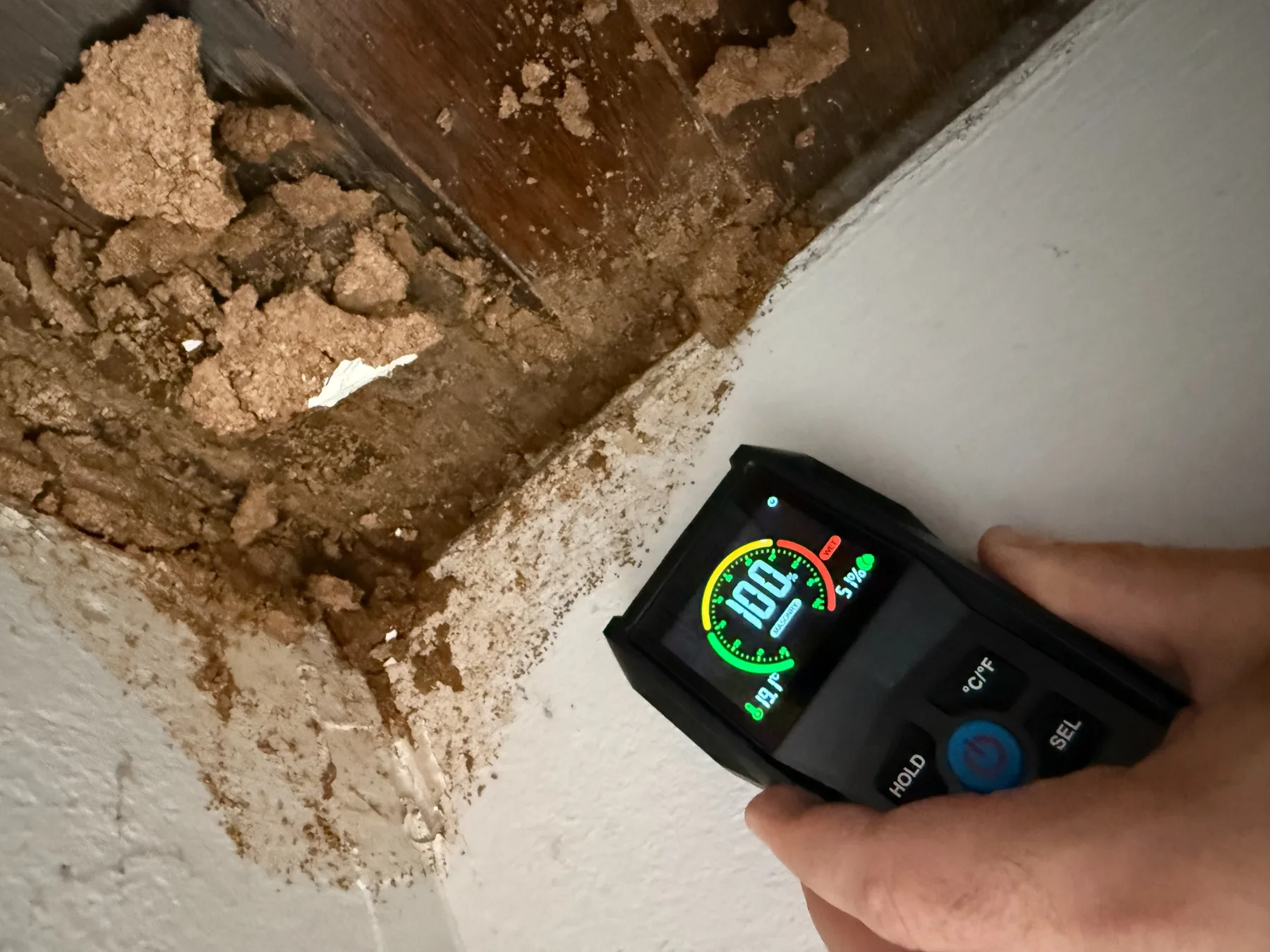
Termite treatment in Dural should start with the individual property rather than an assumption based on postcode or land size. Goliath Pest Solutions assesses accessible evidence, construction, moisture, previous treatment records and practical treatment access before recommending active-termite work, a barrier, monitoring or further investigation.
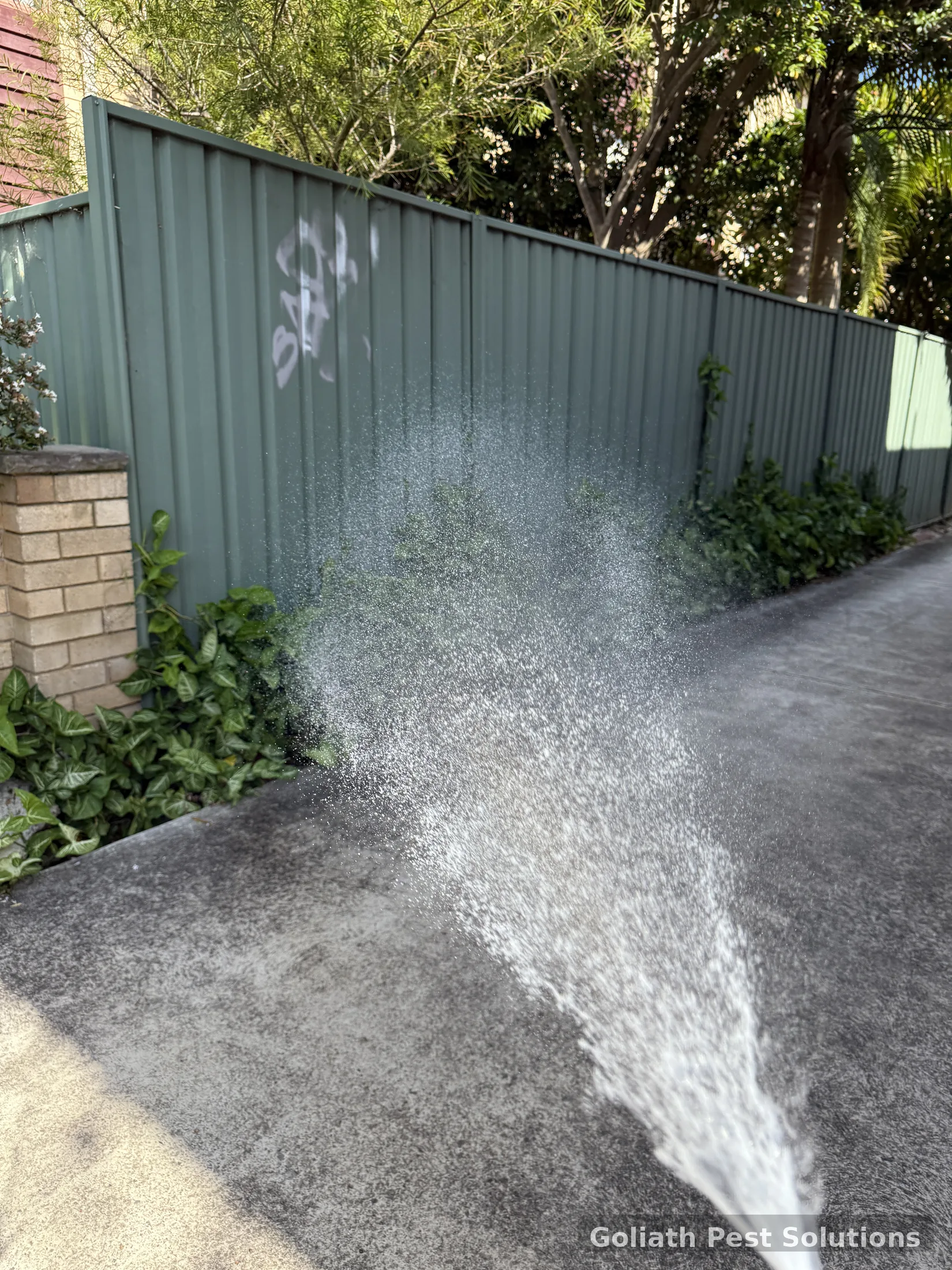
Genuine Goliath Pest Solutions field photography. Image location is not represented as Dural unless specifically documented.
A larger residential property can contain several structures, landscaped areas, retaining features, sheds, decks, subfloor spaces and service routes. The useful question is not whether every square metre can be treated. It is which structures are being protected, what evidence exists around them and where termite entry or inspection access may be concealed.
That is why proposals should identify the actual treatment areas rather than relying on a vague “whole property” description. The building footprint, accessible perimeter, soil and concrete interfaces, subfloor construction and any detached structures should be considered separately where relevant.

Supporting field image used to explain inspection or treatment considerations. It is not presented as a photographed job in Dural.
A practical site plan can prevent a large property from turning into an imprecise treatment scope.
Map accessible perimeter, slab or subfloor interfaces, service entries and visible termite evidence.
Assess garages, studios, sheds or other buildings separately rather than assuming one treatment covers all structures.
Review soil levels, retaining areas, decks and vegetation where they affect inspection access or concealed entry.
Keep key edges and access points visible so ongoing inspection remains meaningful after treatment.
The technician should inspect accessible areas associated with the concern and note limitations clearly. On a larger site, that may mean prioritising the residence and any other occupied or valuable structures before considering peripheral areas.
Moisture, drainage, timber-to-soil contact, concealed voids and previous treatment evidence can all influence the next step. None of those factors alone proves termites are active, but together they help explain where further investigation or treatment may be justified.
A large site benefits from an explicit inspection scope. If a structure or area is not inspected, that limitation should be documented rather than assumed to be low risk.
See our Termite Inspections page for the broader inspection process, or Active Termites if live activity has already been found.
Depending on findings, a Dural property may require targeted active-termite treatment, a chemical treated zone around selected structures, monitoring, or a combination. The correct design depends on construction and access.
| Situation | What may be assessed | Useful next question |
|---|---|---|
| Live activity in a structure | activity location, accessible mud leads, damage and surrounding construction | What work addresses the active termites before longer-term protection is considered? |
| Soil perimeter around residence | accessible soil, foundations, services and continuity | How will the treated zone connect around the intended protected structure? |
| Extensive paving or hardscape | drilling access, services, finishes and exclusions | Which paved sections are included and how will inaccessible areas be handled? |
| Detached buildings | separate construction, use and treatment objective | Are these structures included in the proposal or quoted separately? |
Where a soil-treated zone is appropriate, read our Chemical Barriers guide. If a previous system is uncertain, the unknown barrier or treatment history guide explains what old records and visible evidence can and cannot establish.
On a larger site, that phrase can hide important differences. One contractor may mean the main residence perimeter, another may include detached structures, while another may only treat accessible soil and concrete around selected walls.
Ask for a marked plan, treatment lengths or a written list of structures and areas. Our Chemical Barriers guide explains common installation concepts and the Quote Review service can help compare written scopes.
A more precise scope protects both parties. The homeowner knows what is included, and the technician can design the work around actual access instead of a broad promise that is difficult to verify.
Compare structure coverage, treatment path, installation methods, exclusions and ongoing inspection requirements. A lower price may reflect a smaller treatment area rather than a genuinely equivalent service.
If the property includes several buildings, ask whether each one is included, inspected and covered by the same warranty or service arrangement.
Already have a written proposal? Use Termite Quote Beat to submit it for a like-for-like review. If price is still the main uncertainty, our Termite Treatment Cost page explains why construction, access and treatment scope can materially change a quote.
These pages help keep the Sydney service-area structure connected without implying that Goliath operates a separate office in each suburb.
No. Each structure should be assessed according to construction, evidence, access and the protection objective.
Yes where they are included in the agreed scope and access is available.
A postcode or land size alone is not enough to establish risk. Inspection and property conditions are more useful for treatment decisions.
Yes, but the differences need to be identified first so the comparison is genuinely like-for-like.
NSW Government provides general information about termite management, building protection and regular inspection: Home building safety and standards. NSW EPA explains licensing requirements when engaging pest-management technicians: NSW EPA.
These sources provide general guidance. A treatment recommendation still needs to be based on the construction, accessible evidence and conditions at the individual property.
Send the written quote or arrange an inspection. We can help separate the property into clear inspection and treatment zones before a final scope is agreed.
RELATED TERMITE RESOURCES
If you are comparing termite work for a Dural property, use these pages to move from inspection or active activity into the appropriate treatment and quote-review pathway.
Find guides, treatments, standards, report help and Sydney service areas.
Compare treatment methods, learn what inspections involve and see genuine termite-management work completed by Goliath Pest Solutions.
Enter your postcode and we’ll check whether it falls within our standard service area from Mortlake.