Goliath Pest Solutions services Concord as part of its Sydney termite coverage. A useful termite plan starts with the evidence at the property: active termites, damage, a building-report recommendation, unclear treatment history or a proposal for longer-term protection.
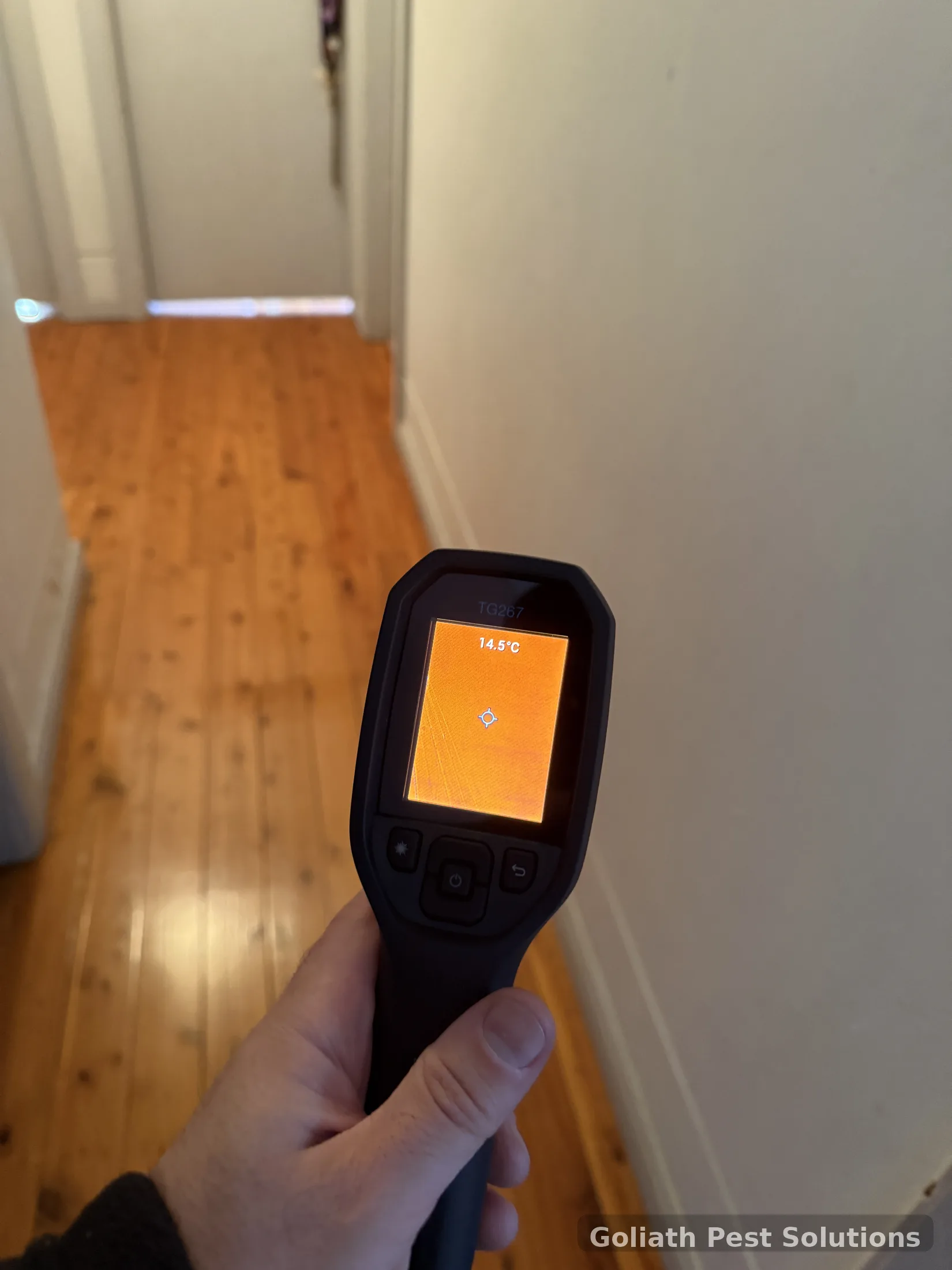
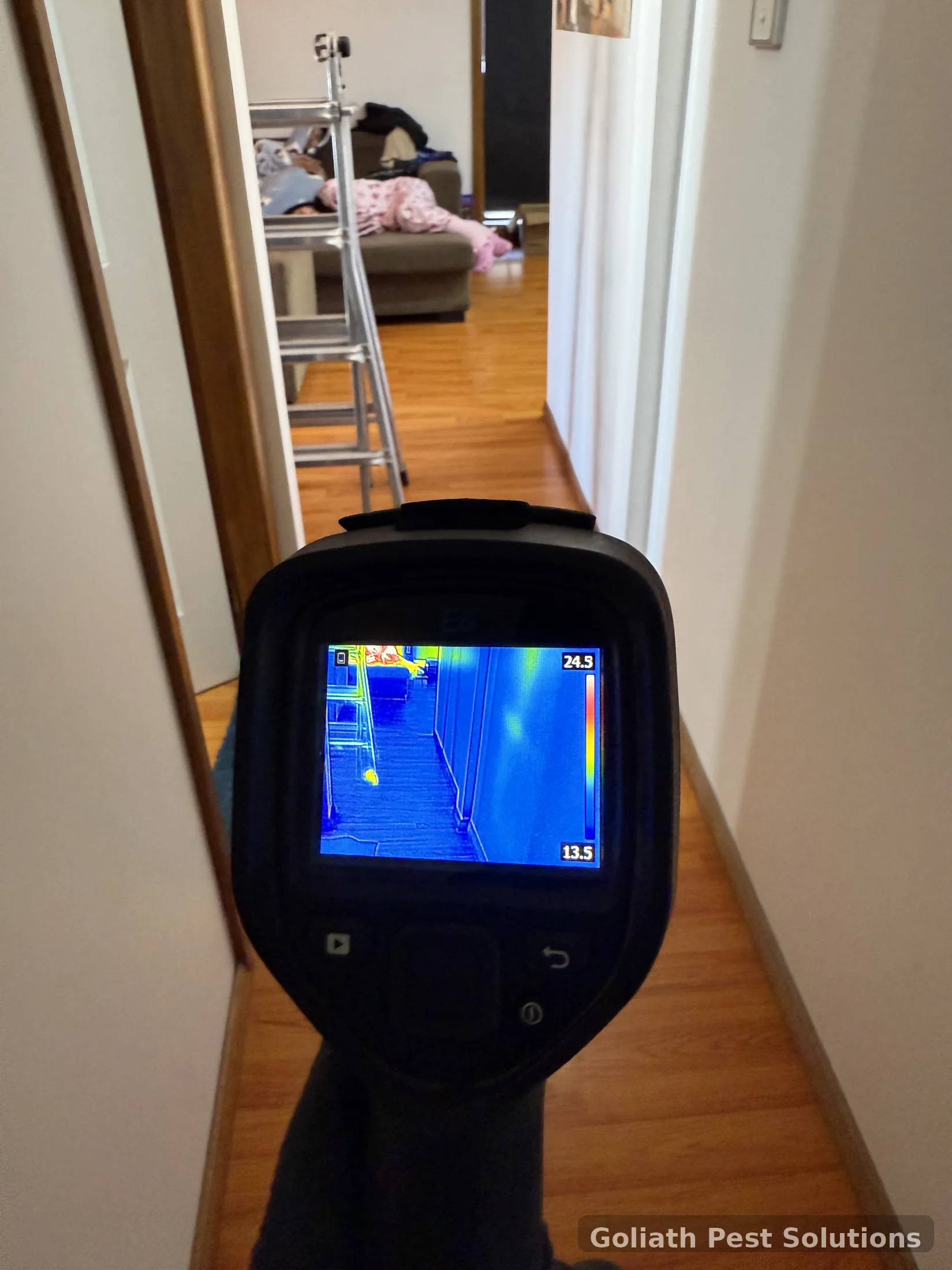
Genuine Goliath Pest Solutions field photography. Image location is not represented as Concord unless specifically documented.
Those three situations are often confused. Live termites require assessment of the activity itself. Damage may be old or current and needs interpretation. Unclear barrier history is a documentation problem until current inspection shows whether further treatment is justified.
Keeping those categories separate helps prevent premature treatment recommendations and makes written quotes easier to compare.

Supporting field image used to explain inspection or treatment considerations. It is not presented as a photographed job in Concord.
Once the objective is clear, the inspection and quote can focus on the information actually needed.
Protect the evidence, arrange assessment and distinguish colony treatment from longer-term protection.
Inspect for current activity and assess accessible extent before deciding on termite treatment or building repair.
Review records and construction changes before assuming the system has failed or is complete.
Use the report as a starting point and obtain dedicated termite assessment where recommended.
A report may identify termite damage, suspected activity, inaccessible areas or a recommendation for specialist inspection. A termite technician can then focus on accessible evidence, construction, moisture, treatment history and the areas relevant to the finding.
The goal is not to contradict another report automatically. It is to add the termite-specific assessment needed for the next decision.
A short report recommendation can lead to a much more specific termite decision once the property is inspected by a technician focused on termite evidence and treatment options.
See our Termite Inspections page for the broader inspection process, or Active Termites if live activity has already been found.
Depending on findings, the next step may be active-termite treatment, a chemical barrier, monitoring, or no immediate treatment beyond rectification and continued inspection.
| Situation | What may be assessed | Useful next question |
|---|---|---|
| Confirmed active termites | activity location, accessible workings and surrounding construction | What treatment is directed at the current termite activity? |
| Damage without current activity | extent, building repair needs and monitoring or inspection plan | Is termite treatment required now or is the issue historic damage? |
| Barrier requested | perimeter access, concrete, soil, subfloor and service interfaces | What exact treatment path is included? |
| Buyer due diligence | report findings, access limitations and existing records | What uncertainty needs to be resolved before exchange or settlement decisions? |
Where a soil-treated zone is appropriate, read our Chemical Barriers guide. If a previous system is uncertain, the unknown barrier or treatment history guide explains what old records and visible evidence can and cannot establish.
Keep the report and provide it to the termite technician. The wording may identify the exact room, elevation, subfloor area or access limitation that triggered the recommendation.
Our Building Inspector Recommended a Termite Inspection? guide explains the process, and Pre-Purchase Report Found Termite Damage? covers damage findings.
After specialist inspection, you should have a clearer distinction between current activity, historic damage, inaccessible areas and any treatment or building-work recommendations.
If treatment is proposed, the written scope should connect back to the findings rather than presenting a generic package.
Use Quote Review if you already have a proposal and want the treatment areas, methods, product, exclusions and price compared like-for-like.
Already have a written proposal? Use Termite Quote Beat to submit it for a like-for-like review. If price is still the main uncertainty, our Termite Treatment Cost page explains why construction, access and treatment scope can materially change a quote.
These pages help keep the Sydney service-area structure connected without implying that Goliath operates a separate office in each suburb.
Not necessarily. The report may identify damage, conducive conditions, limitations or evidence that requires specialist assessment.
Avoid unnecessary disturbance of suspected active areas so the technician can assess the evidence in context.
Yes. A defined diagnosis and property scope makes like-for-like quote comparison much more meaningful.
No. Goliath Pest Solutions services Concord as part of its broader Sydney coverage; we do not represent a separate office in each suburb.
NSW Government provides general information about termite management, building protection and regular inspection: Home building safety and standards. NSW EPA explains licensing requirements when engaging pest-management technicians: NSW EPA.
These sources provide general guidance. A treatment recommendation still needs to be based on the construction, accessible evidence and conditions at the individual property.
Send the report or written quote, or arrange an inspection. We can help turn the initial finding into a clear, property-specific next step.
RELATED TERMITE RESOURCES
If you are comparing termite work for a Concord property, use these pages to move from inspection or active activity into the appropriate treatment and quote-review pathway.
Find guides, treatments, standards, report help and Sydney service areas.
Compare treatment methods, learn what inspections involve and see genuine termite-management work completed by Goliath Pest Solutions.
Enter your postcode and we’ll check whether it falls within our standard service area from Mortlake.