Termite activity is often concealed, so the first clue may be a mud tube, damaged timber, a patch of blistered paint, shed wings or a change around a skirting board rather than a visible colony. The goal is not to diagnose the whole problem yourself. It is to recognise evidence worth investigating and preserve that evidence for a proper termite inspection.
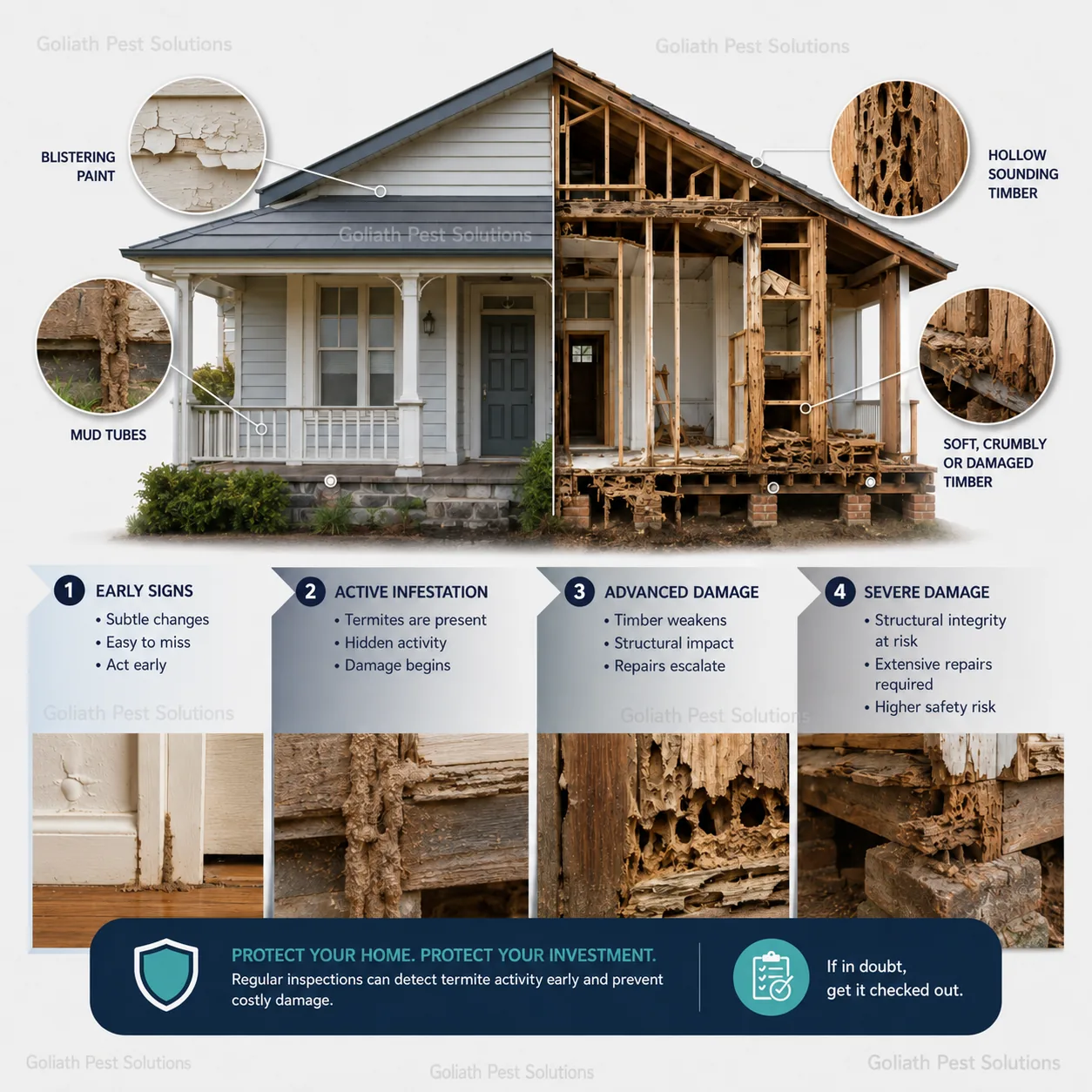
Subterranean termites spend much of their time in protected environments. Australian Museum and NSW education material describe termites as social insects that live in colonies and often move under shelter rather than across exposed surfaces. That behaviour is one reason significant activity can remain concealed inside timber, subfloors, wall junctions or soil pathways.
Homeowners therefore tend to notice the effects of termite activity rather than the termites themselves. Mud or shelter tubes can appear across masonry or foundation surfaces. Timber may be internally hollowed or weakened. Winged reproductive termites can emerge from a mature colony and shed their wings after flight. Finishes can sometimes become distorted where timber beneath them has been affected.
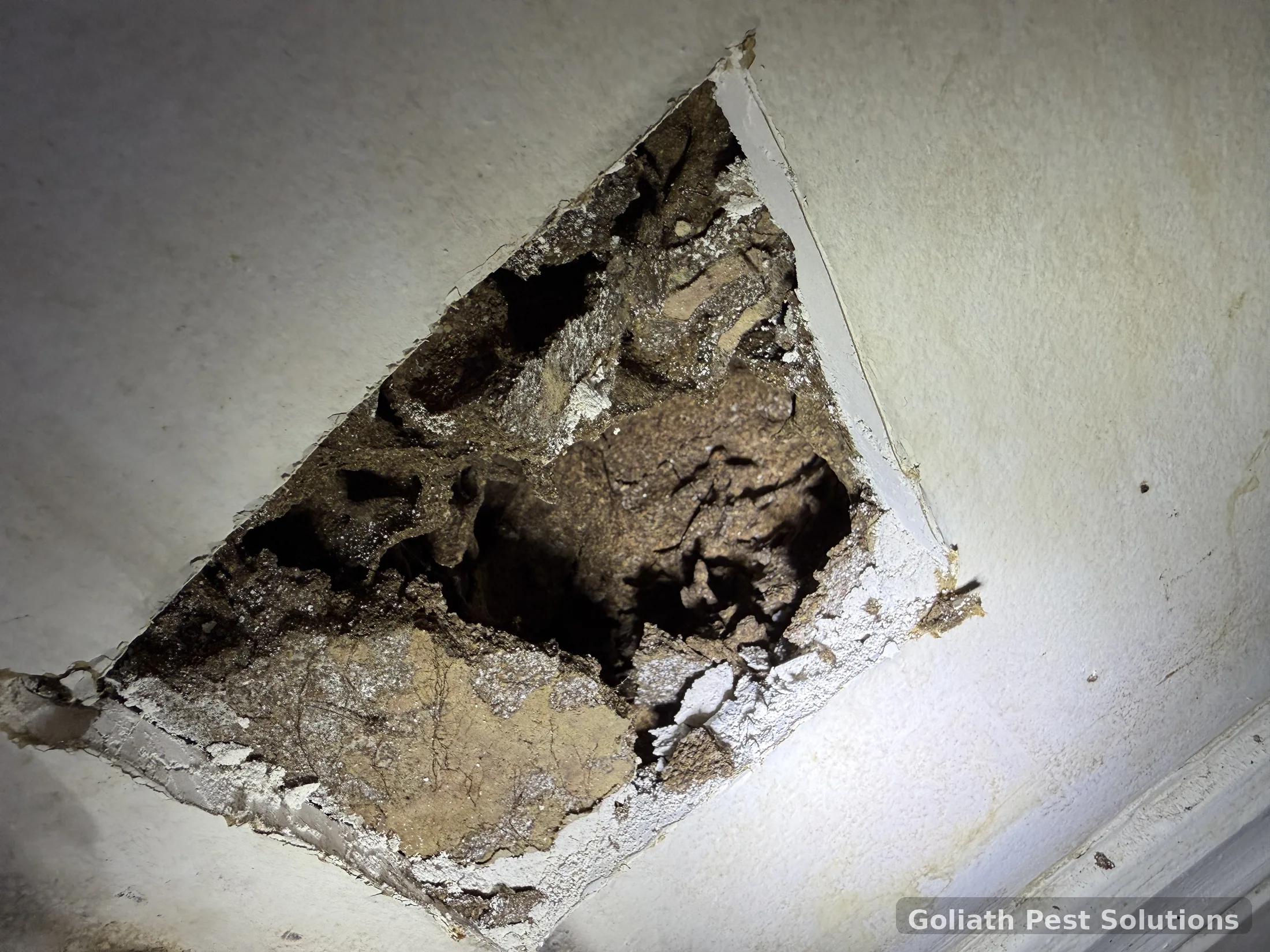
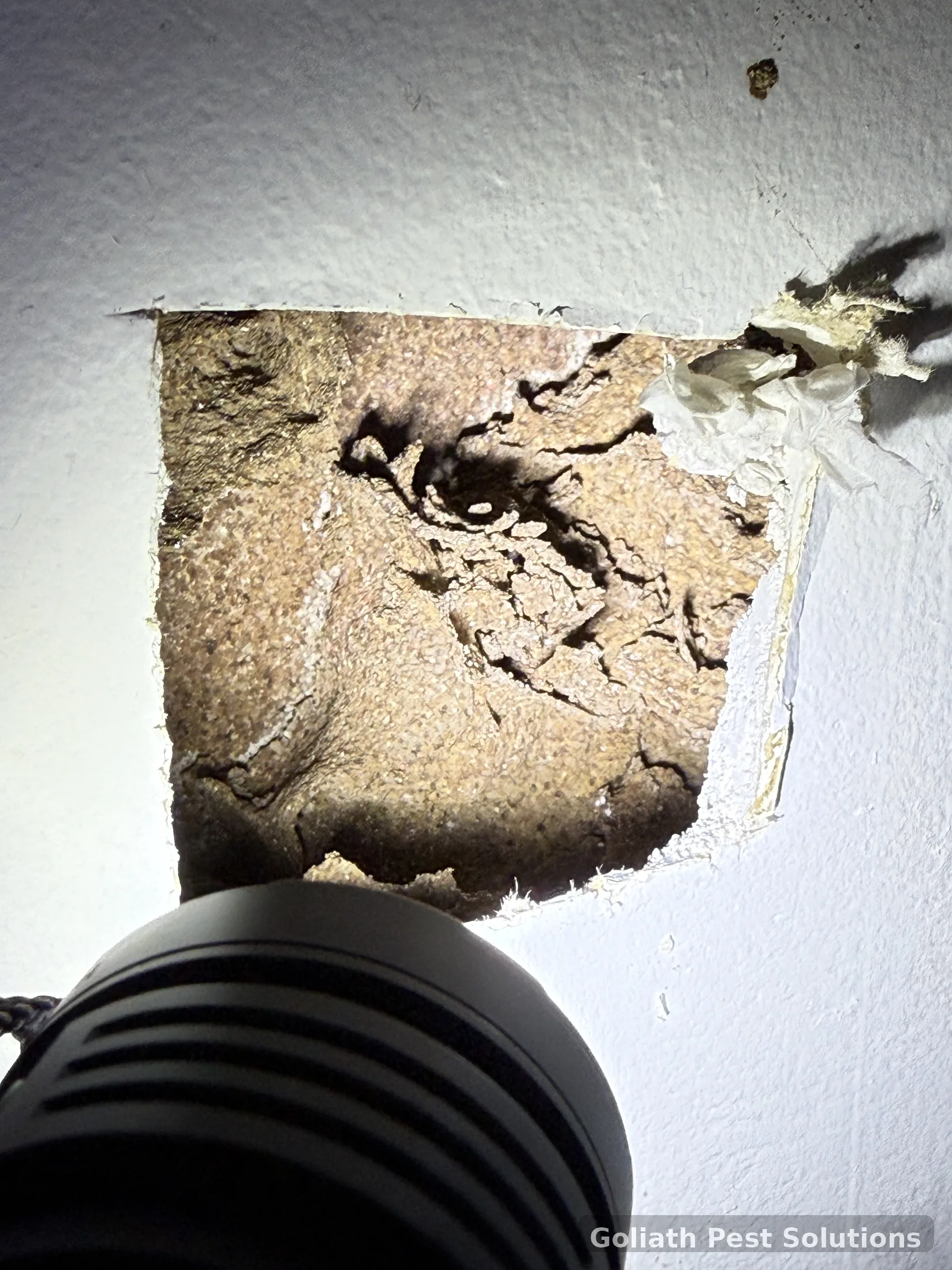

Termites can construct covered pathways that help them move between protected areas and food while reducing exposure to dry air and light. Tubes on foundations, piers, walls or service areas deserve closer assessment.
Termites can feed within timber and leave an outer surface that looks more intact than the inside. Soft, thin, hollow or unexpectedly fragile timber can be a warning sign, but other causes must also be considered.
Alates are winged reproductive termites produced by established colonies. Shed wings around windows, lights or internal rooms are useful evidence to record and investigate.
Blistered paint, distorted skirting, cracking or surface changes can sometimes occur around affected timber or moisture. These signs are not termite-specific and should be interpreted in context.
A homeowner check should stay non-destructive. Look at accessible slab edges, subfloor piers and foundation walls, timber touching soil, landscaping built against the structure, plumbing penetrations, damp areas, stored timber, deck posts, skirtings and other junctions where soil, moisture and timber come together. City of Ryde guidance specifically recommends keeping exposed slab edges clear of soil, leaves and debris, maintaining subfloor ventilation and arranging regular professional inspections.
Do not remove wall linings, drill holes or break open suspect timber simply to “see what is inside”. A professional inspection has a defined scope and can combine visual evidence with suitable diagnostic tools and knowledge of building construction. If a suspicious area is inaccessible, that limitation should be recorded rather than treated as proof the area is clear.
| What you notice | Useful next question | What not to assume |
|---|---|---|
| Mud tube | Where does it start, where does it lead and is there other evidence nearby? | That every tube is active now, or that breaking it will solve the problem. |
| Damaged timber | Is the damage localised, concealed elsewhere, historic or associated with current activity? | That appearance alone determines structural severity. |
| Shed wings | Were they found indoors or outside, and are winged termites still appearing? | That the colony location is known from the wings alone. |
| Moisture or leaks | What is causing the moisture and can the area be fully inspected? | That moisture itself proves termites are present. |
Take photographs before cleaning, painting or disturbing the area. Record the exact room or external location. If live termites are visible, avoid unnecessary disturbance and arrange professional advice. If only damage is visible, an inspection can help distinguish evidence of current activity from historic damage and identify access limitations or conducive conditions that also need attention.
From there, treatment should follow the findings. Active termite treatment, a longer-term chemical barrier, baiting or monitoring, repairs and moisture rectification are different decisions. A warning sign does not automatically mean every property needs every option.

Generated educational illustrations support the explanation, while treatment decisions should be based on the actual property and inspection findings.

Useful warning signs include shelter or mud tubes, damaged or hollowed timber, blistered or distorted finishes, winged termites or piles of shed wings, and visible live termites. None of these signs tells you the full extent of activity by itself.
No. Timber can sound hollow or feel weak for several reasons, including decay or construction details. It is a reason to investigate, not a stand-alone diagnosis.
Avoid unnecessary disturbance before a professional assessment. A shelter tube can be useful evidence about where termites have been moving, and disturbing the area can make the activity harder to interpret.
Winged termites indicate a mature colony is nearby, but they do not automatically prove the colony is inside the structure. Indoor swarming or repeated shed wings deserve prompt investigation.
Photograph the sign in place, then take wider images showing the room, wall, subfloor or external area. Include nearby moisture, soil levels, timber contact, penetrations or previous treatment evidence where visible.
Photograph it in place and contact Goliath before unnecessary disturbance. We can discuss whether the sign warrants a termite inspection and what information will help us assess the next step.
Sources: Australian Museum termite identification guidance, NSW Field of Mars EEC termite fact sheet, and City of Ryde termite guidance.

1300 953 966 • info@goliathpestcontrol.com.au
Mortlake NSW 2137 • Sydney-wide service
Active termites • Chemical barriers • Inspections • Guides • Quote review • Contact
RELATED TERMITE RESOURCES
Educational signs are useful, but the service decision depends on current activity, access, damage and the individual property.
Find guides, treatments, standards, report help and Sydney service areas.
Compare treatment methods, learn what inspections involve and see genuine termite-management work completed by Goliath Pest Solutions.
Enter your postcode and we’ll check whether it falls within our standard service area from Mortlake.