
Termite damage can be visually deceptive. Workers feed within timber and protected galleries, so a painted skirting, wall stud or roof member can retain an outer shell while the internal material has been substantially altered. That is why visible damage, current termite activity and structural repair scope are three separate questions.
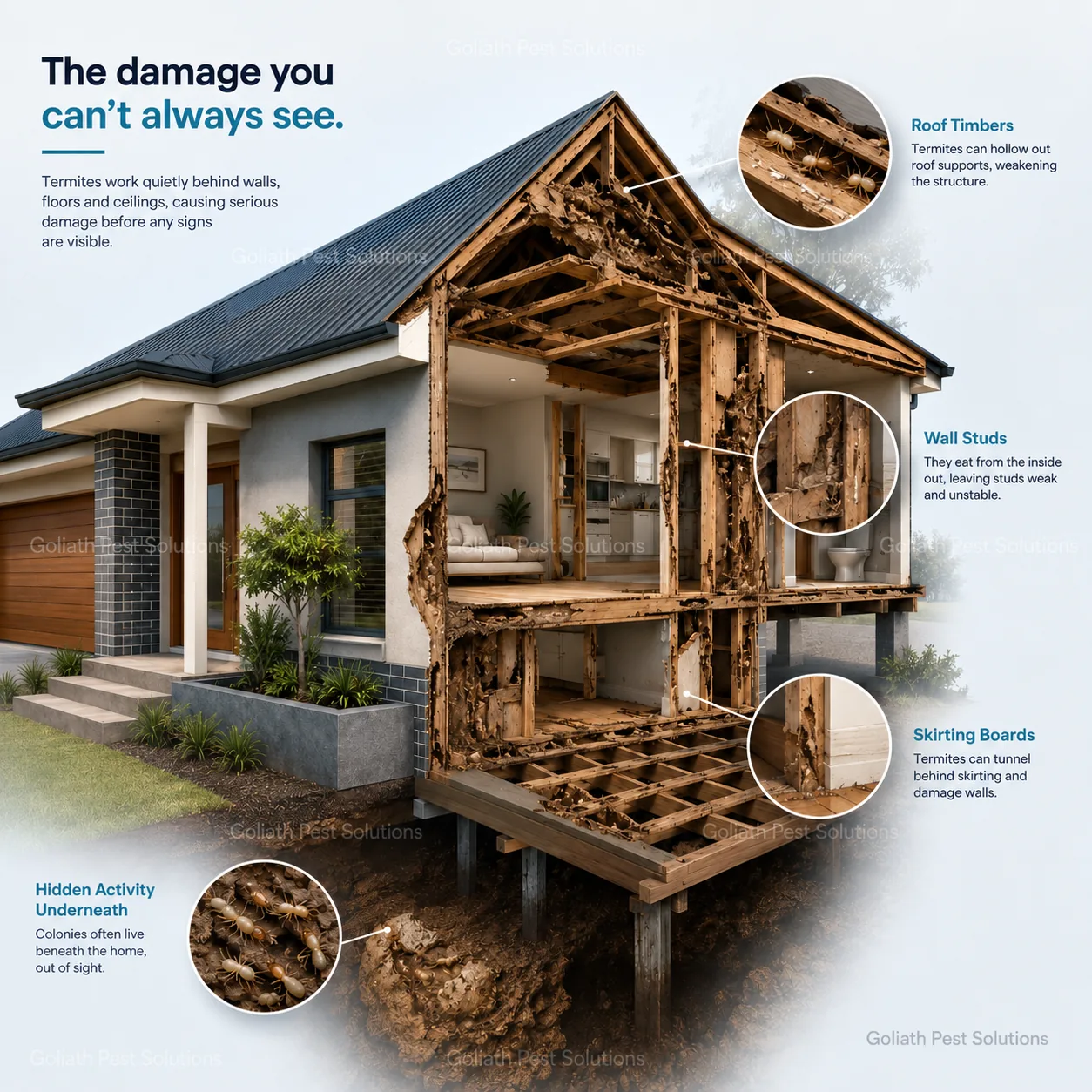
Termites forage in sheltered environments and can work through timber internally. Building guidance notes that concealed termite damage can leave only a thin exterior layer, which helps explain why a piece of timber may look normal from a distance but feel weak, sound hollow or break apart once exposed.
The visible surface is therefore only part of the evidence. Paint, plasterboard, flooring, insulation, cabinetry and other finishes can conceal structural timber. Even where one damaged member is exposed, adjoining wall or floor cavities may not be accessible during a standard visual inspection.
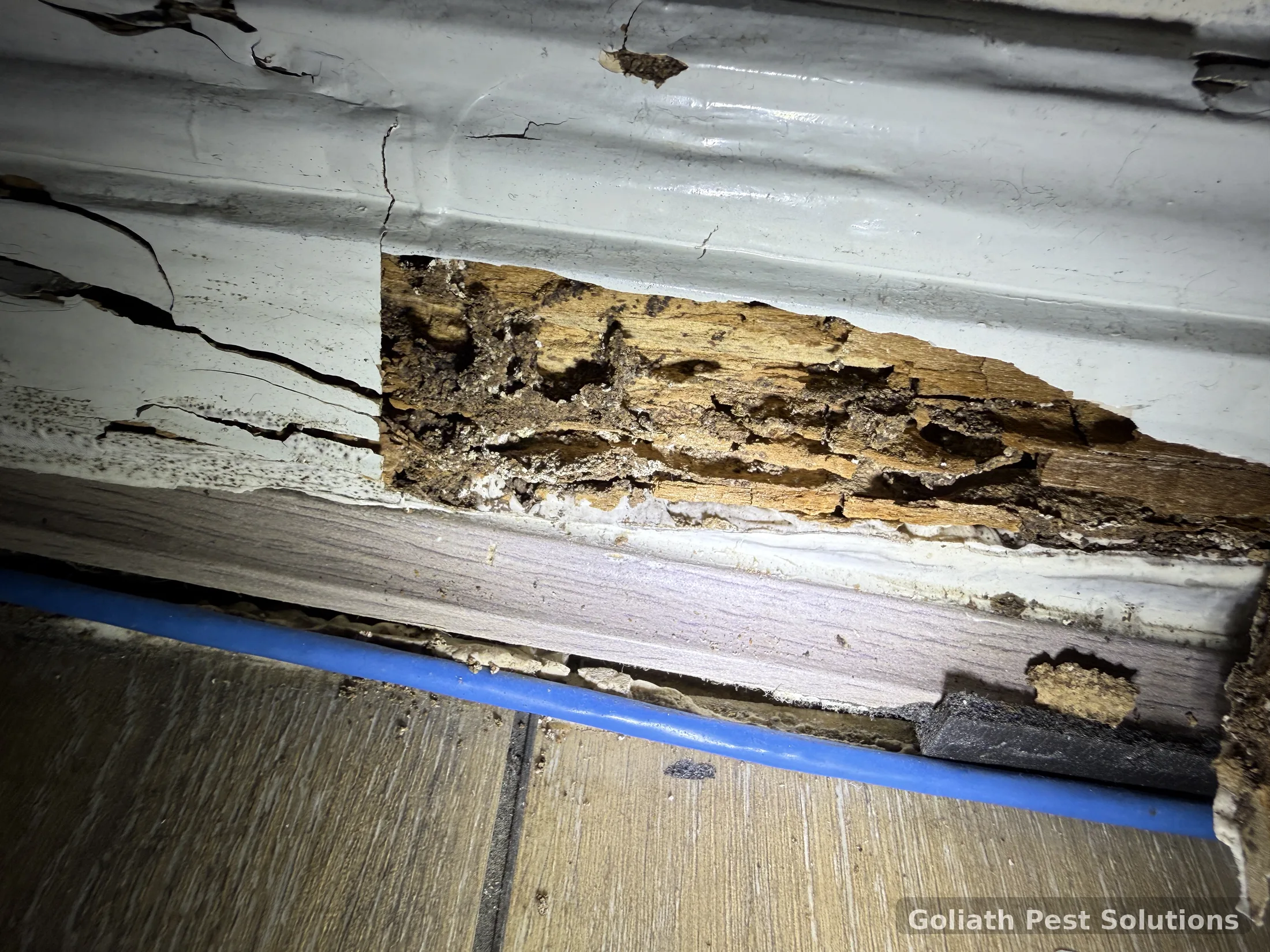
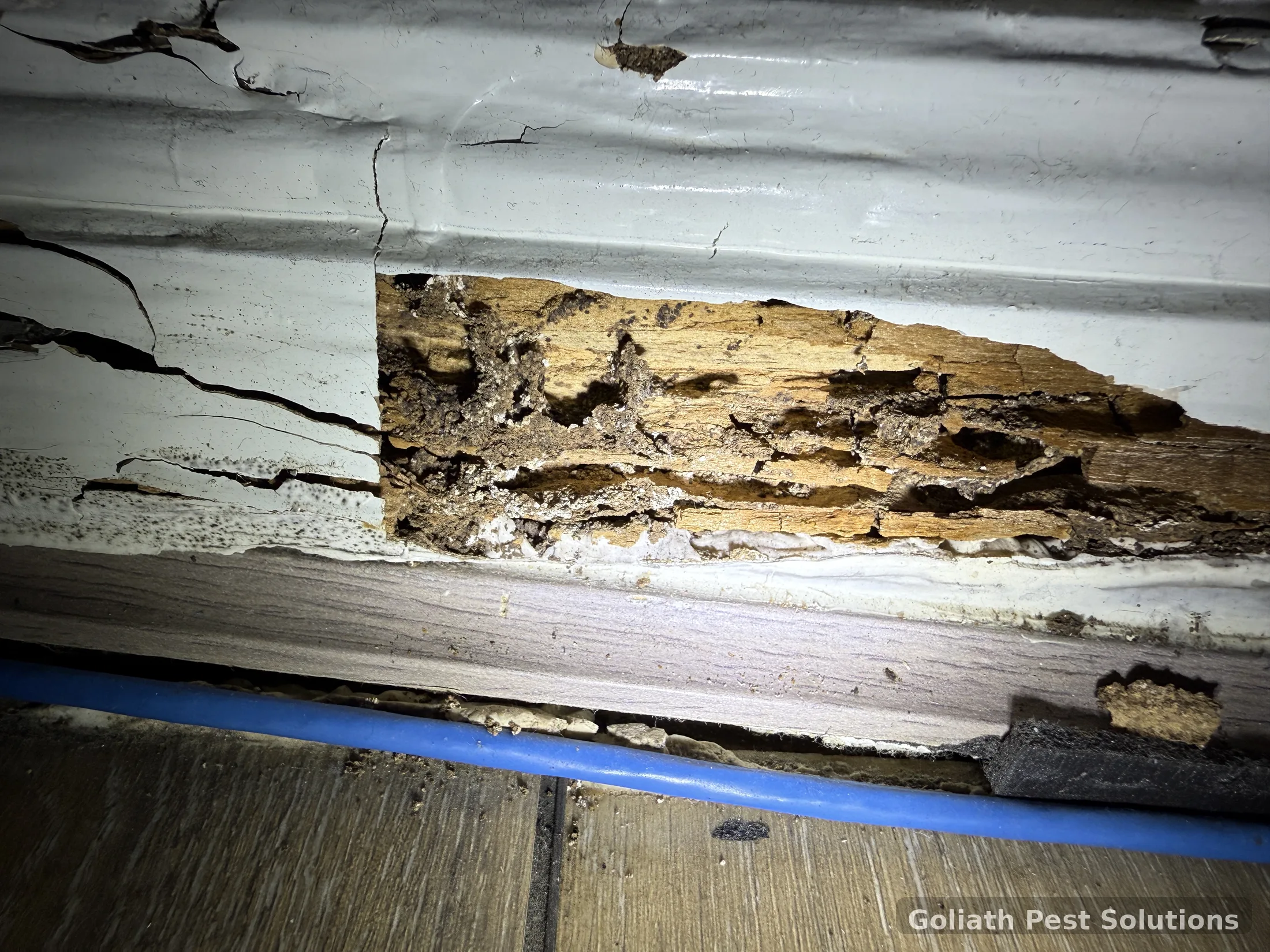
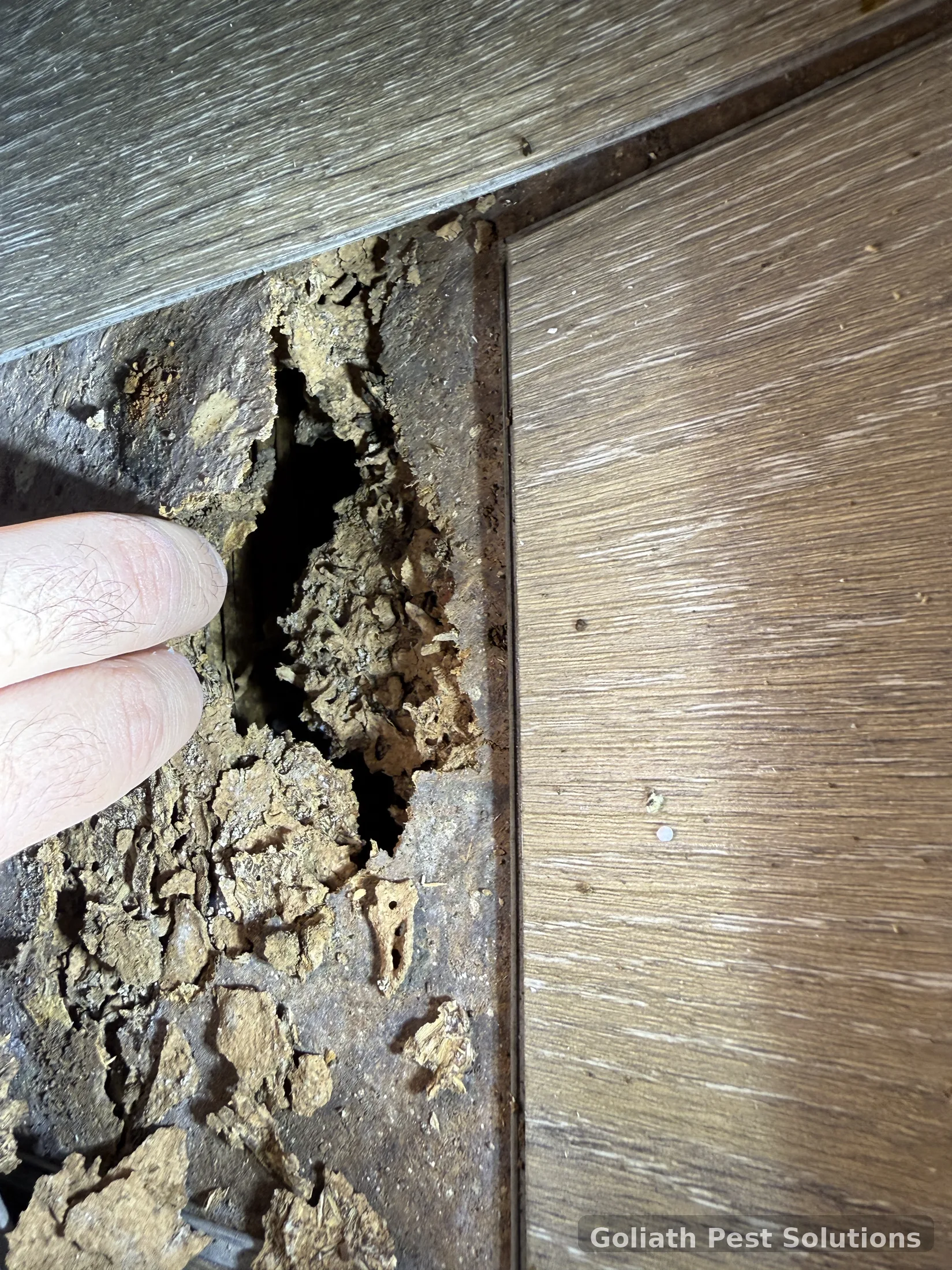
Current activity is a pest-management question. The inspection looks for live termites and other evidence rather than assuming the age of damage from colour or appearance alone.
Accessible areas can be documented, but concealed framing may remain uncertain where linings, floors or fixed finishes prevent inspection.
Repair scope depends on the member affected and the building function it performs. Structural assessment can sit outside the pest inspection and may require another professional.
| Area | Why damage may be difficult to see | Useful follow-up |
|---|---|---|
| Skirtings and door frames | Painted surfaces can remain while internal fibres are affected. | Inspect adjoining wall/floor junctions and look for mudding or moisture. |
| Wall studs and plates | Plasterboard and finishes conceal most framing. | Record inspection limitations and consider further access only where justified. |
| Bearers, joists and subfloors | Low clearance, stored items, dampness and insulation can restrict visibility. | Improve access where practical and assess moisture/ventilation conditions. |
| Roof timbers | Insulation, stored goods and restricted roof access can limit examination. | Inspect accessible rafters, trusses and top plates and document exclusions. |
| Floor systems | Finished flooring can hide subfloor or slab-edge interfaces. | Use construction knowledge and accessible adjoining areas to guide further investigation. |
NSW Government pre-purchase guidance makes a similar distinction between a building report that may identify visible termite damage and a pest inspection that investigates whether timber-destroying pests are still present. The same principle applies after purchase: damage is evidence to investigate, not a complete diagnosis by itself.
Where current termites are present, active treatment is usually addressed before repair work disturbs the evidence or removes access to the infestation. Once termite activity is assessed and managed, damaged materials can be evaluated for repair or replacement. Longer-term termite management and conducive conditions should also be reviewed so the property does not simply receive cosmetic repairs while access and risk factors remain unchanged.
For buyers, see the pre-purchase termite damage guide. For owners who have found live termites, go to Active Termites. If you have only noticed a suspicious change such as blistered paint or hollow timber, start with Signs of Termites in a House.
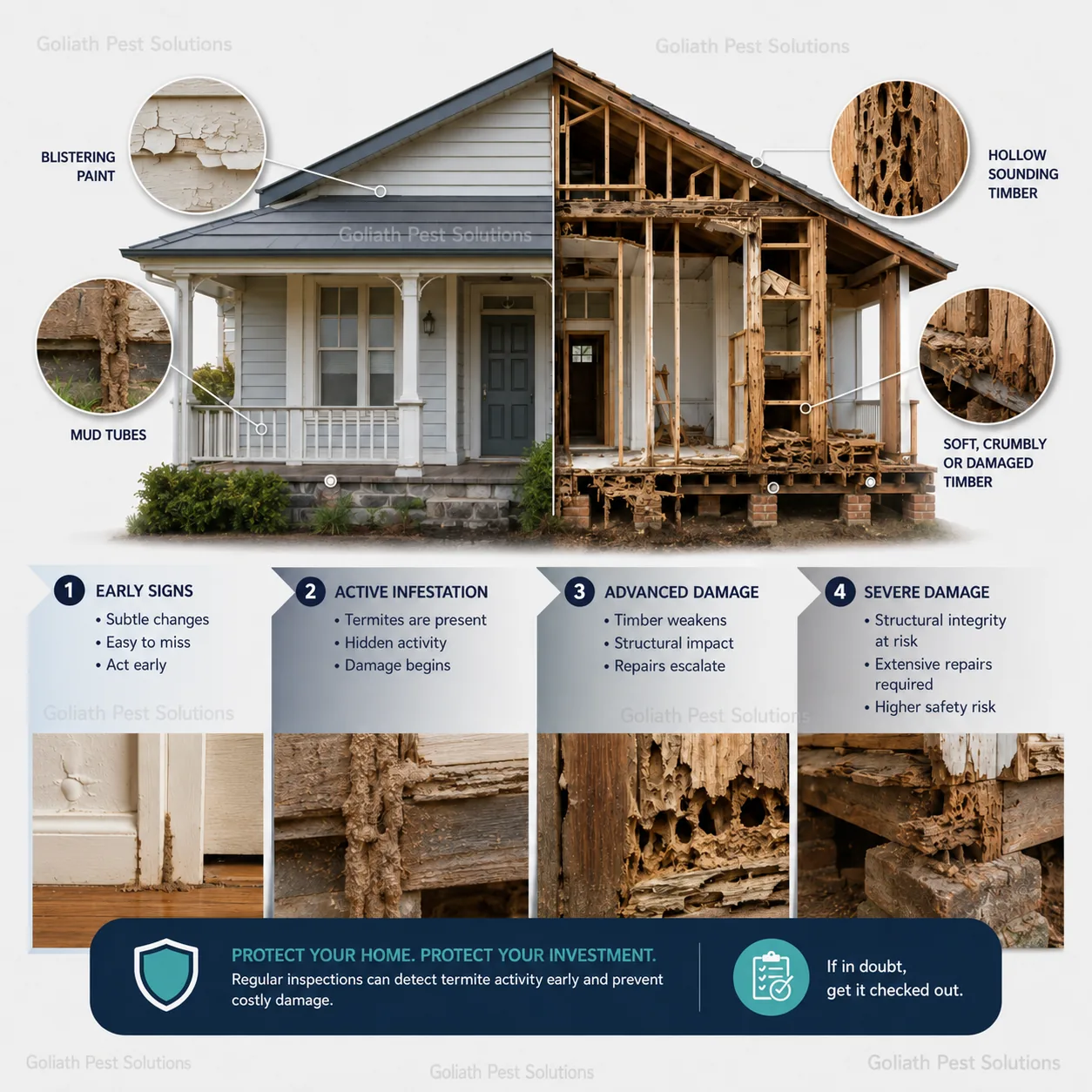
The infographic is educational, not a damage-grading standard. Real properties should be assessed according to the actual timber, construction and accessible evidence.
A visual termite inspection cannot confirm the condition of every concealed wall cavity or enclosed structural member. Fixed floor coverings, cabinetry, wall linings, insulation, low subfloor clearance and stored items can all limit access. Good reporting distinguishes areas that were inspected from areas that were obstructed or inaccessible instead of treating the entire structure as visible.
Where the suspected damage sits beside an inaccessible void, the next step should be proportionate to the evidence. That may mean improving access, removing stored items, arranging a further targeted inspection, or obtaining building advice before destructive opening. The objective is to resolve a real uncertainty, not to open large parts of a house without a clear reason.
Yes. Termites can feed within timber while leaving a thin or partially intact outer surface, so the outside may understate the internal loss.
No. Damage may be historic or associated with current activity. A termite inspection is needed to assess accessible evidence of present activity and the surrounding property.
A termite inspection assesses pest evidence and related risk conditions. Structural adequacy or repair design may require a builder, engineer or other appropriately qualified professional depending on the damage.
Wall framing, skirting boards, floor systems, roof timbers, subfloor bearers and joists, door frames and concealed junctions can all contain timber that is difficult to assess from the surface.
Avoid unnecessary destructive opening unless directed by an appropriate professional. Start with a termite assessment and record any inaccessible areas or limitations that may need further investigation.
Arrange a termite inspection first so current activity, visible damage and access limitations are documented. If the damaged timber may be structurally important, obtain suitable building or engineering advice for the repair question as well.
Sources: NSW Government pre-purchase inspection guidance and Building and Plumbing Commission Victoria termite guidance.

1300 953 966 • info@goliathpestcontrol.com.au
Mortlake NSW 2137 • Sydney-wide service
Active termites • Chemical barriers • Inspections • Guides • Quote review • Contact
RELATED TERMITE RESOURCES
Educational signs are useful, but the service decision depends on current activity, access, damage and the individual property.
Find guides, treatments, standards, report help and Sydney service areas.
Compare treatment methods, learn what inspections involve and see genuine termite-management work completed by Goliath Pest Solutions.
Enter your postcode and we’ll check whether it falls within our standard service area from Mortlake.