SYDNEY TERMITE SPECIALISTS  •   TERMIDOR ACCREDITED  •  1300 953 966
TERMITE SHELTER TUBES • IDENTIFICATION

Termite Mud Tubes: What They Mean and What to Do Next

Mud tubes are one of the most recognisable signs associated with subterranean termites, but their real value is as evidence of a protected travel route. A tube can help an inspector understand where termites have moved between soil, concealed spaces and timber. It should not be treated as a DIY target to scrape away or spray without first understanding the surrounding activity.
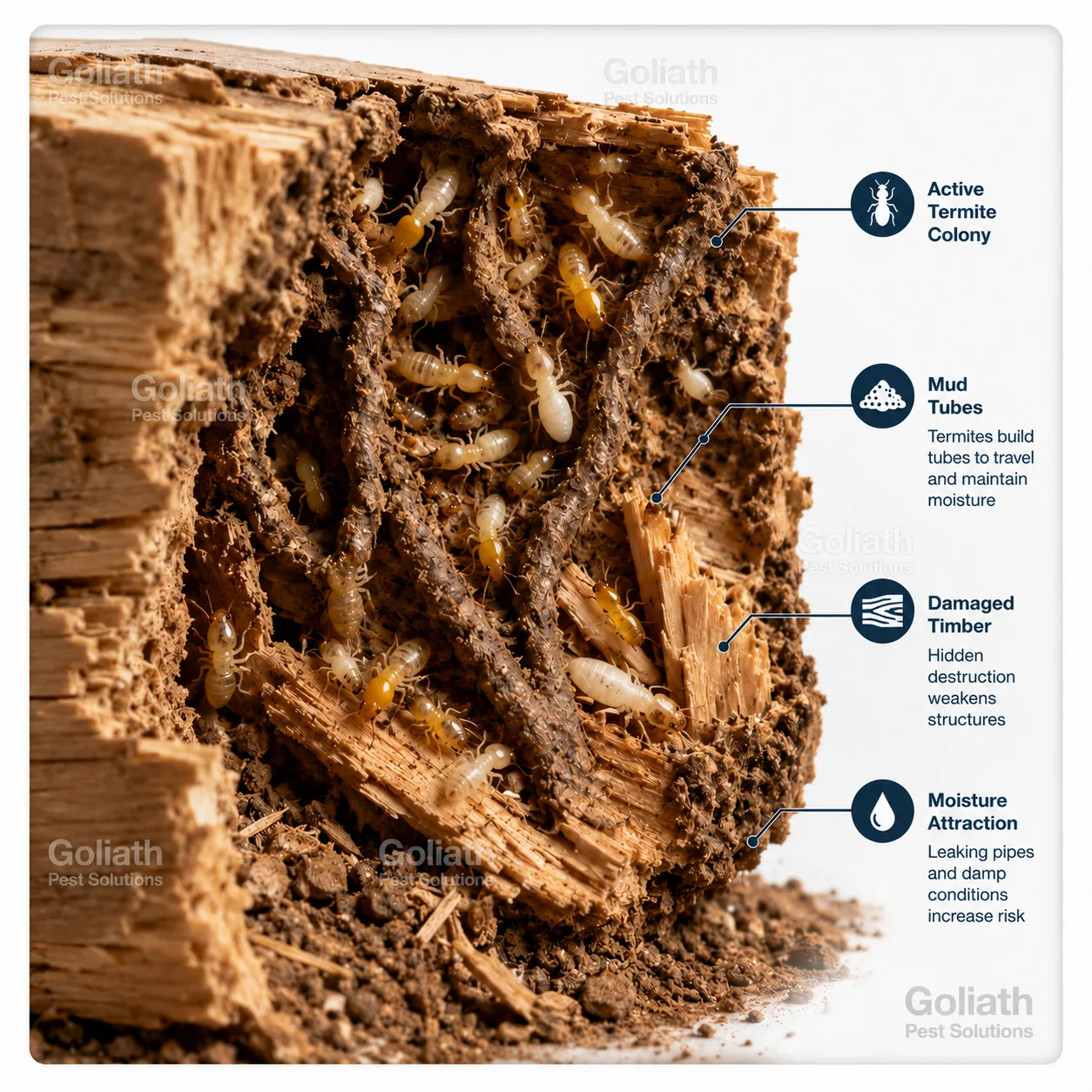
Sheltered termite travelEvidence, not full diagnosisPreserve before inspection
Goliath Pest Solutions educational image showing termites, mud tubes and damaged timber
WHY TERMITES BUILD COVERED PATHWAYS

Mud tubes help termites move through a hostile exposed environment

Termites are vulnerable to drying out when exposed. NSW environmental education material explains that many termites build covered mud runways so they can move between nest and food while protected from sunlight, dry air and predators. The tube creates a more favourable enclosed pathway across surfaces that would otherwise leave the insects exposed.

In and around buildings, those pathways can appear on masonry, piers, foundation walls, slab edges, timber, plumbing or other service areas. A tube may be narrow and discreet or form part of much heavier mudding where a concealed route has been used extensively.
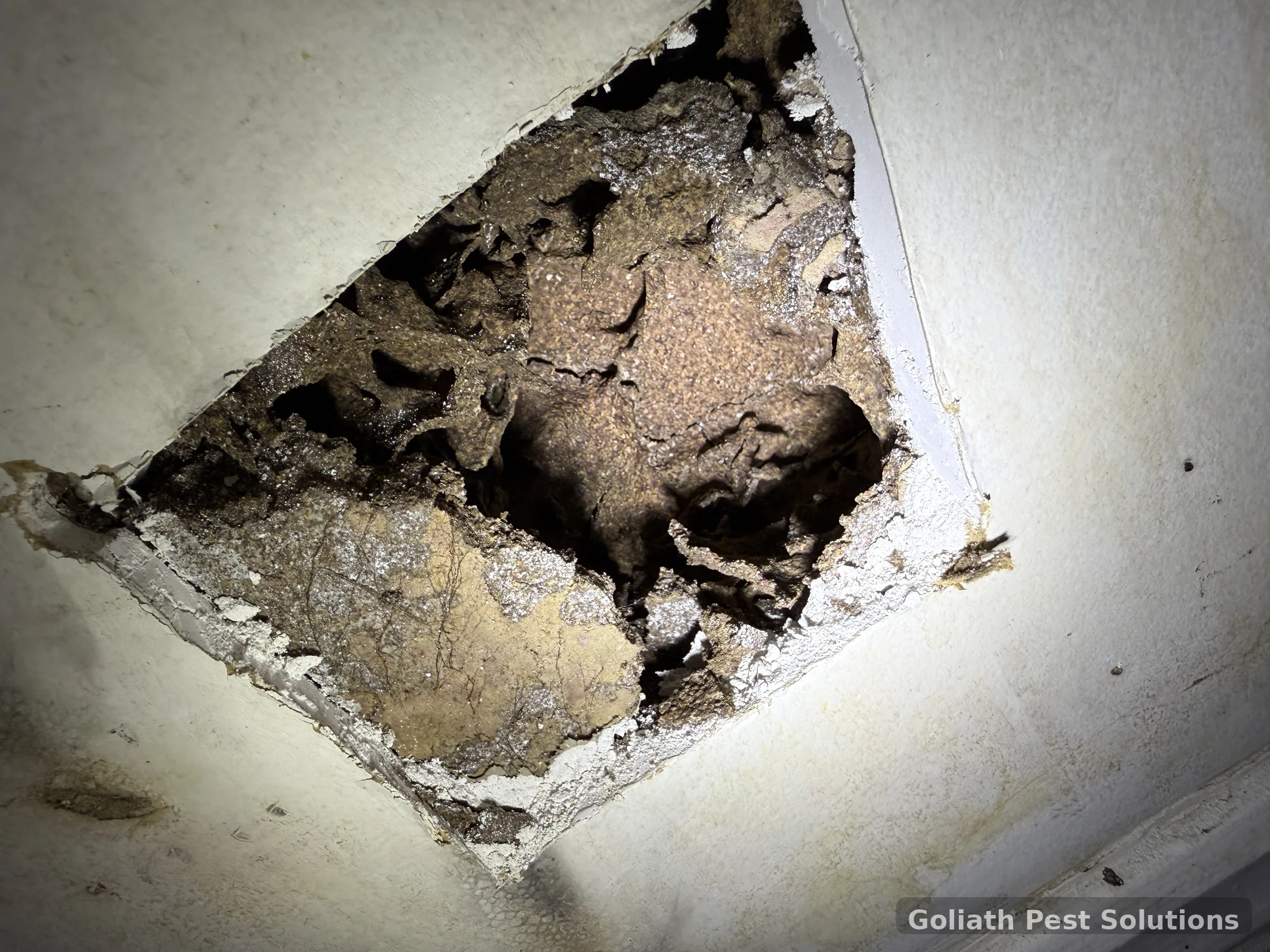
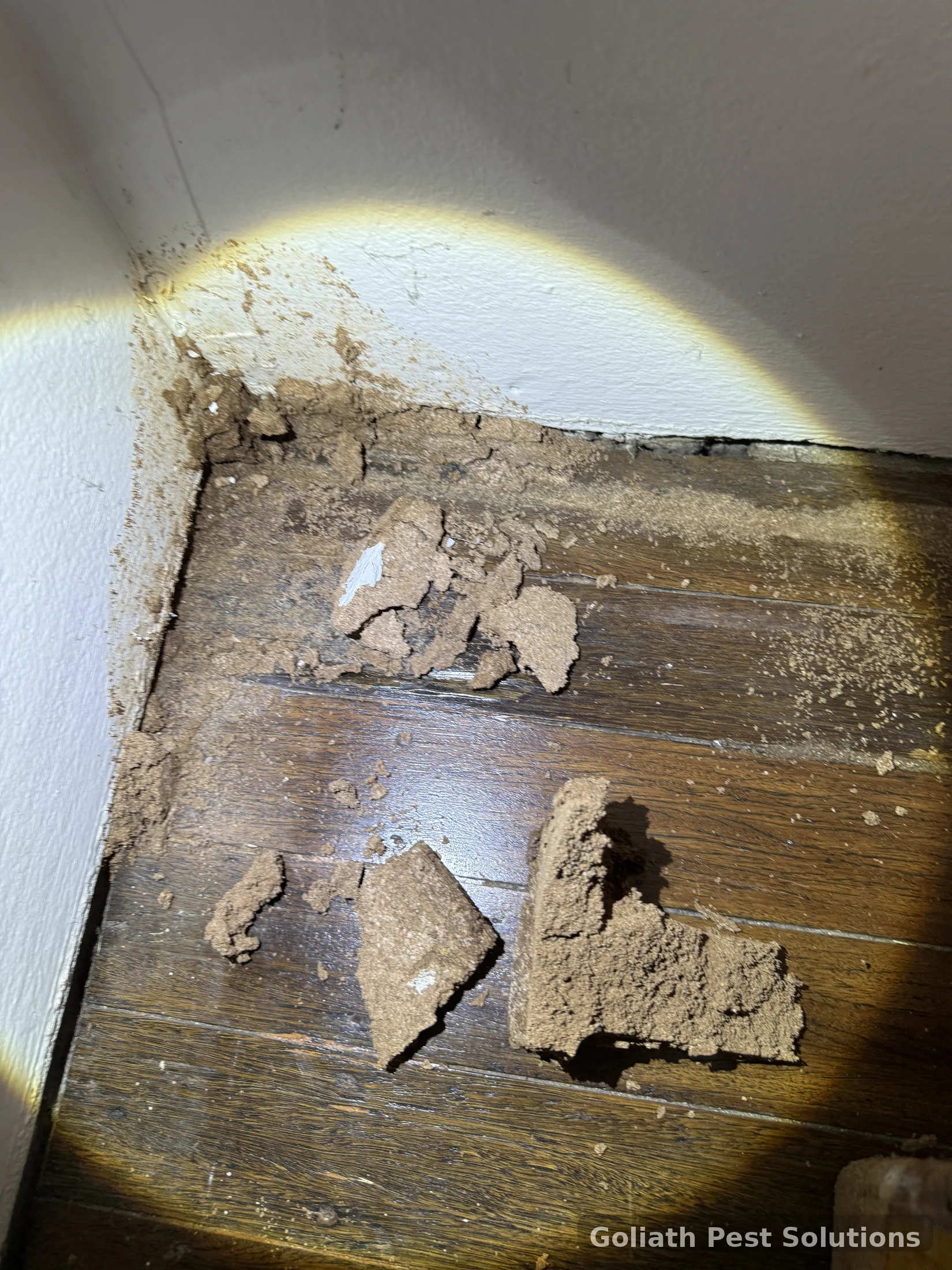
A tube is a clue to a route. The important questions are where the route begins, where it enters the structure, what timber or concealed spaces it reaches, and whether current activity can be established during inspection.
Termite mudding and concealed activity at a Sydney propertyTermite shelter material beside damaged timberSubfloor area inspected for termite entry pathways
WHAT A TUBE CAN AND CANNOT TELL YOU

Useful evidence still needs context

It shows protected movement

The presence of shelter material supports that termites have used the route. Its location can help focus inspection on nearby junctions, timber and concealed areas.

It does not map the colony

A visible tube does not tell you where the nest is located, how large the colony is or how far other foraging routes extend through the property.

It does not measure damage

Heavy mudding may look dramatic, but structural impact depends on which timber has been affected and how much material has been lost, not on the tube size alone.

It may not prove current activity

Historic tubes can remain after activity changes. Current assessment considers live termites, fresh material and surrounding evidence rather than the tube in isolation.

WHERE TO CHECK

Follow the building interfaces, not just the visible line

When a tube is visible, photograph both the close-up and the wider building context. Note whether it crosses from soil to masonry, continues behind a skirting, runs up a pier, follows a pipe, disappears into a crack or joins timber. Look for nearby moisture, leaking plumbing, high garden soil, stored cellulose material or timber-to-soil contact without dismantling the structure.

LocationWhy it mattersInspection question
Subfloor pier or foundation wallCan provide a sheltered route from soil into bearers, joists or wall framing.Is the route visible from ground to timber, and what adjoining areas are accessible?
Slab edge or external wallSoil, paving, landscaping or render can obscure inspection zones and entry points.Is the slab edge visible and are there bridged or concealed sections nearby?
Service penetrationPipes and other penetrations create construction interfaces worth checking.Does the tube enter a gap or concealed junction around the service?
Internal skirting or wall junctionVisible mudding indoors may be only the exposed portion of concealed activity.What adjacent timber and inaccessible voids need further assessment?
WHAT TO DO AFTER YOU FIND ONE

Document, avoid unnecessary disturbance, then inspect

Do not rely on removing the tube as a treatment. The insects may have other concealed pathways, and the important issue is the termite activity and access route behind the visible evidence. Photograph the tube, record the location and arrange a termite inspection. If live termites are exposed accidentally, avoid repeatedly opening or spraying the area before professional advice.

After inspection, the response depends on the findings. Current termite activity may require an active termite treatment strategy. Longer-term property protection may involve a chemical treated zone, monitoring or baiting, building rectification, moisture management or a combination appropriate to the property. The tube itself is not the treatment plan.

Goliath property protection notice after termite management work

Keep treatment records and durable notices after work is completed so future inspectors can understand the property’s termite-management history.

BEFORE TREATMENT IS CHOSEN

The tube should lead to questions about the whole property

A visible shelter tube can tempt a homeowner to focus treatment on a few centimetres of wall. Termite management needs a wider view. The inspector should consider accessible activity, adjoining timber, other possible routes, moisture and drainage, building construction, previous termite-management records and areas that could not be inspected. The final recommendation may be very different for a slab-on-ground house, a raised timber floor or a property that already has a documented barrier or monitoring system.

This is also why an old tube should not automatically be dismissed. Even when no live termites are found in that exact section, the route can still be relevant to the property history and to future inspection. Keep photographs and any treatment records so the next inspection does not start from zero.

COMMON QUESTIONS

Termite mud tube FAQs

What is a termite mud tube?

A termite mud or shelter tube is a protected pathway made from soil and other material that helps termites move while reducing exposure to dry air, light and predators.

Does a mud tube mean termites are active right now?

It confirms termite-related sheltering or movement has occurred, but a tube alone does not establish whether it is currently active. The surrounding area and accessible structure should be assessed.

Should I scrape a termite tube off the wall?

Not before documenting it and arranging assessment. Removing it can destroy useful evidence about the route termites were using.

Where are termite tubes commonly found?

They can appear on foundation walls, subfloor piers, slab edges, masonry, service penetrations, timber junctions and other sheltered routes between soil and building materials.

Can termites be present without visible mud tubes?

Yes. Concealed entry can occur through building joints, cracks, penetrations or inaccessible areas, so the absence of a visible tube does not prove a property is termite-free.

NEXT STEP

Found a suspicious mud tube?

Leave it in place where practical, photograph it and contact Goliath. We can help determine whether a termite inspection is the appropriate next step and what surrounding areas need attention.

Sources: NSW Field of Mars EEC termite fact sheet and Victorian Department of Health termite guidance.

Goliath Pest Solutions

Termite Quote Beat by Goliath Pest Solutions

1300 953 966 • info@goliathpestcontrol.com.au
Mortlake NSW 2137 • Sydney-wide service

Active termites • Chemical barriers • Inspections • Guides • Quote review • Contact

RELATED TERMITE RESOURCES

From termite evidence to the right next step

Educational signs are useful, but the service decision depends on current activity, access, damage and the individual property.

Find termite answers and real projectsSydney termite specialists
Case StudiesActive TermitesTermite BarriersInspectionsTermidor HE
SYDNEY TERMITE SERVICE AREAS Looking for termite treatment in your suburb?
VIEW ALL SERVICE AREAS →
SUBURB NOT LISTED? NO PROBLEM. We service properties across the wider Sydney area.

Enter your postcode and we’ll check whether it falls within our standard service area from Mortlake.

Coverage is an approximate service-area check based on postcode location, not driving distance. Quote review is still available for edge-of-area and larger termite projects.