
SYDNEY TERMITE SPECIALISTS  •   TERMIDOR ACCREDITED  •  1300 953 966
WINGED TERMITES • ALATES

Flying Termites in Sydney: What Alates and Shed Wings Mean

Seeing dozens of winged insects around a light, window or room can be alarming. In a termite colony, the winged reproductive caste is called the alates. Their appearance signals that a mature colony has produced reproductives, but it does not automatically tell you whether the colony is inside the building, in nearby soil, a tree or another concealed location.
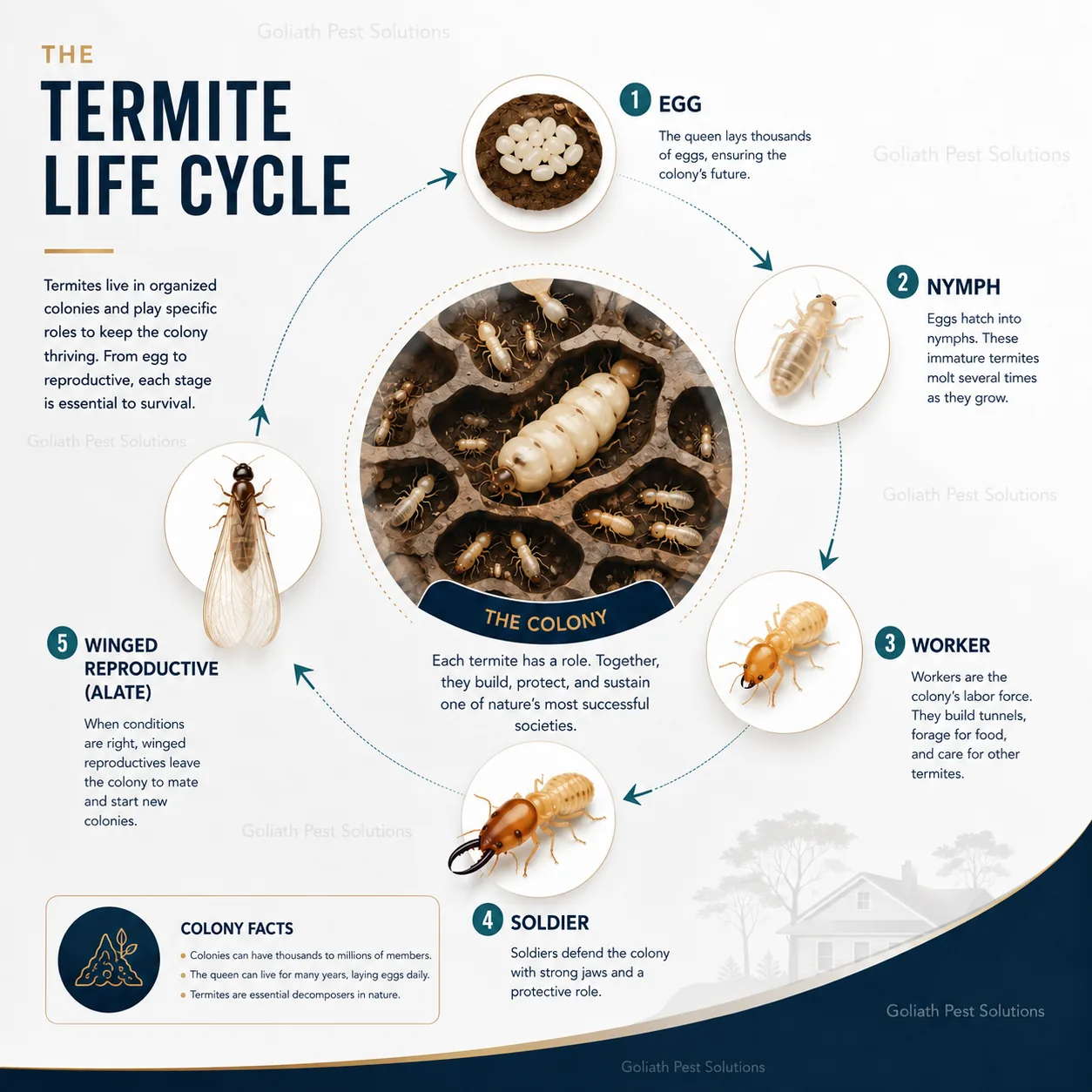
Winged reproductivesShed wings are useful evidenceIndoor swarms deserve follow-up
Goliath Pest Solutions termite life cycle infographic showing winged reproductive alates
WHAT AN ALATE IS

The flying stage has a specific job: reproduction and dispersal

Termite colonies contain different castes with different roles. Victorian Department of Health guidance describes alates as the true winged adult termites. They have eyes, darker colouring and two pairs of wings of similar size and shape. When a colony reaches the stage where it produces winged reproductives, those termites wait for suitable conditions and then leave on a colonising flight.

After landing, prospective reproductives shed their wings, pair and attempt to establish a new colony in a suitable location. That is why detached wings on floors, window sills or around lights can be as useful to record as the insects themselves.
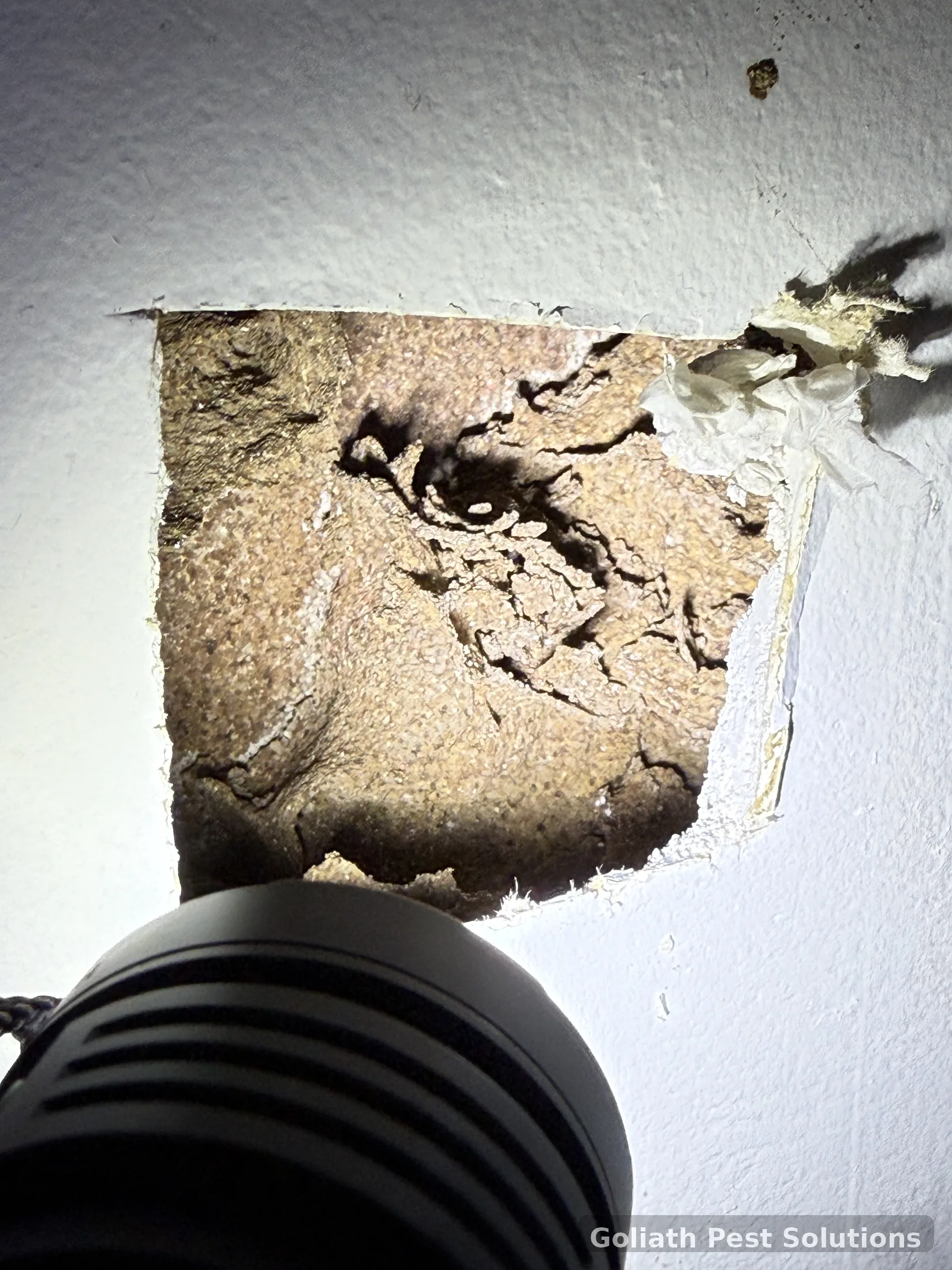
What an indoor swarm means: it is strong reason to investigate the property, but it is not a map of the colony. The emergence point, surrounding building junctions and other termite evidence still need assessment.
Termite activity and damaged timber exposed during field work

Winged termites are only one caste. Most destructive feeding activity in structures is associated with the worker caste operating in concealed galleries and routes.

TERMITE OR ANT?

Use several identification features rather than guessing from the word “flying”

Wings

Australian termite fact sheets describe alates as having two pairs of similar-sized wings. Winged ants generally have more obvious differences between the front and rear pairs.

Antennae and body

Termites have bead-like antennae and a body form without the strongly pinched waist typical of ants. Photographs of intact insects are helpful when asking for identification.

Shed wings

Termite alates shed their wings after flight. Groups of loose, similar-looking wings indoors should be documented and considered alongside other termite evidence.

WHY SWARMS APPEAR SUDDENLY

Colonising flights depend on suitable environmental conditions

Swarming is not a daily event. Government termite guidance notes that winged reproductives may leave under conditions such as high humidity, still air and sometimes low light. The exact timing differs between termite species and local conditions, so Sydney homeowners may notice bursts of winged activity around warm or humid weather rather than a steady presence.

Because alates are attracted to light, they may collect around windows and light fittings. If the insects appear to be emerging from an internal wall, skirting, floor junction, roof area or another part of the building rather than simply arriving from outside, make a careful note of the emergence point before cleaning up.

What you observeHow to document itWhy it matters
Winged insects outside near lightsPhotograph several intact insects and note time/weather.May indicate a mature termite colony somewhere in the surrounding environment.
Large indoor swarmPhotograph insects, wings and the apparent emergence area.Indoor emergence deserves prompt property assessment.
Pile of shed wingsLeave some in place or collect a sample without discarding all evidence.Supports that winged termites have completed a flight nearby.
Repeated eventsRecord dates and rooms/locations.Repeated indoor activity can help focus inspection on concealed sources.
WHAT TO DO NEXT

Check for the colony’s other evidence, not just the flying caste

After an alate event, an inspection looks for the broader termite picture: shelter tubes, concealed entry routes, damaged timber, moisture conditions, construction interfaces and any visible activity. The worker termites responsible for feeding are usually hidden, so a swarm can be the event that reveals a problem that was otherwise out of sight.

If current activity is confirmed, see the Active Termites guide. If the main concern is what a swarm means biologically, continue to the Termite Life Cycle guide. If you simply have a photo and are unsure whether it is a termite, send it to Goliath with the location and circumstances.
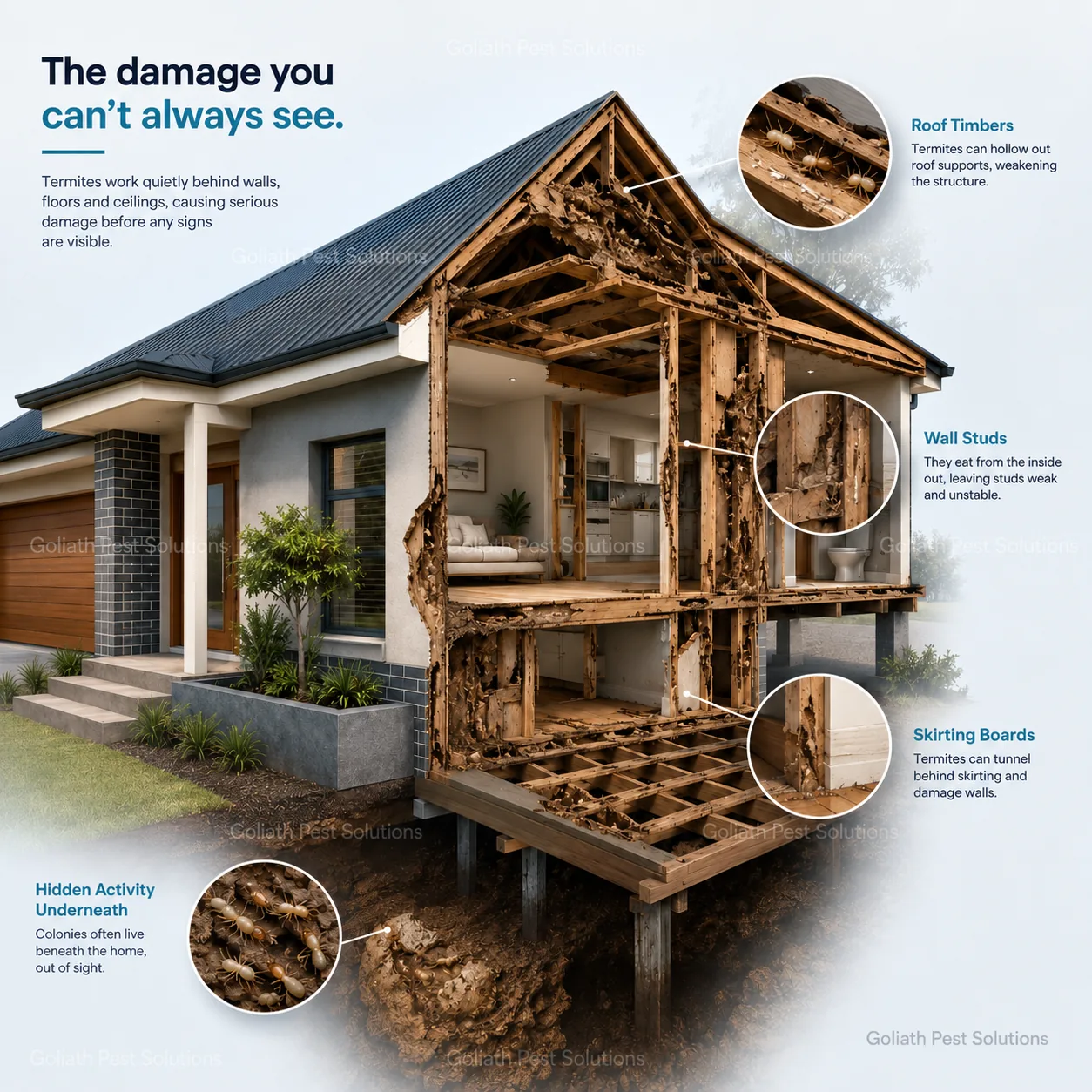
Educational cutaway showing concealed termite damage within a home

A swarm is visible. The worker activity and damage associated with a colony may still be concealed within soil pathways and timber.

INDOOR VS OUTDOOR CONTEXT

Where the alates appeared changes the urgency of the follow-up

A swarm outdoors can originate from a colony in soil, a tree, stump or another structure nearby. That still demonstrates termite activity in the local environment, but it does not locate a building infestation. A large indoor emergence is more concerning because the insects may have travelled through concealed building spaces before reaching a light or window. The actual emergence point is therefore useful evidence.

If you clean up, keep several intact insects or clear photographs. Photograph any small opening, crack, skirting junction or wall area from which the insects appeared. During inspection, that information can be considered together with shelter tubes, timber damage, moisture and construction details rather than treating the swarm as an isolated event.

COMMON QUESTIONS

Flying termite and alate FAQs

What are flying termites?

Flying termites are alates, the winged reproductive caste produced by mature termite colonies. They leave the colony during a colonising flight and may form new colonies after pairing and shedding their wings.

Why do I find piles of termite wings near windows?

Alates shed their wings after flight. A pile of similar-sized shed wings can therefore be useful evidence that a termite flight has occurred nearby and should be investigated, particularly when found indoors.

Are flying termites the same as flying ants?

No. Termites are not ants. Australian guidance describes termite alates as having two pairs of similar-sized wings. Identification should consider the whole insect rather than relying on one feature.

Does one flying termite mean my house has a colony?

Not necessarily. Alates can travel from a colony outside the building. Repeated indoor emergence, large numbers or piles of shed wings inside the home warrant closer assessment.

When do termite swarms happen?

Swarming conditions vary by species and location. Government guidance notes that high humidity, still air and sometimes low light can trigger colonising flights, so warm humid periods can make alates more noticeable.

NEXT STEP

Found flying termites or a pile of shed wings?

Take clear photos, record where they appeared and contact Goliath. Indoor swarming or repeated shed wings are worth investigating even when you cannot see worker termites.

Sources: Victorian Department of Health termite colony and alate guidance, NSW Field of Mars EEC termite fact sheet and Australian Museum termite identification.

Goliath Pest Solutions

Termite Quote Beat by Goliath Pest Solutions

1300 953 966 • info@goliathpestcontrol.com.au
Mortlake NSW 2137 • Sydney-wide service

Active termites • Chemical barriers • Inspections • Guides • Quote review • Contact

RELATED TERMITE RESOURCES

From termite evidence to the right next step

Educational signs are useful, but the service decision depends on current activity, access, damage and the individual property.

Find termite answers and real projectsSydney termite specialists
Case StudiesActive TermitesTermite BarriersInspectionsTermidor HE
SYDNEY TERMITE SERVICE AREAS Looking for termite treatment in your suburb?
VIEW ALL SERVICE AREAS →
SUBURB NOT LISTED? NO PROBLEM. We service properties across the wider Sydney area.

Enter your postcode and we’ll check whether it falls within our standard service area from Mortlake.

Coverage is an approximate service-area check based on postcode location, not driving distance. Quote review is still available for edge-of-area and larger termite projects.