
SYDNEY TERMITE SPECIALISTS  •   TERMIDOR ACCREDITED  •  1300 953 966
TERMITE BIOLOGY • COLONY ROLES

The Termite Life Cycle: Eggs, Workers, Soldiers and Winged Alates

A termite colony functions as a social system rather than a group of identical insects. Eggs and young develop into castes with specialised roles, including workers that forage and maintain the colony, soldiers that defend it and reproductives that produce future generations. Understanding those roles helps explain why the termites you see are often only a small part of the colony.
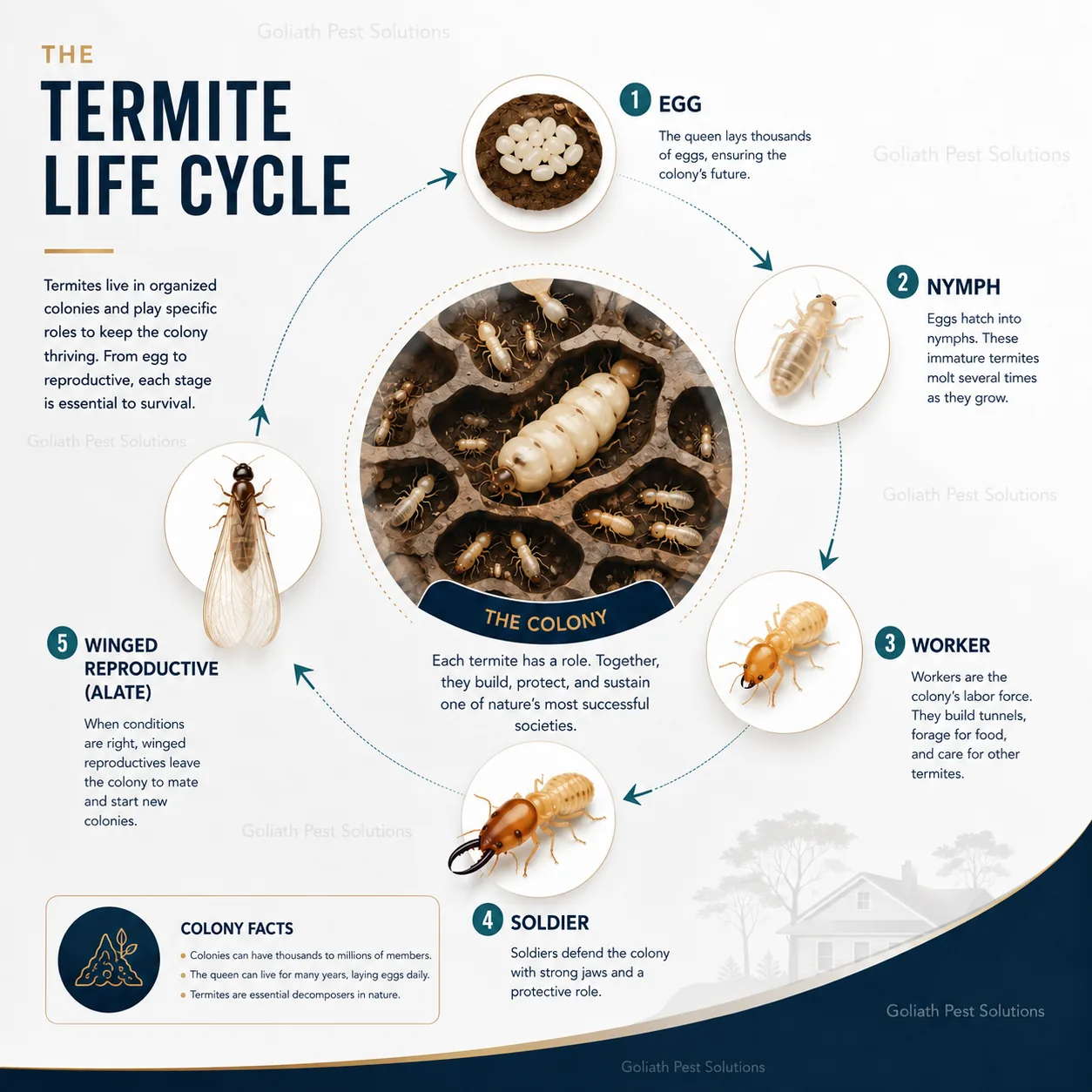
Colony-based insectSpecialised castesAlates establish new colonies
Goliath Pest Solutions educational infographic explaining termite eggs, workers, soldiers and winged reproductives
A SOCIAL COLONY, NOT A SOLITARY PEST

Different termites perform different jobs

Australian Museum and NSW education material describe termites as social insects that live in colonies. Although they are often called “white ants”, termites are not ants. Their colony structure includes reproductive adults, workers and soldiers, with young termites developing into different forms according to species and colony requirements.

That division of labour matters in pest management. The pale worker termites commonly exposed in damaged timber are not the winged termites that establish new colonies, and the large-jawed soldiers seen alongside workers are not the main feeding caste. A small exposed group therefore represents only one part of a much larger social system.
The life-cycle graphic is intentionally simplified for homeowners. Termite developmental pathways vary between species. Use it to understand colony roles rather than as a diagnostic chart for identifying a particular Sydney species.
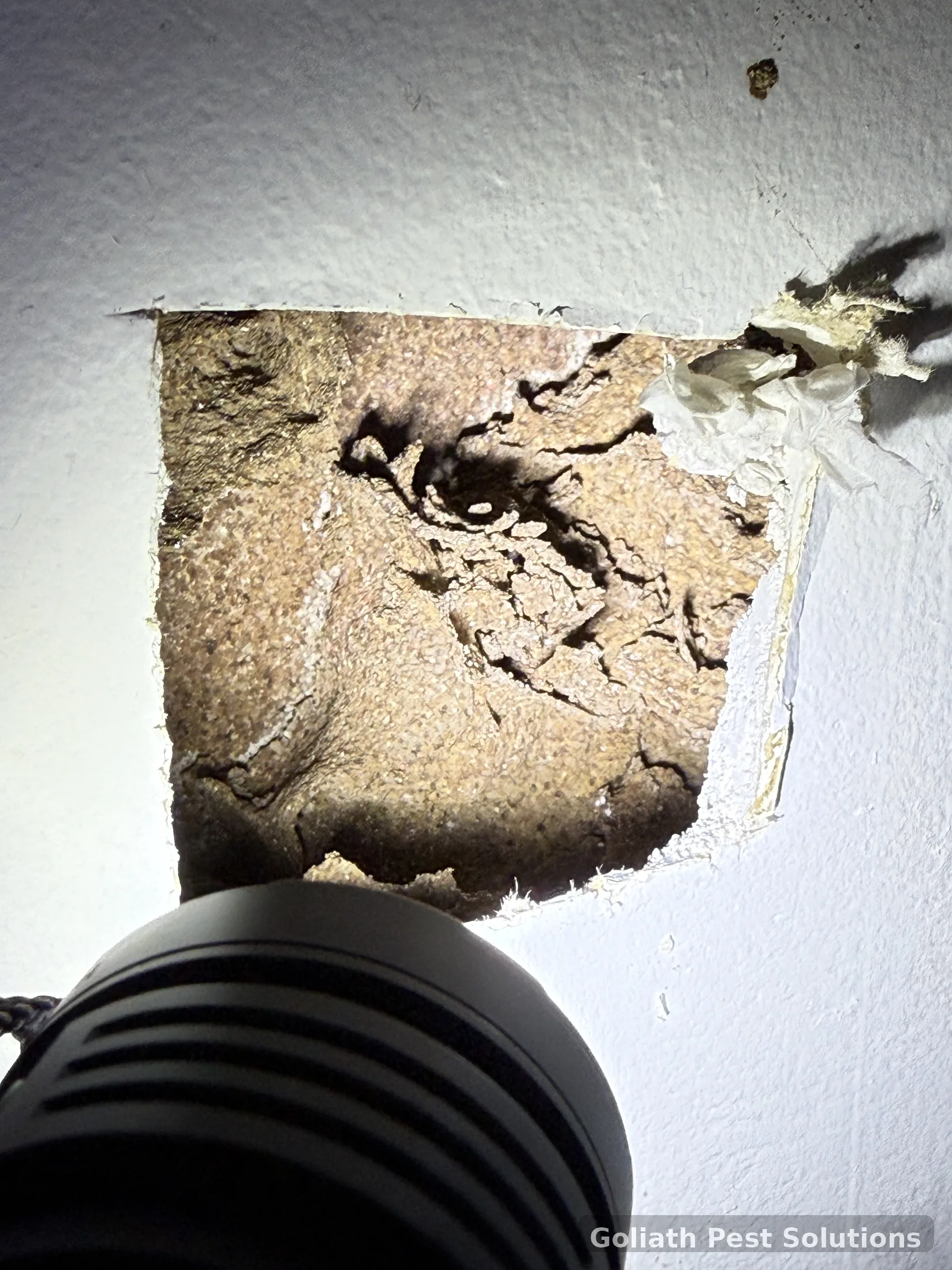
Worker and soldier termites exposed in damaged timber

Real colony composition and termite appearance vary by species and caste.

COLONY ROLES

A practical homeowner view of the main stages and castes

EggsProduced by reproductive termites and tended within the colony.
Young termitesImmature termites develop and are cared for by nest mates.
WorkersForage, feed colony members, maintain galleries and perform most labour.
SoldiersSpecialised defenders that protect workers and the colony from threats.
AlatesWinged reproductives that leave mature colonies and attempt to establish new ones.

Victorian health guidance describes winged alates as fertile adults with two pairs of similar-sized wings. After a colonising flight they shed their wings, pair and may begin a new colony. That process explains why a sudden swarm or discarded wings can be the first visible clue homeowners notice.

WHY THE WORKER CASTE MATTERS IN BUILDINGS

The termite that feeds on timber is usually not the termite flying around your light

Workers undertake feeding and foraging duties. They move through soil and sheltered galleries, find cellulose sources and support other colony members. When a piece of timber is opened and pale termites are moving through earth-like material, workers are often the most numerous caste present, with soldiers appearing among them.

That distinction is useful because killing a handful of exposed workers does not explain or necessarily resolve the broader colony. Professional termite management considers the type and location of activity, property construction, access routes and the treatment objective rather than focusing only on the insects visible at one opening.

CasteMain roleWhat a homeowner may notice
WorkersForaging, feeding, nest and gallery work, care of colony members.Pale soft-bodied termites inside damaged wood, mudding or concealed galleries.
SoldiersColony defence.Termites with more specialised heads or jaws among groups of workers.
AlatesDispersal and reproduction.Winged termites during a swarm or piles of shed wings after flight.
King and queen / reproductivesReproduction within the colony.Usually remain concealed within the nest and are not what homeowners typically expose in wall or floor timber.
BIOLOGY INTO PRACTICAL DECISIONS

Why colony behaviour influences inspection and treatment

Because termites operate as a colony and forage through concealed networks, visible activity is rarely the whole picture. Inspection aims to establish where activity is present, what routes are accessible, whether damage exists and what building conditions influence the problem. Treatment choices can then be matched to the objective, such as managing current activity, providing a treated zone, monitoring or baiting, or addressing conducive conditions.

If your interest began with a swarm, go to Flying Termites in Sydney. If you have found pale workers in timber, see Active Termites. If you are researching warning signs generally, use Signs of Termites in a House.
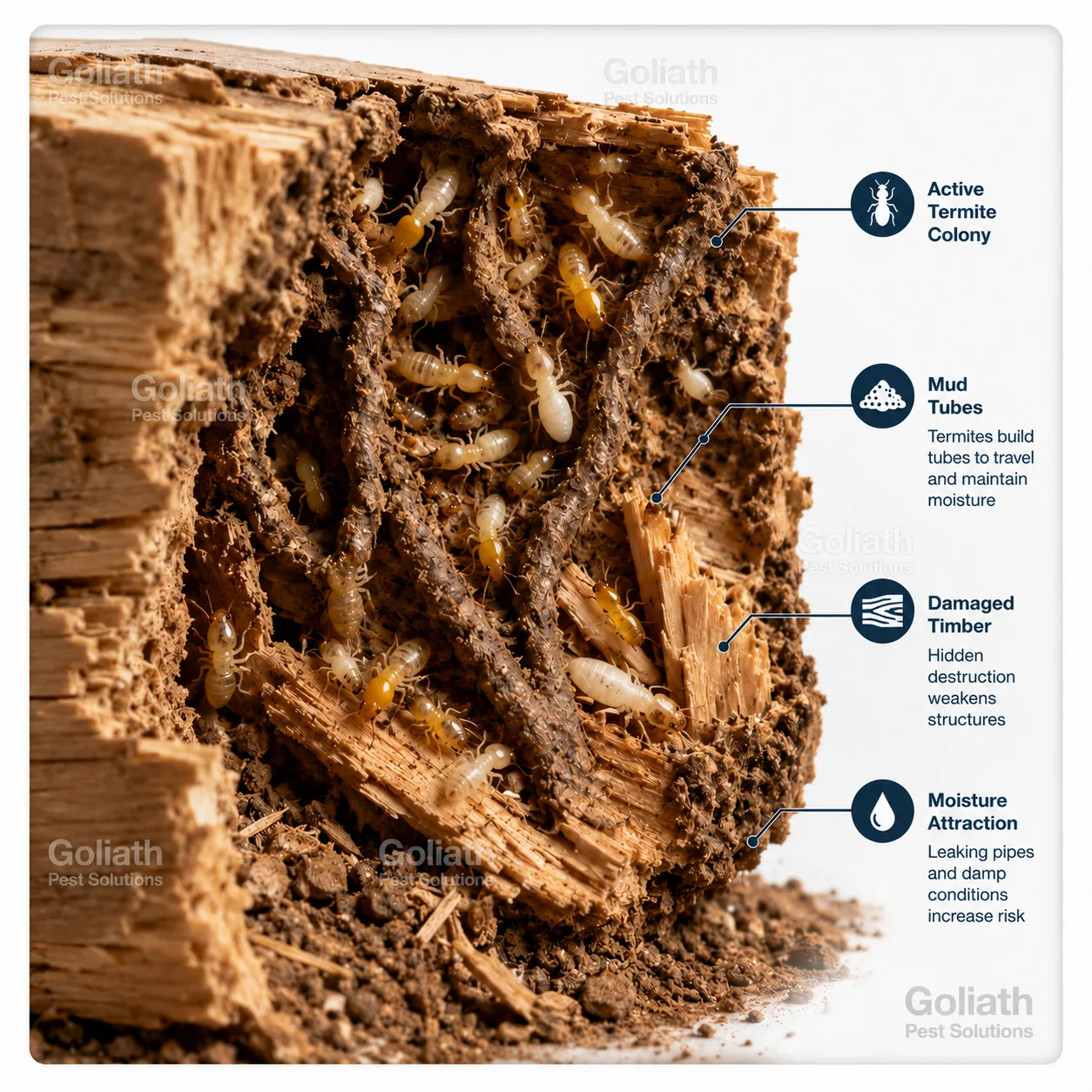
Educational illustration of active termite colony activity in damaged timber

Educational illustration. Actual species, caste appearance and nest structure differ across Australian termites.

COLONIES CHANGE OVER TIME

The castes are connected by food transfer, grooming and shared colony work

Workers support the colony by feeding and grooming other termites as well as maintaining galleries and foraging for food. Soldiers depend on workers for much of their care, while reproductives remain focused on producing offspring. This interdependence is one reason termite management is usually described at the colony or property level rather than as simply killing the handful of insects that happen to be visible.

Colony development is also not identical across every Australian species. Numbers, nesting habits, caste proportions and developmental pathways vary. For a homeowner, the useful principle is simpler: visible workers, soldiers or alates each represent a specialised role within a social colony, and their presence should be interpreted alongside the building evidence rather than used as a stand-alone estimate of colony size.

COMMON QUESTIONS

Termite life cycle FAQs

What are the main termite castes in a colony?

A termite colony includes reproductive termites and non-reproductive castes such as workers and soldiers. Winged reproductive termites are called alates.

Do worker termites become soldiers in a simple fixed sequence?

Termite development varies by species and colony needs, so a homeowner infographic is a simplified way to understand roles rather than a complete developmental map for every species.

Which termites damage timber?

Workers are responsible for foraging, feeding and many colony maintenance tasks, including feeding on cellulose materials. Soldiers primarily defend the colony, while reproductives produce offspring.

Why do termites grow wings?

Mature colonies can produce alates, the winged reproductive caste. They leave on colonising flights, pair and may establish new colonies.

Are termites ants?

No. Although they are commonly called white ants, termites are a separate insect group and are more closely related to cockroaches than true ants.

NEXT STEP

Have a termite photo you want identified in context?

Send Goliath clear photos showing the insects and the surrounding timber, soil or building area. We can help determine whether a property inspection is warranted and explain what caste or activity may be visible.

Sources: Australian Museum termite overview, Australian Museum termite identification, NSW Field of Mars EEC termite fact sheet and Victorian Department of Health termite life-cycle guidance.

Goliath Pest Solutions

Termite Quote Beat by Goliath Pest Solutions

1300 953 966 • info@goliathpestcontrol.com.au
Mortlake NSW 2137 • Sydney-wide service

Active termites • Chemical barriers • Inspections • Guides • Quote review • Contact

RELATED TERMITE RESOURCES

From termite evidence to the right next step

Educational signs are useful, but the service decision depends on current activity, access, damage and the individual property.

Find termite answers and real projectsSydney termite specialists
Case StudiesActive TermitesTermite BarriersInspectionsTermidor HE
SYDNEY TERMITE SERVICE AREAS Looking for termite treatment in your suburb?
VIEW ALL SERVICE AREAS →
SUBURB NOT LISTED? NO PROBLEM. We service properties across the wider Sydney area.

Enter your postcode and we’ll check whether it falls within our standard service area from Mortlake.

Coverage is an approximate service-area check based on postcode location, not driving distance. Quote review is still available for edge-of-area and larger termite projects.