Termite concerns in Marsfield often begin with uncertainty rather than an obvious infestation: a moisture reading, suspicious timber, a previous owner’s treatment record or a pre-purchase recommendation. Goliath Pest Solutions can assess the termite question and help separate what is known from what still needs investigation.
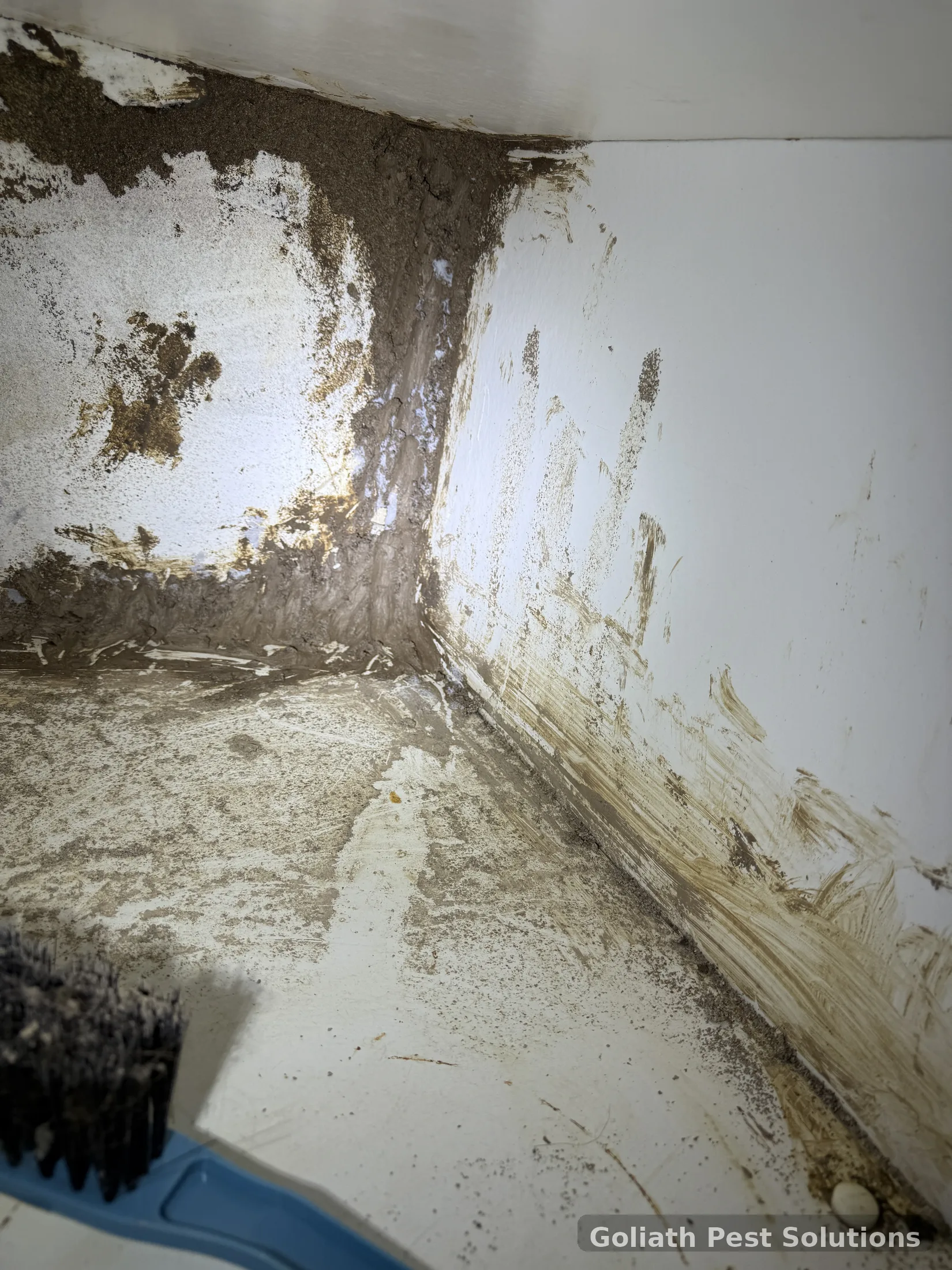
Genuine Goliath Pest Solutions field photography. Image location is not represented as Marsfield unless specifically documented.
A damp wall, subfloor, bathroom interface or drainage issue deserves attention because persistent moisture can create conditions that need closer inspection. However, a high moisture reading does not identify termites by itself. Plumbing, waterproofing, condensation and other building issues can produce similar readings.
That is why termite assessment in Marsfield should combine diagnostic readings with physical evidence and construction context. If a meter or thermal image highlights an area, the next question is what accessible timber, finishes, voids and adjacent building interfaces show. The result may be a termite issue, a building-maintenance issue, both, or neither.

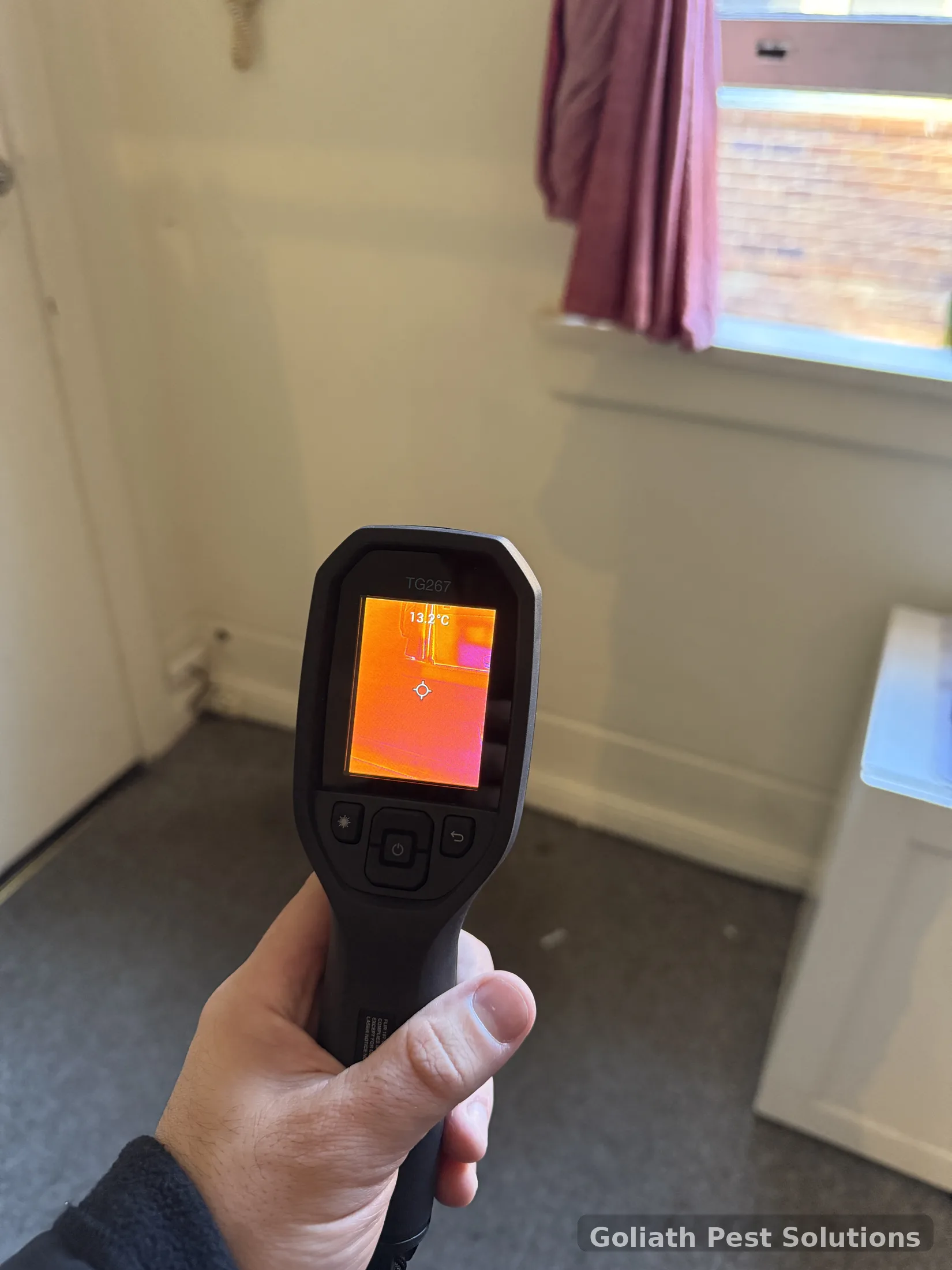
Supporting field image used to explain inspection or treatment considerations. It is not presented as a photographed job in Marsfield.
Rather than treating every moisture or timber concern as the same problem, work through the evidence in sequence.
Check the likely moisture source, surrounding materials and whether termite evidence is also present.
Look for damage pattern, mudding, accessible galleries and whether the timber is structurally or cosmetically affected.
Record notices, drill holes, stations and invoices before assuming the protection is current or complete.
Consider inspection access, conducive conditions and future monitoring rather than applying treatment without a reason.
The value of inspection comes from combining observations. A technician can use moisture and thermal tools to support the process, but must also inspect accessible timber, perimeter areas, subfloor or slab interfaces and other places where termite movement or damage may be evident.
If the property has recently had a leak repaired, keep that information available. A changed moisture condition can affect what the technician sees and how readings are interpreted. Likewise, if stored items or fitted finishes restrict access, those limitations should be documented rather than ignored.
Inspection quality depends on context. A thermal anomaly behind a wall is not a termite map, and a normal reading does not prove hidden areas are clear. Physical inspection, evidence and limitations remain central.
See our Termite Inspections page for the broader inspection process, or Active Termites if live activity has already been found.
For a Marsfield property, treatment may range from targeted active-termite work to a broader chemical barrier or monitoring program. If the main issue is moisture with no termite evidence, the correct next step may instead be rectification and future inspection.
| Situation | What may be assessed | Useful next question |
|---|---|---|
| Live activity found | activity location, accessible mud leads, surrounding construction and colony-management options | How will active termites be managed before longer-term protection is considered? |
| Barrier being considered | soil access, concrete, paving, penetrations and areas where continuity is difficult | What parts of the proposed barrier are directly accessible and how will obstructions be handled? |
| Monitoring preferred | station positions, service frequency and what happens if activity is detected | What ongoing inspections or servicing are included? |
| Moisture only | cause of dampness, timber condition and evidence for or against current termite activity | What building rectification is needed before deciding on pest treatment? |
Where a soil-treated zone is appropriate, read our Chemical Barriers guide. If a previous system is uncertain, the unknown barrier or treatment history guide explains what old records and visible evidence can and cannot establish.
Homeowners sometimes receive a thermal image or moisture reading and understandably want a yes-or-no answer. The more accurate response is to treat the reading as one piece of evidence. It can justify closer inspection, but it cannot identify the pest species, confirm a colony or measure the extent of concealed damage.
Our Moisture and Termite Risk guide explains how damp conditions, leaks and subfloor moisture fit into termite assessment. If visible warning signs are also present, see Signs of Termites in a House before disturbing the area.
Where the moisture source is a building defect, rectification and termite management are separate but connected tasks. Fixing a leak does not eliminate an established termite colony, and termite treatment does not repair plumbing, drainage or waterproofing.
If you already have a quote, check whether the recommendation is based on confirmed activity, a risk condition or a request for preventive protection. Those are different objectives and should be written differently.
A useful proposal identifies the treated areas, installation method, product or system, exclusions and follow-up requirements. It should also explain limitations where parts of the property cannot be inspected or treated.
Already have a written proposal? Use Termite Quote Beat to submit it for a like-for-like review. If price is still the main uncertainty, our Termite Treatment Cost page explains why construction, access and treatment scope can materially change a quote.
These pages help keep the Sydney service-area structure connected without implying that Goliath operates a separate office in each suburb.
No. Elevated moisture can have many causes. It is useful because it may direct closer investigation, but termite activity requires supporting evidence and professional interpretation.
Thermal imaging can show temperature patterns that may justify closer assessment. It does not directly identify termites or replace physical inspection.
Keep records of the repair and arrange termite assessment if there were warning signs, damaged timber, a report recommendation or ongoing concern. The pest and building issues should be considered separately.
Yes. You can upload a written termite quote for scope comparison, then determine whether inspection is needed to verify the proposed work.
NSW Government explains that termite-management measures should be combined with regular inspections: Home building safety and standards. NSW EPA also explains how to check that a pest management technician is licensed: Engaging a pest management technician.
These sources provide general guidance. A treatment recommendation still needs to be based on the construction, accessible evidence and conditions at the individual property.
Arrange an evidence-based inspection or upload the written termite proposal you already have. The aim is to clarify the problem first, then choose a treatment that matches it.
RELATED TERMITE RESOURCES
If you are comparing termite work for a Marsfield property, use these pages to move from inspection or active activity into the appropriate treatment and quote-review pathway.
Find guides, treatments, standards, report help and Sydney service areas.
Compare treatment methods, learn what inspections involve and see genuine termite-management work completed by Goliath Pest Solutions.
Enter your postcode and we’ll check whether it falls within our standard service area from Mortlake.