Termite concerns in Breakfast Point may involve apartments, townhouses, managed properties or individual residences. The termite evidence still needs to be assessed in the same way, but access, common property and responsibility can affect how inspection and treatment are coordinated.
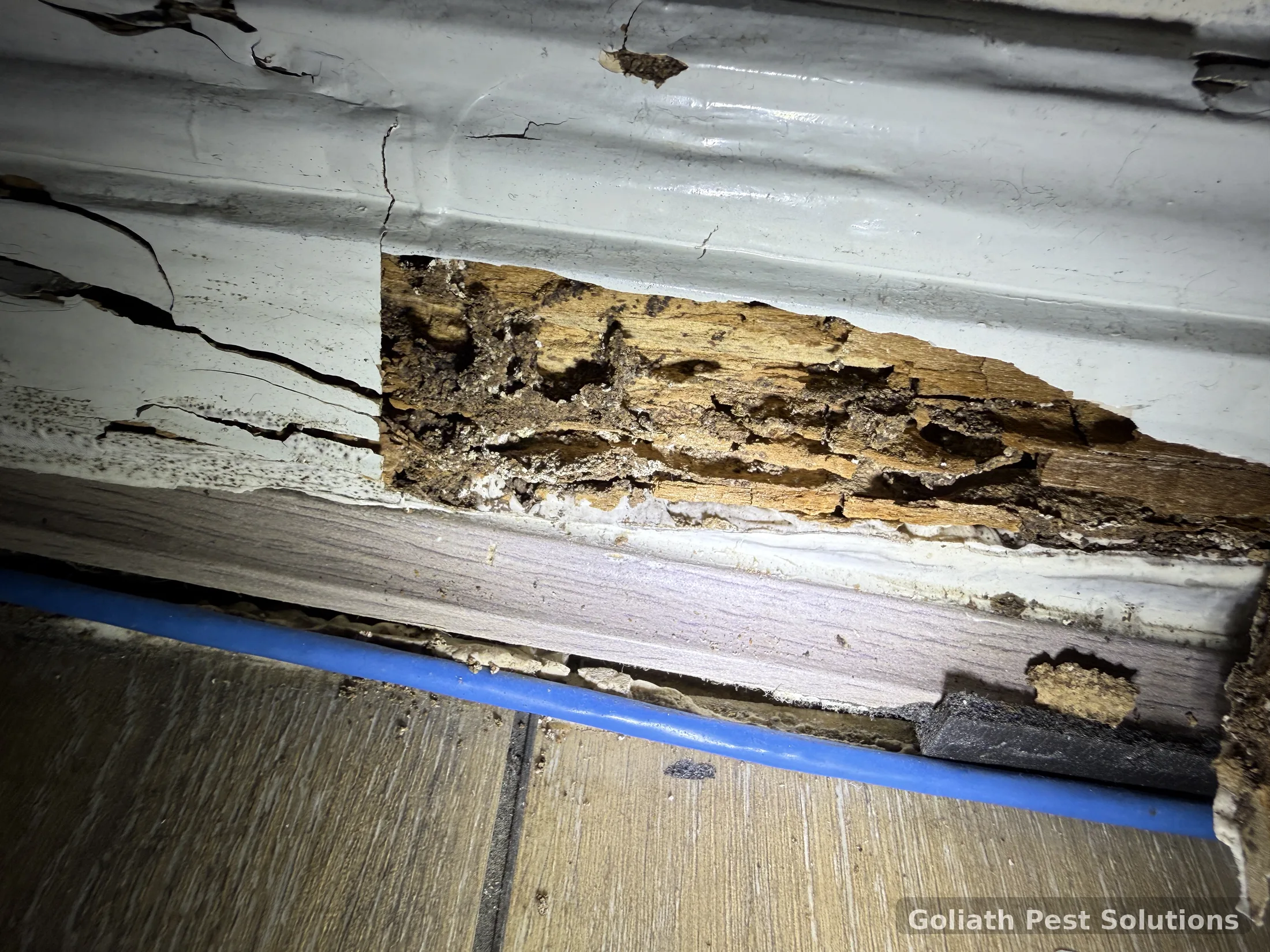
Genuine Goliath Pest Solutions field photography. Image location is not represented as Breakfast Point unless specifically documented.
A termite finding inside one lot may relate only to that area, or it may require inspection of adjacent or common-property interfaces. A technician should not guess about ownership boundaries or assume access to areas that have not been authorised.
Instead, the report can describe the observed evidence, identify the additional areas that would be useful to inspect and allow the owner, strata manager or building manager to coordinate access.

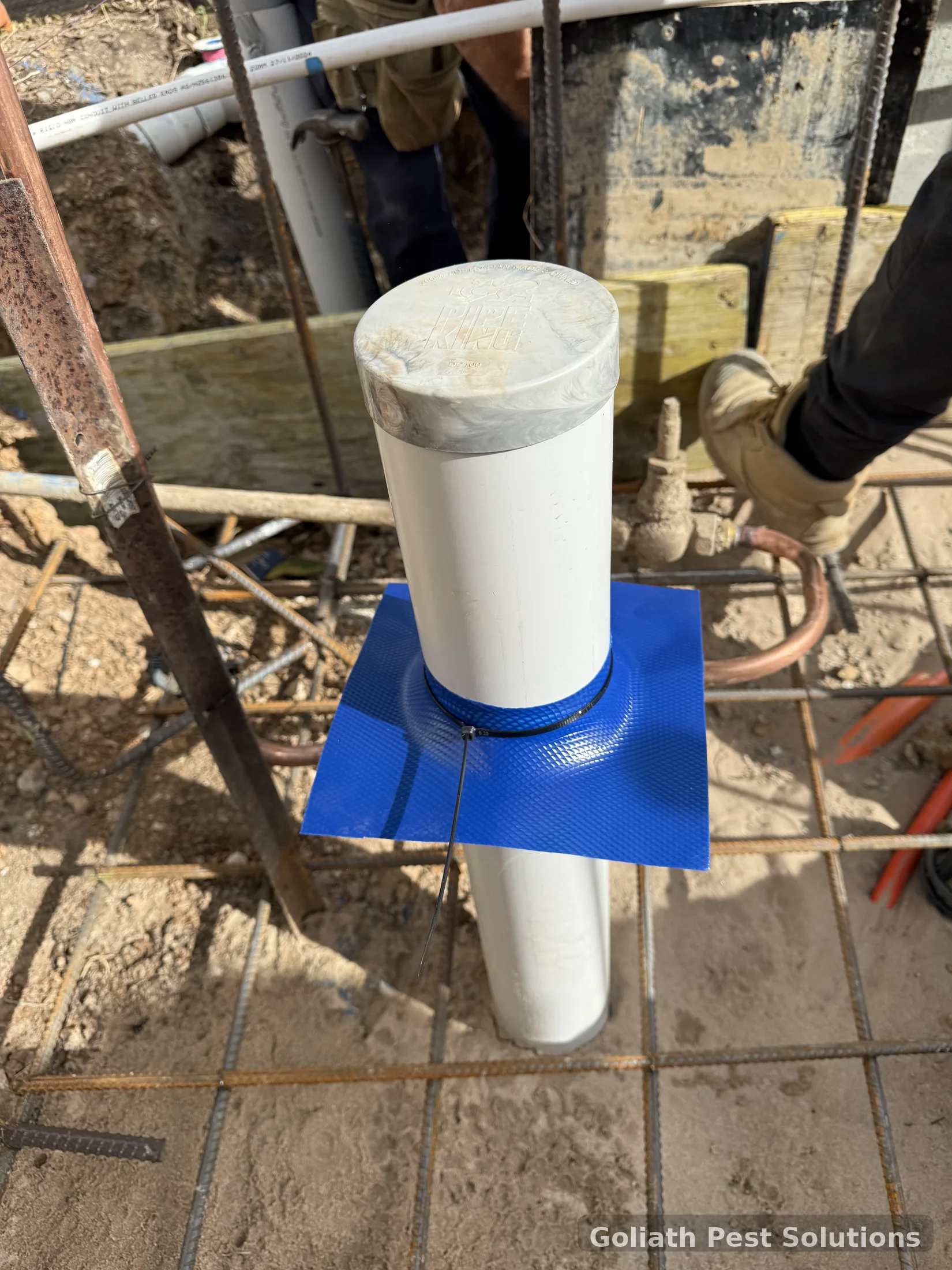
Supporting field image used to explain inspection or treatment considerations. It is not presented as a photographed job in Breakfast Point.
A structured process keeps the technical findings clear even where several parties are involved.
Document activity, damage, mudding and accessible surrounding construction.
Note any common or neighbouring areas that should be checked rather than assuming they are clear.
Keep the pest report factual; strata or legal responsibility can be resolved through the appropriate property process.
State which areas can be treated now and which depend on further approval or access.
Locked rooms, inaccessible risers, ceiling voids, service spaces, fixed finishes and common-property areas can all limit termite inspection. The report should record those limitations and any recommended follow-up.
That allows a second visit or additional access to be targeted rather than leaving future readers with an inaccurate impression that the entire building was inspected.
In managed buildings, a clear record of what could and could not be inspected is often as important as the findings themselves.
See our Termite Inspections page for the broader inspection process, or Active Termites if live activity has already been found.
A proposal may cover a single affected area, a broader building interface or a staged program that depends on additional access. The document should state that plainly.
| Situation | What may be assessed | Useful next question |
|---|---|---|
| Activity inside one lot | local activity, adjacent interfaces and access limitations | Does the evidence indicate that adjoining or common areas need inspection? |
| Common property concern | authorised access, construction junctions and treatment options | Which common areas are included in the proposed work? |
| Monitoring program | station locations, ownership, service schedule and reporting | Who receives the service records and what areas are being monitored? |
| Barrier proposal | building perimeter, soil/concrete access and common-property approval | Which treatment sections require strata or building-management access? |
Where a soil-treated zone is appropriate, read our Chemical Barriers guide. If a previous system is uncertain, the unknown barrier or treatment history guide explains what old records and visible evidence can and cannot establish.
The report should document the evidence that was visible, state that the adjoining area was not accessible and recommend the appropriate follow-up access.
Our Termite Inspections guide explains inspection limitations, and Building Inspector Recommended a Termite Inspection? is useful where another report triggered the enquiry.
Once access is arranged, the second assessment can determine whether the original finding was localised or part of a broader issue.
If a quote is based on limited access, that assumption should be visible. Compare proposals only after confirming whether they cover the same private and common-property areas.
A seemingly cheaper quote may simply omit areas that another contractor has included, so access and coverage must be compared before price.
Already have a written proposal? Use Termite Quote Beat to submit it for a like-for-like review. If price is still the main uncertainty, our Termite Treatment Cost page explains why construction, access and treatment scope can materially change a quote.
These pages help keep the Sydney service-area structure connected without implying that Goliath operates a separate office in each suburb.
Yes where the appropriate access and authorisation have been arranged.
No. The finding should trigger assessment of relevant accessible areas rather than an unsupported assumption about the entire building.
Sometimes targeted work may be possible, but the limitations and any required follow-up should be documented.
Yes, records can be provided to the relevant authorised parties as part of the service process.
NSW Government provides general information about termite management, building protection and regular inspection: Home building safety and standards. NSW EPA explains licensing requirements when engaging pest-management technicians: NSW EPA.
These sources provide general guidance. A treatment recommendation still needs to be based on the construction, accessible evidence and conditions at the individual property.
Arrange the available access and send any building or pest reports. We can document the evidence, limitations and next inspection or treatment step clearly.
RELATED TERMITE RESOURCES
If you are comparing termite work for a Breakfast Point property, use these pages to move from inspection or active activity into the appropriate treatment and quote-review pathway.
Find guides, treatments, standards, report help and Sydney service areas.
Compare treatment methods, learn what inspections involve and see genuine termite-management work completed by Goliath Pest Solutions.
Enter your postcode and we’ll check whether it falls within our standard service area from Mortlake.