Need a termite inspection, active-termite assessment or longer-term protection in West Ryde? Goliath Pest Solutions services West Ryde as part of its Sydney coverage. The starting point is to understand what has actually been found, how the building is constructed and which areas can be inspected or treated, rather than assuming every property needs the same solution.
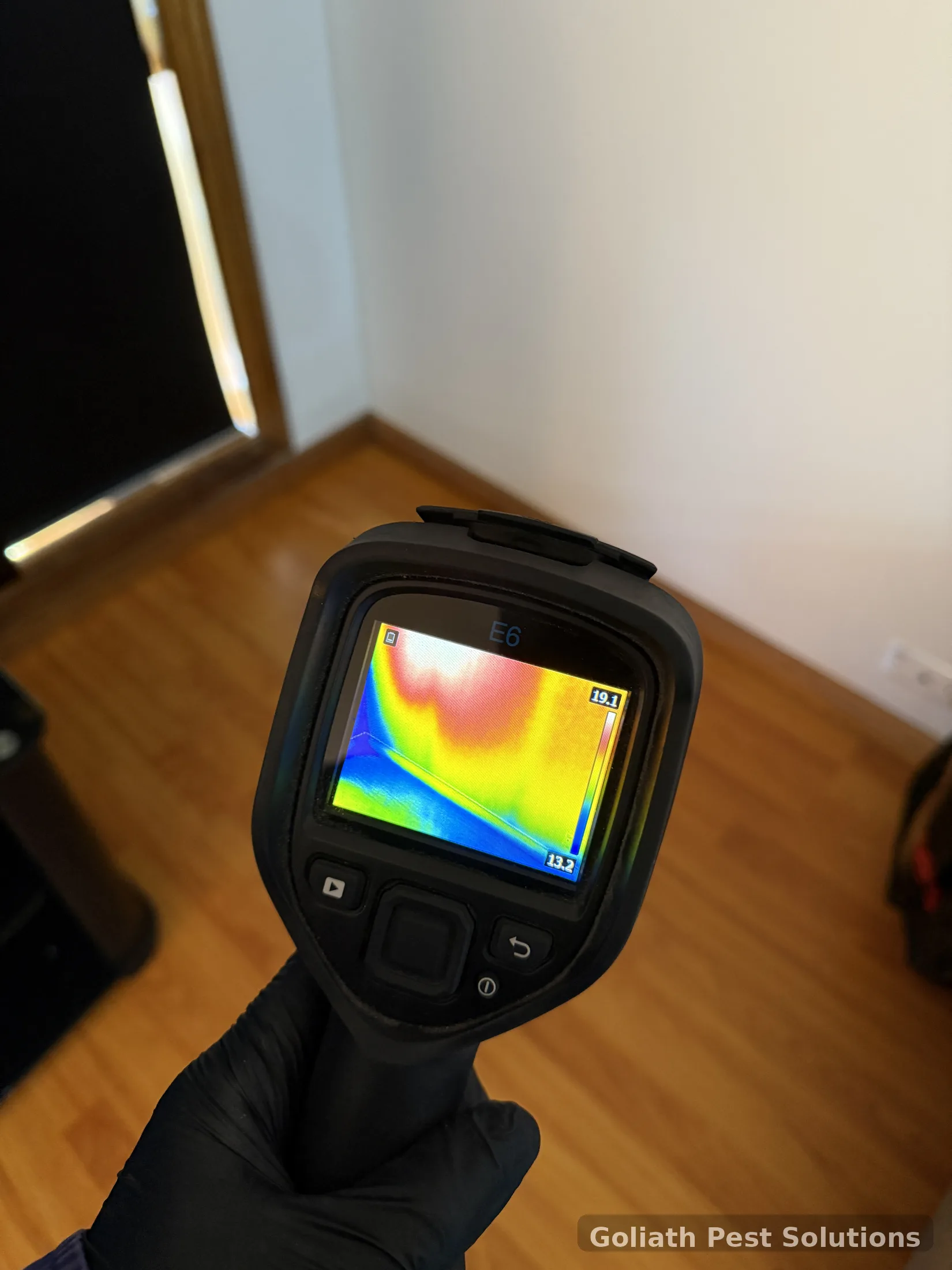
Genuine Goliath Pest Solutions field photography. Image location is not represented as West Ryde unless specifically documented.
A homeowner may contact us after finding mudding, hollow or damaged timber, shed wings, a suspicious wall area or a recommendation in a building report. Another property may have drill holes or an old durable notice but no reliable treatment paperwork. Those situations can look similar from a distance, but they create different inspection questions and different treatment decisions.
For West Ryde enquiries we keep the process evidence-led. Accessible termite activity, damage, moisture, slab or subfloor construction, perimeter access, service penetrations and previous treatment evidence are considered together. If the property has already been treated, the objective is not to guess what was done; it is to establish what can be verified and what still needs assessment.

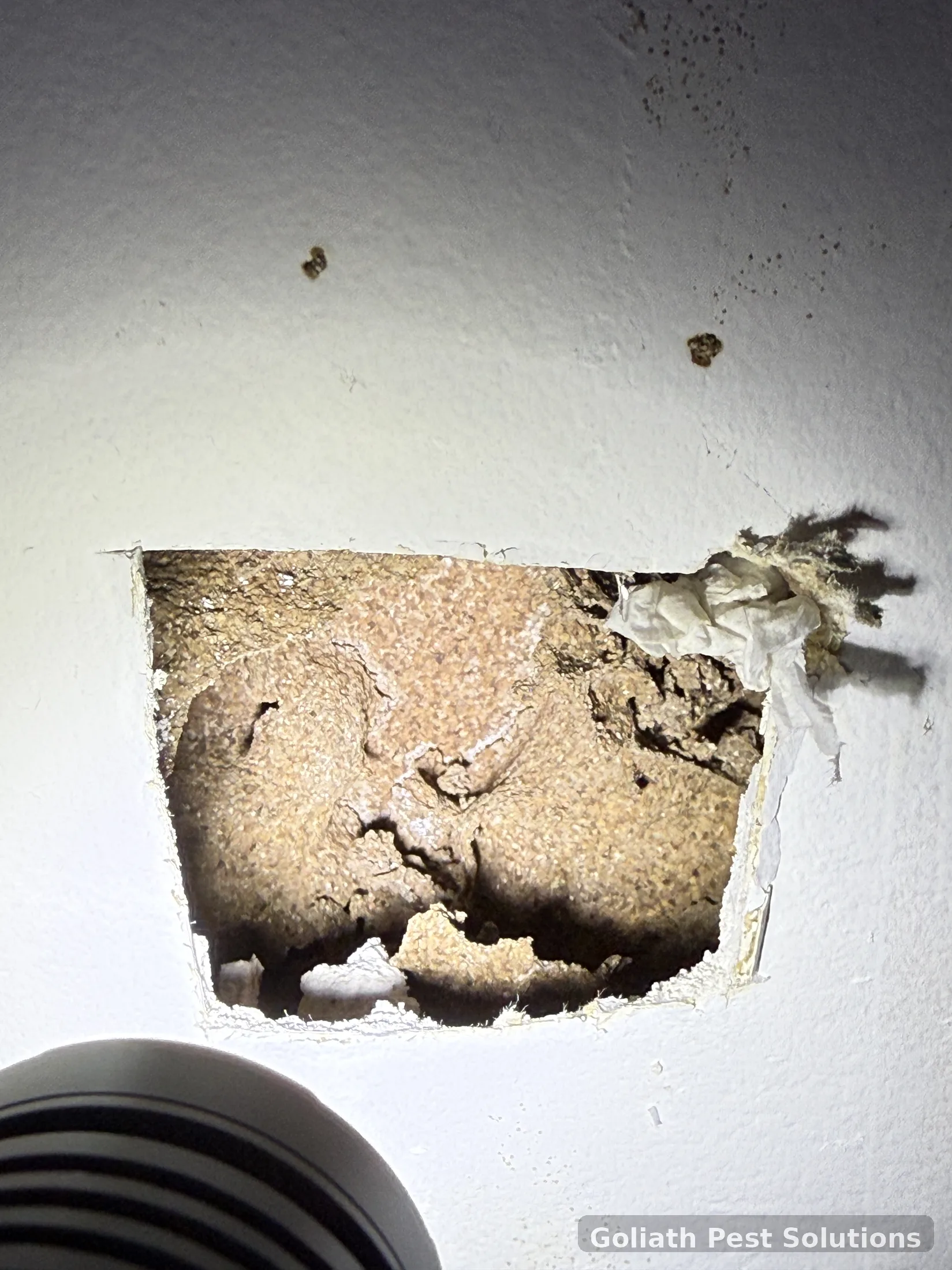
Supporting field image used to explain inspection or treatment considerations. It is not presented as a photographed job in West Ryde.
The purpose of a termite service is not simply to apply product. It is to answer the immediate question at the property and then design the appropriate response.
Avoid disturbing active areas unnecessarily. Arrange assessment so treatment can be directed at the actual activity and surrounding risk.
Damage records where termites have been, but it does not by itself establish whether activity is current. Inspection comes first.
Old drill patterns, notices or invoices can be useful clues. They do not prove current continuity, age, product or warranty status.
Use inspection findings and available records before deciding whether remedial treatment, a new barrier or further building access is needed.
Termites commonly remain concealed, so a good assessment is broader than the single spot that triggered the call. The technician looks for accessible evidence of activity and damage and considers how termites could move between soil, structural interfaces and timber.
Diagnostic tools such as moisture meters and thermal imaging can support that investigation when used in context. They do not replace physical inspection and they do not prove termites on their own.
The same visible damage can sit inside very different buildings. Treatment design depends on whether there is active infestation, the construction type, access to relevant soil or structural interfaces, and whether an existing termite-management system can be verified.
See our Termite Inspections page for the broader inspection process, or Active Termites if live activity has already been found.
Depending on the findings, the next step may be targeted work for active termites, a soil-treated zone, monitoring and baiting, rectification of conducive conditions, or a staged combination. No treatment method should be selected simply because it is the easiest item to quote.
| Situation | What may be assessed | Useful next question |
|---|---|---|
| Active termites confirmed | colony treatment approach, accessible activity and follow-up requirements | Is the proposal treating current activity, longer-term property protection, or both? |
| Existing home needing perimeter protection | accessible soil, paving, concrete, subfloor and continuity of the proposed treated zone | Which sections will be drilled, trenched, rodded or otherwise treated? |
| Unknown previous barrier | records, durable notice, drill pattern, accessible treatment evidence and current inspection findings | What is actually known about the old system and what is assumed? |
| No live termites but risk conditions present | inspection findings, moisture, drainage, access and future inspection visibility | Is treatment justified now, or are inspection and building rectification the priority? |
Where a soil-treated zone is appropriate, read our Chemical Barriers guide. If a previous system is uncertain, the unknown barrier or treatment history guide explains what old records and visible evidence can and cannot establish.
A building report can flag termite damage, conditions conducive to termite activity or the absence of visible evidence of a barrier. That wording is useful, but it is not automatically a treatment specification. A dedicated termite inspection can investigate the timber-pest question in more detail and separate observed damage from current activity.
If a report says no barrier was identified, that does not necessarily prove that no termite-management work has ever been carried out. Records may be missing, components may be concealed or a previous system may no longer be verifiable. Our guide on a building report that says no termite barrier explains this distinction.
For a purchaser, the useful outcome is a clearer picture of accessible evidence, limitations, treatment history and the work that may reasonably be needed after settlement. That is more valuable than turning a cautious report sentence into an automatic barrier quote.
Two termite proposals can have similar totals while describing materially different work. One may include active-termite treatment only; another may include perimeter protection, subfloor work, monitoring, follow-up visits or warranty conditions.
Check whether treatment areas, installation method, product or system, exclusions and future inspection obligations are written clearly enough to compare. A cheaper total is not truly cheaper if the scope is smaller or important areas are excluded.
Already have a written proposal? Use Termite Quote Beat to submit it for a like-for-like review. If price is still the main uncertainty, our Termite Treatment Cost page explains why construction, access and treatment scope can materially change a quote.
These pages help keep the Sydney service-area structure connected without implying that Goliath operates a separate office in each suburb.
No. Damage, mudding, shed wings, a building-report recommendation or uncertainty about previous treatment can all justify investigation. The inspection should determine what the evidence supports.
A written proposal can be discussed from plans, photos or another quote, but treatment design should reflect actual construction, access and site conditions. An inspection may be needed before finalising scope.
Avoid unnecessary disturbance if active termites are suspected. Photograph the area and arrange assessment so the evidence can be interpreted in context.
Yes. Goliath provides Sydney-wide termite services, with nearby pages for Ryde, Eastwood, Gladesville and other covered suburbs.
NSW Government guidance notes that termite-management systems work alongside regular inspections: Home building safety and standards. City of Ryde also publishes practical termite guidance about keeping slab edges inspectable, subfloor access and regular inspections: City of Ryde termite guidance.
These sources provide general guidance. A treatment recommendation still needs to be based on the construction, accessible evidence and conditions at the individual property.
Send the written scope for review or arrange an inspection. We will work from the evidence, construction and accessible treatment areas rather than forcing the property into a generic package.
RELATED TERMITE RESOURCES
If you are comparing termite work for a West Ryde property, use these pages to move from inspection or active activity into the appropriate treatment and quote-review pathway.
Find guides, treatments, standards, report help and Sydney service areas.
Compare treatment methods, learn what inspections involve and see genuine termite-management work completed by Goliath Pest Solutions.
Enter your postcode and we’ll check whether it falls within our standard service area from Mortlake.