When termite damage is found in Drummoyne, the important distinction is whether termites are currently active, whether the visible damage is historic, and what building repair may be required after the pest issue is understood.
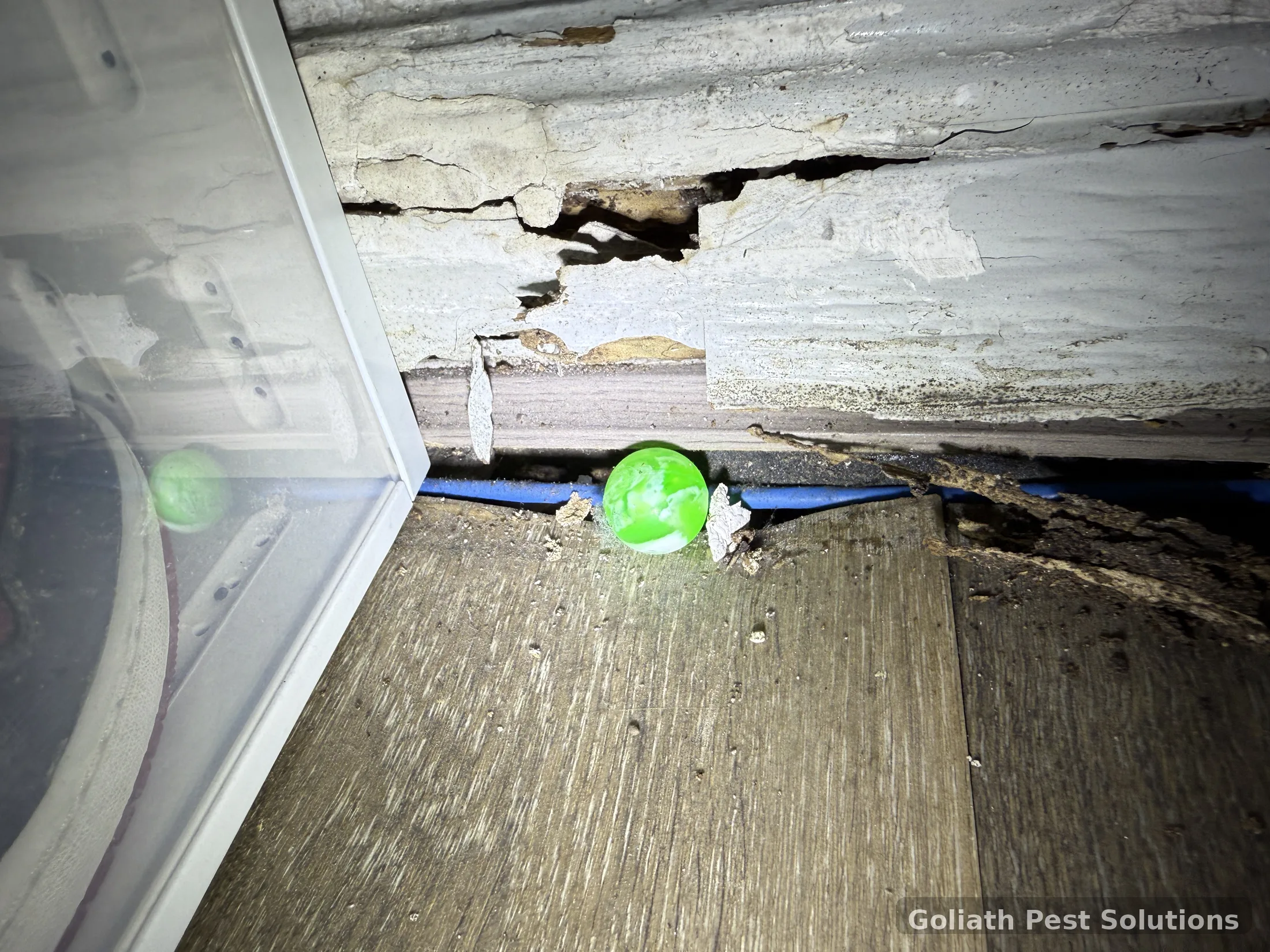
Genuine Goliath Pest Solutions field photography. Image location is not represented as Drummoyne unless specifically documented.
Termite-damaged timber can remain long after activity has stopped. Conversely, concealed live termites may exist beyond a visible damaged area. The inspection needs to look for current evidence and consider the surrounding construction before treatment or repair decisions are made.
If building repairs are planned, useful termite evidence should be documented before damaged materials are removed wherever practical.

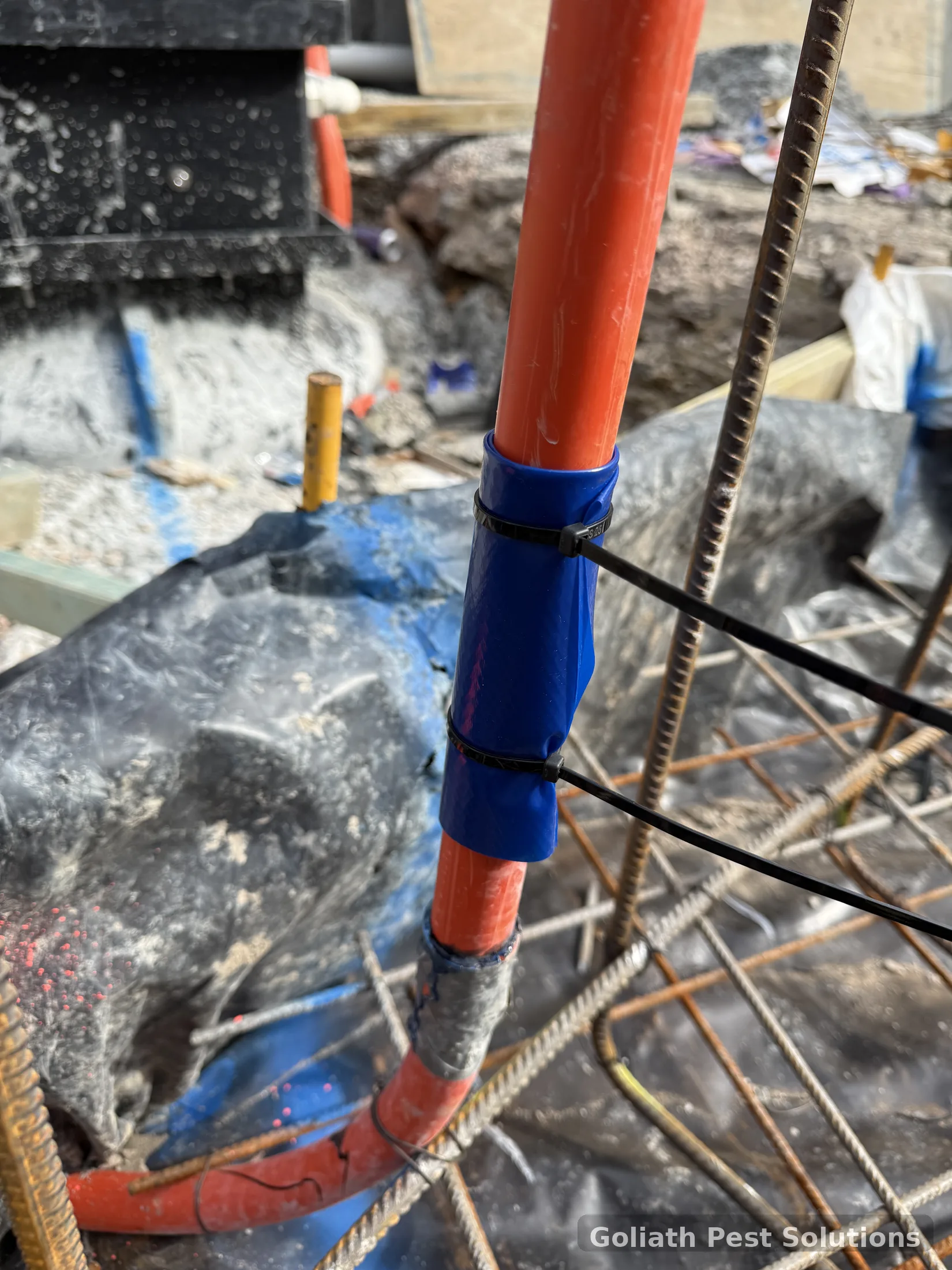
Supporting field image used to explain inspection or treatment considerations. It is not presented as a photographed job in Drummoyne.
These tasks overlap, but they are not the same service and should not be confused in the quote.
Treat and monitor the termite activity before assuming the problem is only structural repair.
Document accessible damage and determine whether any current termite evidence remains.
Use the appropriate builder or structural professional to assess repair requirements where needed.
After the active issue is understood, consider barrier or monitoring options based on property construction.
Inspection may include adjoining timber, wall or floor interfaces, subfloor or roof areas where relevant, moisture observations and treatment history.
Access limitations should be stated clearly because concealed building elements cannot be represented as fully inspected when they were not accessible.
A careful report distinguishes visible damage, current termite evidence and inaccessible areas. That gives the homeowner a better basis for both pest treatment and later building repair.
See our Termite Inspections page for the broader inspection process, or Active Termites if live activity has already been found.
If termites are active, the treatment plan should address them directly. If the damage appears historic, the focus may shift to inspection, repair and longer-term protection rather than unnecessary colony treatment.
| Situation | What may be assessed | Useful next question |
|---|---|---|
| Live termites in damaged timber | activity, mudding, surrounding access and treatment sequence | What is the active-termite treatment objective? |
| Damage only | evidence of current activity and accessible extent | Is pest treatment required now or is the next step building repair and monitoring? |
| Repair exposes more activity | newly opened areas and treatment access | How should treatment be coordinated before the repair is closed? |
| Post-treatment protection | barrier, monitoring and future inspection access | What reduces the chance of future concealed entry and keeps the property inspectable? |
Where a soil-treated zone is appropriate, read our Chemical Barriers guide. If a previous system is uncertain, the unknown barrier or treatment history guide explains what old records and visible evidence can and cannot establish.
Pause before discarding all affected material if termites are suspected. Photograph the evidence and arrange assessment so current activity and entry pathways can be considered.
The Hidden Termite Damage guide explains why visible damage can be only part of the picture, while Active Termites covers the immediate treatment question.
After the termite issue is assessed, repair work can be planned with clearer information about whether active treatment, further opening or longer-term protection is required.
A termite proposal should not blur structural repair into pest treatment. Ask which work is pest management and which building repairs require another trade.
For like-for-like comparison, focus on termite treatment areas, methods, follow-up and protection rather than assuming every contractor includes the same repair work.
Already have a written proposal? Use Termite Quote Beat to submit it for a like-for-like review. If price is still the main uncertainty, our Termite Treatment Cost page explains why construction, access and treatment scope can materially change a quote.
These pages help keep the Sydney service-area structure connected without implying that Goliath operates a separate office in each suburb.
No. Damage can be historic, so current activity needs to be assessed from current evidence.
Where termites are suspected, it can be useful to document and inspect the evidence before major disturbance.
Pest treatment and structural repair are different services. Appropriate building or structural professionals may be needed for repairs.
Potentially, depending on property construction and the treatment design. The treatment sequence should be planned around the findings and repair work.
NSW Government provides general information about termite management, building protection and regular inspection: Home building safety and standards. NSW EPA explains licensing requirements when engaging pest-management technicians: NSW EPA.
These sources provide general guidance. A treatment recommendation still needs to be based on the construction, accessible evidence and conditions at the individual property.
Arrange an inspection before major disturbance where practical. We can help determine whether activity is current and define the termite-management work separately from building repairs.
RELATED TERMITE RESOURCES
If you are comparing termite work for a Drummoyne property, use these pages to move from inspection or active activity into the appropriate treatment and quote-review pathway.
Find guides, treatments, standards, report help and Sydney service areas.
Compare treatment methods, learn what inspections involve and see genuine termite-management work completed by Goliath Pest Solutions.
Enter your postcode and we’ll check whether it falls within our standard service area from Mortlake.